Have you ever noticed how we keep cleaning the floor while the faucet leaks? We spend a lot on treating illnesses, but health promotion gets very little. It’s like arguing about seatbelts in 2024, knowing they’ve been important for decades.
Prevention is more effective than any medicine. But we often choose to react instead of act ahead.
This isn’t just about saving money. It’s about psychology, common sense, and lasting health. Why do we ignore what clearly works?
Let’s look into why prevention should be our first choice. It’s not just smart—it’s the only way to make sense for our communities and our finances.
Immunization Clinics
Remember when polio haunted childhoods like a spectral villain? Today, it’s barely a medical footnote, thanks to vaccines. But here’s the twist: vaccine hesitancy is staging a comeback tour, and it’s not playing small venues.
Modern immunization clinics have evolved beyond sterile medical spaces. They’ve become community hubs where science meets storytelling. I’ve watched nurses transform anxious moments into educational opportunities while administering shots.
- Accessibility – Locations in familiar community centers
- Education – Clear explanations defeating misinformation
- Trust-building – Healthcare professionals as relatable guides
The .gov reality adds another layer. Federal websites must maintain credibility while navigating misinformation minefields. They achieve this through transparent data sharing and compliance with accessibility standards.
These digital resources partner with physical clinics to create a disease prevention network. They provide vaccine schedules, safety data, and outbreak maps that empower informed decisions.
Ultimately, immunization success hinges on making science accessible and human. When clinics combine medical expertise with community connection, they don’t just prevent diseases – they build healthier futures.
Nutrition & Physical Activity Initiatives
Imagine if we could bottle motivation and sell it next to the protein powder. We’d be billionaires. But instead, we’re fighting an obesity epidemic with good intentions and bad policy. The real magic happens when we stop preaching and start building.
I’ve seen community gardens pop up in food deserts. They turn vacant lots into vegetable havens. These aren’t just plots of dirt – they’re social experiments in nutritional literacy. People who grow kale suddenly want to eat kale. Who knew?
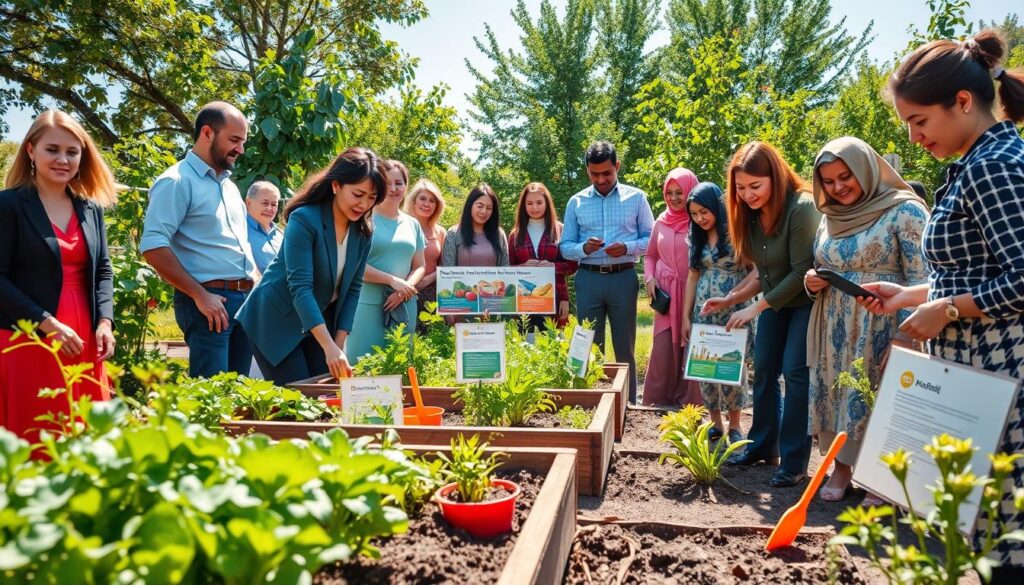
The Division of Nutrition, Physical Activity, and gets this. They fund programs that make healthy choices inevitable, not impossible. Think walking clubs that become social movements and cooking classes that feel like dinner parties.
Successful initiatives share three secrets:
- They’re actually fun (novel concept, I know)
- They build community, not just six-packs
- They work with human nature, not against it
The best public health workshop I ever attended involved zero PowerPoint slides. We cooked meals together while discussing food politics. People left with recipes and revolution on their minds.
Physical activity programs follow the same rules. The most effective ones:
- Remove barriers (childcare, cost, transportation)
- Create social accountability
- Measure progress in laughter, not just laps
We need to stop telling people to “just exercise more” and start asking why our cities make driving easier than walking. The politics of physical activity matter more than any fitness tracker.
Nutrition education works when it’s hands-on. People remember the taste of homegrown tomatoes longer than any food pyramid. They trust neighbors more than nutritionists.
The future of public health isn’t in pill form – it’s in community centers, parks, and kitchens. It’s in programs that understand people would prefer to dance than run on treadmills. And honestly, who can blame them?
Chronic Disease Management
The chronic disease epidemic isn’t a mystery. It’s a choice we make every day. Conditions like diabetes and heart disease are preventable. Yet, we’ve grown to accept them as part of modern life.
It’s like watching a slow-motion pandemic that we’ve all grown used to. We’ve made it background noise.
But there’s a twist: effective management changes everything. I’ve seen programs that treat patients like partners, not problems. This new way of thinking makes a huge difference.
- Telehealth integration that meets people where they are – literally
- Support groups that actually support, not just sympathize
- Nutrition coaching that blends science with reality
- Movement programs that don’t need expensive gym memberships
When research funding meets community partnerships, magic happens. Without support, we’re just rearranging the deck chairs. Innovation needs investment – both money and a new way of thinking.
These programs succeed because they focus on the whole person. They know managing chronic conditions is about making lasting changes. The best strategies understand that people live in the real world, not in textbooks.
What makes these approaches work? They treat the person, not just the numbers. They know lifestyle changes are harder than just taking medication. And they empower patients, not just tell them what to do.
The future of managing chronic diseases isn’t in new medicines. It’s in more human-centered ways. Sometimes, the most revolutionary treatment is a new perspective.
How to Get Families Involved
Getting families to focus on health is like trying to put together IKEA furniture without instructions. Everyone has a different piece, and no one knows where the Allen wrench is. The trick is to make health prevention fun, not a chore.
Successful programs turn health into social activities. Imagine cooking classes that become fun dates or walking groups that are also a chance to catch up. It’s all about making health a positive experience, not a punishment.
Why does “for your kids’ sake” work better than being told to do something? It speaks to our deepest desires without making us feel forced. Parents will do anything for their kids, but they resist being told what to do.
Here’s what actually works for family engagement:
- Gamified challenges that turn preventive care into friendly competition
- Multi-generational activities where grandparents and kids participate together
- Social proof demonstrations showing other families enjoying health initiatives
- Low-commitment trial options that remove the pressure of long-term promises
The psychology behind this approach is fascinating. Families respond well to health programs that respect their freedom and offer clear benefits. It’s the difference between being sold something and finding something valuable.
Effective disease prevention programs know families want solutions, not lectures. They make healthy choices easy, not hard.
Remember: the goal isn’t to convince families to care about health. They already do. The goal is to show them how health initiatives fit into their busy lives.
When health becomes part of family identity, that’s when real change happens. It stops being “something we should do” and becomes “something we do.”
Health Fair Spotlights
The key to a memorable health fair is real community connection. I’ve seen both kinds of events—those that felt like a medical nightmare and those that were full of life.
When local groups run health fairs, something special happens. People start to want to be there, not just because they have to.
The Riverside Community Health Initiative’s fair is a great example. They made a public health workshop feel like a block party. There were blood pressure checks and chef demos side by side. Dental screenings and art projects were there too.
What makes them stand out? It’s their partnership model. They use corporate donations to fund local health programs. Every dollar helps, not just goes to overhead.
They also have a program for graduate students. It helps them help underserved areas. Students get real-world experience and make a difference.
The Urban Wellness Collaborative is another example. They make health care fun, not a burden. They use music, food, and culture to make their public health workshops enjoyable.
It’s worked well for them. More people are coming, and they’re following up on their health care. When people have fun, they’re more likely to take care of themselves.
These stories teach us something bigger. Good public health is about working with the community, not just telling them what to do. When people feel important, they’re more likely to take care of themselves.
Event & Class Calendar
Ever wonder how the best health promotion events seem to pop up just when you need them? It’s not luck—it’s smart planning. The key is not just what you teach, but when and how you share it.
Successful programs know that 7 PM on a Tuesday is better than 2 PM on a Wednesday. Why? Because it fits into people’s busy lives. They’re not waiting for cholesterol workshops.
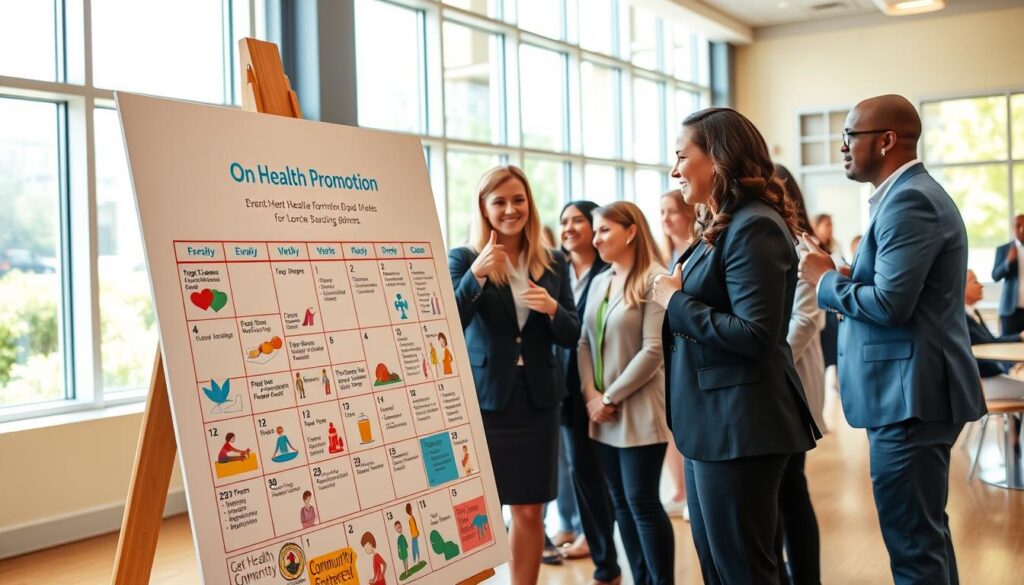
- Strategic timing that works around school pickups and work schedules
- Marketing that speaks to actual human interests (not just medical jargon)
- An experience that feels more like discovery than obligation
Let’s face it: nobody gets excited about “Mandatory Health Enlightenment Session.” The winners make learning feel like finding hidden treasure.
Here’s what makes forgettable events different from ones that change lives:
| Forgettable Events | Transformative Experiences | Key Differentiator |
|---|---|---|
| Empty chairs and stale coffee | Full rooms and actual engagement | Relevant timing |
| Medical jargon overload | Relatable, story-driven content | Human-centered messaging |
| One-size-fits-all approach | Personalized interaction | Community connection |
| Lecture-style monologues | Interactive participation | Experience design |
The best health promotion strategies meet people where they are. They know a parenting workshop during naptime will work better than an evening session.
Great examples are organizations like Public Health Ontario. They don’t just schedule events—they create experiences that fit into real lives.
Remember: great content delivered poorly is like it never happened. But average content delivered well? That’s where the magic is.
Local & National Resources
Finding real health resources shouldn’t be hard. That .gov domain is not just for show. It’s your safety net in the vast world of online health info. These sites are super secure, like the White House, making them the best choice for keeping you healthy.
These resources are for everyone, not just tech-savvy folks. Good health plans remove all kinds of barriers. Whether it’s physical ramps or digital hurdles, they make sure everyone can get help. Research shows that effective prevention is about being accessible and.
Your local health department’s website might not look fancy, but it’s packed with good info. Add that to national resources like CDC guidelines, and you’re all set. The key to a great health plan is being able to find and trust it.