Let’s get real for a second. When we talk about accessible wellness, we’re not just talking about wheelchair ramps. They’re not just an afterthought.
Nearly 29% of American adults have disabilities. That’s over one in four people who are left out of spaces that claim to promote well-being.
Imagine hosting a party where only some guests can find the entrance. True inclusion means seeing health in all its forms. It’s about recognizing that health looks different for everyone.
We’re creating spaces where everyone can truly participate. It’s not just about checking boxes. It’s about changing how we think about health and wellness.
Program Types (Adaptive Sports, Sensory-Friendly Fitness, Seated Workouts)
Remember when corporate wellness felt like a dystopian episode of Black Mirror? Companies measured success by pounds lost and gym attendance. This created a system where only certain bodies could win. True adaptive fitness flips this script entirely.
We’re not talking about modified versions of standard workouts. This is a complete reimagining of what movement can be. The goal isn’t to make disabilities disappear – it’s to make participation universal.
Adaptive sports prove competition isn’t about identical physical capabilities. Wheelchair basketball isn’t basketball-lite – it’s a brilliant evolution of the game with its own strategies and athletic demands. These programs recognize that excellence comes in countless forms.
Sensory-friendly fitness understands that not everyone thrives in loud, fluorescent-lit boxes pumping EDM music. For neurodiverse participants, a quiet environment with controlled lighting might be the difference between engagement and overwhelm. It’s not accommodation – it’s intelligent design.
Seated workouts demonstrate that gravity is optional when it comes to building strength. These sessions aren’t “less than” standing alternatives – they’re masterclasses in functional movement principles. I’ve seen seated yoga sessions that would challenge most professional athletes.
The research confirms what we’ve observed: workplace wellness programs that reward weight loss create societal barriers. True inclusion means offering personalized health goals instead of standardized outcomes. The metric that matters? Universal participation, not uniform results.
We’re moving beyond the Jane Fonda one-size-fits-all approach (though we’ll always love the leg warmers). Today’s adaptive fitness landscape offers multiple pathways to wellness because bodies come in countless configurations. The revolution isn’t coming – it’s already here.
Registration & Accommodations
If registration forms were people, they’d need serious therapy. They ask too many questions and miss the important ones.
The ADA’s reasonable accommodation rule is not just red tape. It’s a chance to be creative and find solutions that work for everyone.
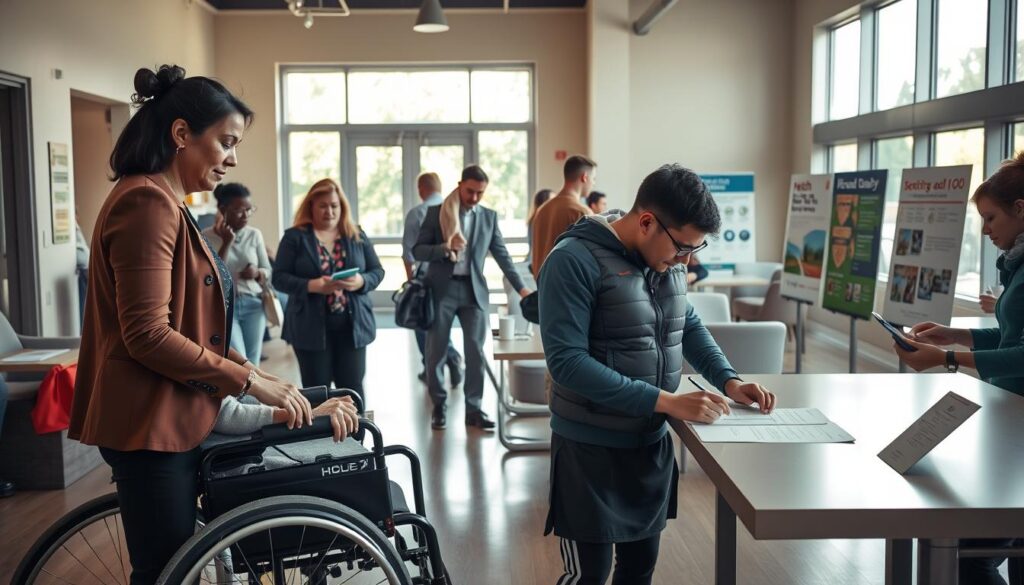
Curb cuts were made for wheelchairs but now help many others. They show how registration for inclusive health programs can work for everyone too.
Personalized approaches make people happier. Why put everyone in the same box when we can work together? The CDC’s disability inclusion work proves small changes can make a big difference.
Reasonable accommodation is about asking how to make things work. It’s about being welcoming, not just a gatekeeper.
True inclusive health isn’t just adding special sections. It’s about making the whole experience flexible and welcoming from the start.
Inclusive Event Calendar
An inclusive calendar is more than just showing diversity. It’s a key to really connecting with the community. I’ve seen places only focus on accessibility during special days. But true inclusion means every event thinks about all access needs from the start.
Accessible wellness goes beyond just ramps and wide doors. It means asking tough questions early on. Are there quiet areas for those with sensory needs? Do you offer more than just ramps for getting around? And do you have different ways to communicate for everyone?
Research shows that just adding a little bit of accessibility isn’t enough. It leads to “tokenistic participation,” where people feel left out. An event that only works for some is not inclusive. It’s more like a marketing trick to look good.
Good inclusive calendars have three key things:
- Consistent accessibility standards across all events
- Multiple engagement options for different needs and likes
- Clear communication about what’s available
When we make inclusivity a part of everything, we create spaces where everyone wants to be. This is the difference between just going through the motions and really building a community.
The best accessible wellness programs see their calendar as a work in progress. They listen to feedback, make changes, and know that inclusion is an ongoing effort. Because in the end, a calendar that works for everyone is not just right. It’s how you build a strong community.
Community Partners
Why start over when you can team up with experts in adaptive fitness? Many groups treat accessibility as their own project, not a community effort. The real magic happens when we admit we don’t have all the answers.
True partnership means sharing power, resources, and credit. It’s not just about diversity. Studies show that working together leads to better solutions in fitness programs.
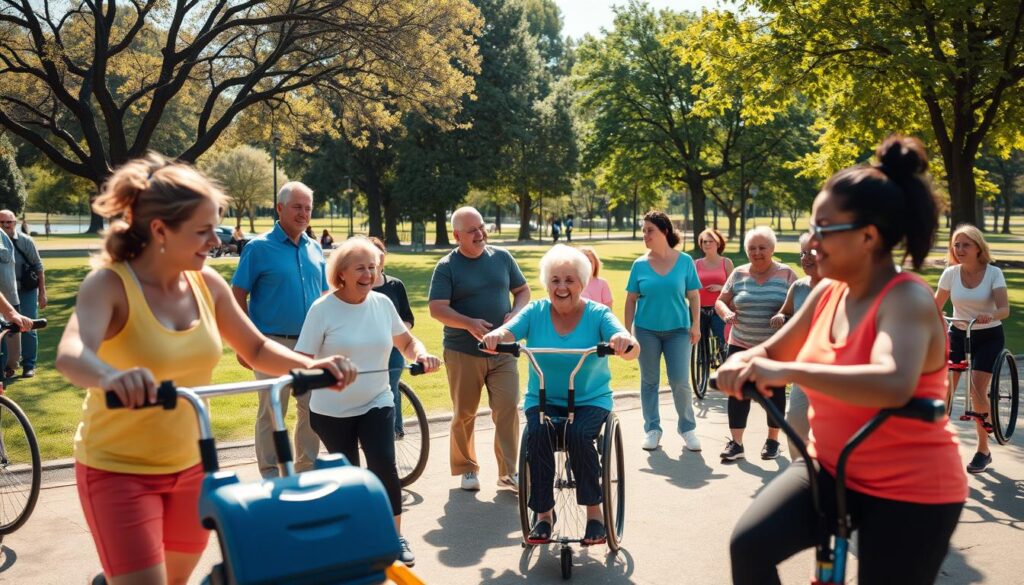
Everyone can help break down barriers. Healthcare teams can make health care more inclusive for people with disabilities. It’s about seeing that others have valuable knowledge too.
The best fitness programs come from real teamwork with:
- Disability-led organizations
- Adaptive sports leagues
- Community health advocates
- Local healthcare providers
This isn’t charity; it’s building something better together. When we work together, we create fitness chances that work for everyone.
| Partner Type | What They Bring | Impact on Programs |
|---|---|---|
| Disability-Led Orgs | Lived experience expertise | Authentic program design |
| Healthcare Providers | Medical knowledge & resources | Safer, more effective workouts |
| Community Centers | Space & local connections | Greater accessibility & reach |
| Adaptive Sports Leagues | Specialized equipment & training | Higher quality programming |
The table shows how different partners add unique value. Together, they build fitness systems that really work. It’s the difference between a program that looks good and one that changes lives.
Community partnerships turn adaptive fitness from theory to action. They’re where good ideas meet real results. And that’s where the real work starts.
How Family and Caregivers Can Participate
Let’s be real – caregivers are the MacGyvers of accessibility. They do amazing things with duct tape and determination when systems fail. They’re not just support; they’re the architects of inclusion.
The ALLY framework’s “leveraging influence” hits home for families. They have deep knowledge of what works. They know about narrow doorways, sensory overload, and schedules that work for real people.
But here’s a revolutionary thought: families shouldn’t do all the adaptation work. Why make them choose between participating and being exhausted? We can build systems that support everyone’s wellness.
Effective inclusive health programs support the whole family, not just one person. Research shows this approach benefits families, not just individuals. It’s about redesigning, not just fitting square pegs into round holes.
So, how can caregivers shape inclusive health initiatives? Here are three ways to start:
- Share your expertise during program planning
- Advocate for systemic changes, not just individual ones
- Connect with other families for collective power
The National Council on Aging has great insights on engaging caregivers. Their approach turns caregivers into co-designers.
True inclusive health isn’t just adding accessibility later. It’s about building programs with families as partners. When we get this right, we’re not just opening doors – we’re redesigning the whole building.
The best programs treat family input as essential data, not just feedback. They see caregivers as mapping the blueprint for inclusive health.
This shift changes everything. Instead of asking “How can we accommodate your family?” we ask “How can we build this together?” That’s when inclusive health becomes real.
Testimonials from Families
Ever wonder if accessible wellness is just another corporate buzzword? Talk to the families who live it.
I met a mom in Chicago whose daughter found a yoga class that didn’t treat her wheelchair like inconvenient furniture. That’s not compliance—that’s humanity. Her story, like many others, proves that personalized approaches aren’t just nice; they’re necessary.
Research shows workplace wellness programs that adapt to individual needs act as protective factors. But data doesn’t sweat. People do. A husband in Denver joined his wife in adaptive sports instead of watching from the sidelines. That’s accessible wellness in action—transforming spectators into participants.
These testimonials aren’t about overcoming disabilities. They’re about programs that stop treating differences as problems and start seeing them as perspectives. Real wellness happens when inclusion isn’t an afterthought but the main event.
Want to see change? Listen to those who’ve lived it. Their stories are the best argument for why accessible wellness matters.