Ever watch a household without structure? It’s like a Marx Brothers film colliding with a hurricane. Pure chaos.
I’ve come to see family routines as the architectural blueprints of domestic sanity. They create what experts call “predictable environments” that help children feel secure and looked after.
Think of it as behavioral cryptography. These patterns transform morning madness into manageable moments. They’re the operating system that prevents those 7:42 AM meltdowns over lost shoes.
According to child development experts, consistency matters. Children thrive when life isn’t a constant surprise.
These daily rhythms do more than organize chaos. They secretly build the neural pathways that help kids become functional adults. You know, the kind who don’t eat cereal for dinner every night.
Let’s decode how these healthy habits create cohesion from calamity.
Morning & Evening Rituals
Ever wonder why military generals and kindergarten teachers share the same strategic mindset? Both know that success needs perfect timing and preparation. Your family routines work on the same principles.
Morning rituals aren’t just about coffee. They’re about starting the day right. Music is your secret weapon, lifting moods better than coffee.
Starting with positive affirmations is like a mental boost. Before the day starts, say, “Today will be amazing because…” Let everyone finish the sentence. It sets a positive tone, even for the grumpiest teenager.
The car is your mobile mindfulness studio. Instead of fighting over the radio, do a 60-second breathing exercise. Inhale for four, hold for four, exhale for six. It’s like a reboot before the day begins.
Evening rituals are where the magic happens. This is when kids are most open to learning. Storytelling is your way to teach values when they’re too tired to resist.
Switching from daytime leader to bedtime storyteller needs a plan. Follow a routine: bath, pajamas, story, lights out. This creates a sleep signal in their brains.
| Morning Power Moves | Evening Wind-Down | Psychological Impact |
|---|---|---|
| Positive affirmation exchange | Predictable bath routine | Builds optimism framework |
| Strategic music selection | Reading physical books | Reduces screen stimulation |
| Car mindfulness exercises | Gratitude sharing | Enhances emotional regulation |
| Visual checklist system | Progressive light dimming | Creates neurological cues |
The secret isn’t being perfect. It’s being consistent and flexible. Some days will be tough, but your routine keeps you grounded.
Your family routines are the foundation of your life. They’re the invisible structure that holds everything together, even when chaos hits. And they’re worth every bit of planning.
Age-Appropriate Chores
Assigning chores to kids feels like a mini revolution at home. It’s like giving them control over the household. The mop becomes a shared resource.
This isn’t about making kids work like adults. It’s about teaching them important life skills. Skills that help them when they leave home.
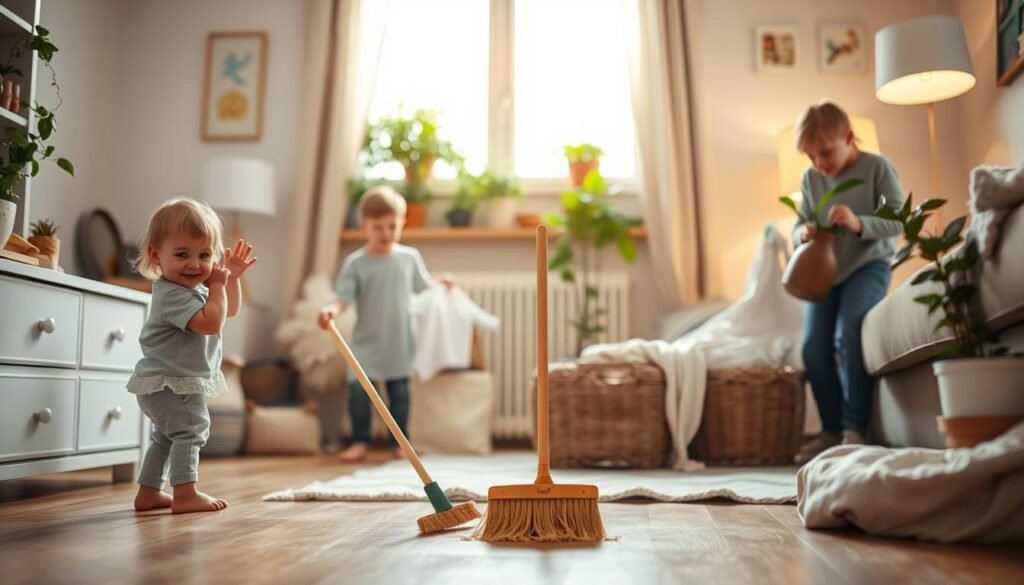
Chores are like team-building exercises for kids. They help create healthy habits that last forever. The key is to match tasks with their abilities.
Toddlers can sort socks like experts. Older kids can do more, like setting tables or helping with laundry.
The chore progression map shows how tasks get harder as kids get older. It’s a journey to becoming self-sufficient.
| Age Group | Appropriate Chores | Skills Developed | Parental Supervision |
|---|---|---|---|
| 2-3 years | Put toys in bin, place clothes in hamper | Basic categorization, motor skills | Constant guidance needed |
| 4-5 years | Set table, feed pets, match socks | Pattern recognition, routine building | Demonstrate then supervise |
| 6-8 years | Make bed, unpack dishwasher, simple cleaning | Time management, attention to detail | Periodic check-ins |
| 9-12 years | Help with laundry, prepare simple meals | Multi-step tasks, basic cooking skills | Minimal supervision |
Chores get harder but more meaningful as kids grow. It’s not just busywork. Each task builds bigger responsibility and independence.
After-dinner cleanup is special. Kids helping with dishes or taking out trash strengthens family bonds. It shows that keeping a home is a team effort.
Pet care is a big deal in child development. Feeding pets daily teaches kids about responsibility and caring. It’s more than just a pet; it’s a big responsibility.
These skills help kids become capable adults. A child who sets tables well can organize meetings as an adult. A teenager who does laundry well won’t wear pink to important interviews in college.
We’re not just teaching chores. We’re building the foundation for capable, competent adults. They learn that healthy habits start with taking responsibility for their space.
This system is self-reinforcing. Each task builds confidence for the next one. Soon, you’ll have kids who can handle the world.
Visual Schedules
Visual schedules are like stage directions in a play, keeping everything running smoothly. They help organize family routines as efficiently as a city planner designs a subway map. Imagine a busy morning without them – it’s like trying to navigate a crowded station without signs.
Color-coded charts are better than verbal reminders because they’re easier to understand. Airports use icons, not books, to guide people. Our brains can process visual information much faster than text. Visual schedules make complex routines simple and clear.
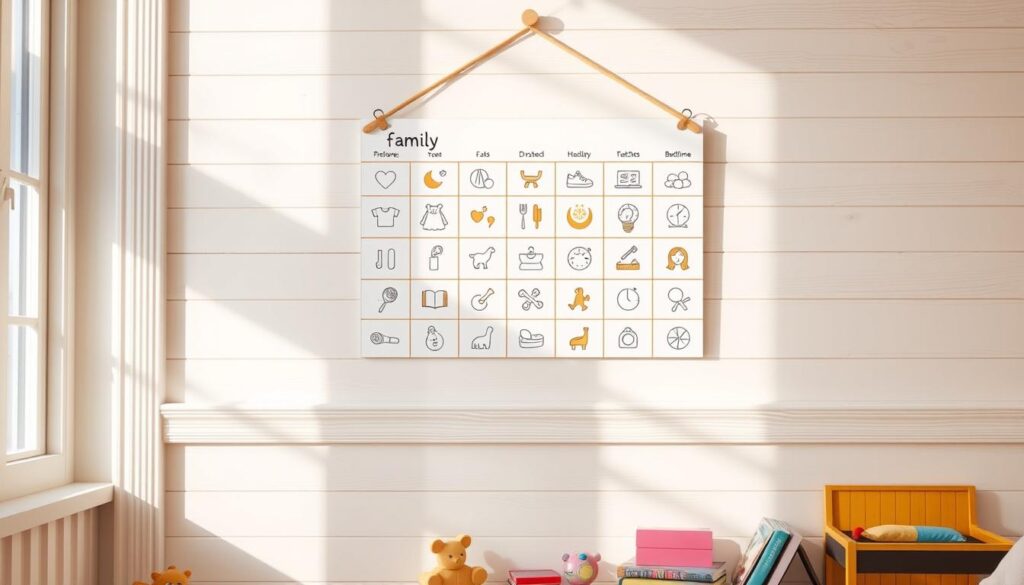
They reduce mental stress by making routines easy to follow. Everyone knows their part, creating a smooth flow. It’s like a well-choreographed dance, where everyone moves in sync.
Creating a good visual schedule is about both looks and function. Your fridge shouldn’t look like a mess. Here are some tips:
- Color coding by family member or task type
- Icon-based systems for pre-readers
- Magnetic or dry-erase surfaces for flexibility
- Consistent placement in high-traffic areas
If you don’t want to make your own, there are great printable visual schedules and daily routines available. The goal is to find something that fits your family’s style and looks good too.
Visual schedules are like data visualization for your home. When done right, they turn messy mornings into smooth ones. They’re the quiet leaders of your household’s daily rhythm.
Community Stories
Domestic routines often spill beyond our homes into the community. Your family’s healthy habits are part of the “community ecosystem.”
Think about that Friday pizza night. It’s not just about the food. It’s about building neighborhood bonds through shared activities.
Car pool lines can become cultural exchange programs. The 7:15 AM minivan turns into a place where parents share recipes and teens swap music. These daily activities help hold communities together.
One family made grocery shopping a neighborhood event. They invited different families each week, turning the frozen food aisle into a community meeting. This created stronger social ties and shared healthy habits.
Teens benefit from these community activities. Celebrating holidays and milestones in new ways helps them connect with others. Birthday parties and holiday traditions become chances to include everyone.
Elementary school-age children form bonds through these routines. Inviting friends to visit is more than playtime—it’s community building. These interactions teach empathy and social skills.
Volunteering as a family is a win-win. It teaches gratitude and environmental responsibility. These activities reinforce healthy habits that go beyond physical wellness.
Our domestic rituals have a big impact on neighborhoods. Weekly farmers markets and block parties are examples of community building. These activities are not just social events but also economic and environmental actions.
What makes these stories powerful is their authenticity. They’re not forced community building but natural extensions of family life. Pizza nights with neighbors, shared gardens, and walking groups are all part of this.
These stories show that the best healthy habits connect us to others. They turn individual routines into community rituals that strengthen our social fabric. The family that engages with its community creates something lasting.
When planning your family’s schedule, think about how it can connect you to neighbors. Sharing your garden’s zucchini or going for regular walks with neighbors are ways to build community. These actions create connections that benefit everyone.
These stories teach us that our best healthy habits are those that spread outward. They create connections that make us all healthier, both individually and together. The family that looks beyond itself leaves a lasting legacy of connection for the community.
Tips for Consistency
Building lasting healthy habits is like finding peace between your ideal self and the Netflix lover. The key is not to be perfect. It’s about following the 80/20 rule. Aim to hit your routines most days, but also enjoy life’s surprises.
Your family schedule should be like jazz, not classical music. It has structure, but also room for improvisation. When things go wrong, don’t panic. Just reset and adapt. You might even find joy in the unexpected.
The trick is to find a balance between structure and spontaneity. Too much structure can make you feel like a rebel. Too little can turn your home into a hurricane. Find that perfect balance where healthy habits help you, not hinder you.
Strategic flexibility is your best ally. Sometimes, the best thing to do is to ditch the schedule for a spontaneous ice cream treat. These moments become the stories that last longer than any bedtime routine.
True consistency means building habits that can handle real life. It’s not about being perfect. It’s about creating a system that makes family life work.