The modern family unit often feels like a startup in crisis mode. The pressure is constant and exhausting.
It’s not about achieving a perfect state of happiness. True mental wellbeing is a family effort. It’s supported by the community around it.
Consider the data. Depression linked to family stress is a global issue. Studies in South Africa show how poverty and HIV add to the burden. The challenges are big, and so must be the solutions.
Resilience isn’t just for some families. It’s skills and support we can build. Think of it as a community-powered operating system we can install.
Protective factors like parental modeling and social connections help us cope. They act as our buffer. For more on managing stress at home, check out our guide on understanding family stress.
Our mental wellness is key to community resilience. It’s a project we’re all working on together.
Community-Based Approaches
“Community-based” is like a trendy buzzword we all nod at but rarely examine. What does it mean to build community resilience? It’s not just about feel-good posters. It’s about creating systems that support families.
Forget the lone wolf narrative. Thriving, under pressure, is a team sport. The most effective framework is the Protective Factors Framework. It’s a checklist for building family strength.
First, parental resilience acts as an emotional shield. Next, social connections provide support. Then, knowledge of parenting and child development turns panic into strategy. Concrete support in times of need is key. Lastly, the child’s social and emotional competence is the ultimate goal.
But, a one-size-fits-all program doesn’t work. True mental wellness strategies must be tailored to each community.
In a South African township, the key is to use what’s already there. Sometimes, the most powerful intervention isn’t a new clinic. It’s a reconfigured family meeting.
Imagine a weekly family meeting focused on problem-solving. It becomes a space to build a shared narrative of strength. This is a profound piece of family tips we often miss: the system is already in the room. You just need to redirect its purpose.
A community-based approach isn’t about importing solutions. It’s about building social scaffolding using local materials. It asks: what structures exist? What unique risks do families face here? How can we amplify the protective factors that are already trying to grow?
The answer is never just a program. It’s a principle. Build from within. That’s how you engineer community resilience that lasts. It turns abstract mental wellness goals into lived, daily reality. And that’s a tip any family can use.
Wellness Activities for All Ages
Mental wellness isn’t just about meditation. It’s about the everyday moments we share with our families and communities. We often think self-care means spending a lot of money on fancy things. But, the truth is, well-being comes from simple things like eating together, reading at the library, and making pancakes on Saturday mornings.
At the heart of it all is the family. In a world that’s always changing, having a routine helps us feel safe. It’s not about being dull. It’s about creating a sense of security that lets us take chances and learn from our mistakes. Having Taco Tuesday every week is more than just dinner; it’s a time to feel connected.
Here, family tips become more than just advice. They become a way to protect our hearts. Things like bedtime stories, game nights, and walks on Sundays are not just activities. They’re the threads that weave our families together. It’s the knowing that these moments will always be there that gives us a sense of belonging.
Looking beyond our homes, we find the town square. This is where community resilience grows strong. Think of your local library. It’s not just a place to find books. It’s a safe space for all ages, with activities that help us grow together.
Community gardens, sports leagues, art classes, and concerts are also key to our well-being. They teach us important life skills like teamwork and patience. They bring people together, creating a sense of community that goes beyond words.
These places are like community hubs. They’re where we connect with each other in a real way. A grandfather fixing a bike with a teenager, parents bonding over their kids’ music class—these moments are what hold a neighborhood together. They’re more valuable than any app.
Our focus shifts from just taking care of ourselves to caring for our community. It’s about feeling connected and looking out for one another. Places like libraries, parks, and community centers are our first line of defense against feeling alone and anxious.
For more ideas on building these connections, check out these 10 engaging mental health activities. The best part? This way of taking care of ourselves is for everyone. It doesn’t cost a lot or require special things. It just asks us to show up and be part of our community. By doing so, we not only improve our own well-being but also strengthen our community’s health.
Programs for Families
Forget the generic pamphlets. Real community resilience is built in living rooms and kitchen tables. It’s about turning good intentions into real plans.
Think of it as moving from hoping for a lifeguard to having a clear stand, trained staff, and a working megaphone. Family programs vary, but the best ones understand the community deeply.
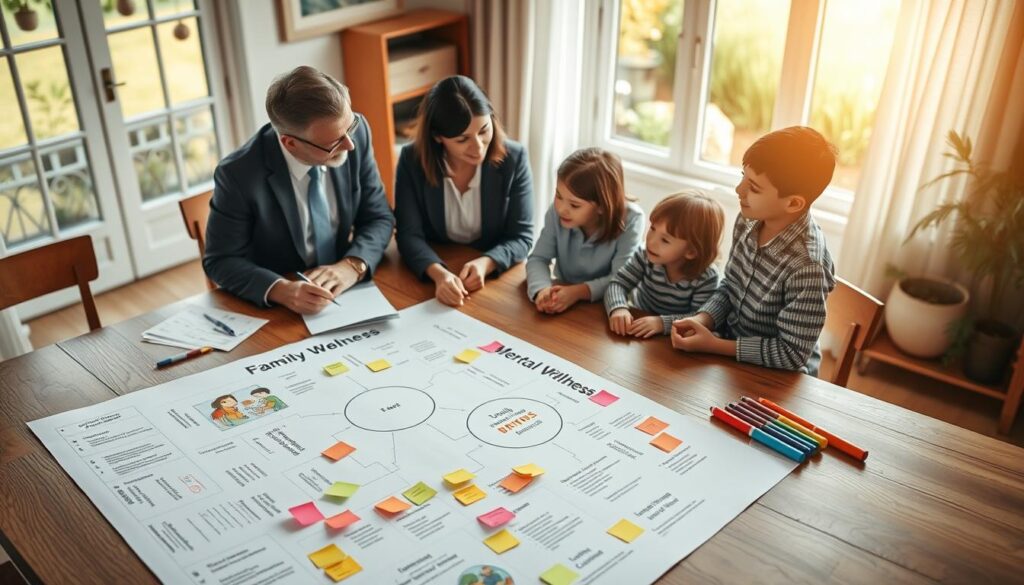
Clinical anchors like Hispanic Community Counseling Services (HCCS) focus on cultural understanding. They build trust by understanding familismo and community pressures. It’s counseling from within the community.
Proactive coaches, like SafeCare, visit families at home. They teach about home safety, child health, and positive parenting. It’s about creating a safer, more nurturing home environment.
Research-based programs, like “Our Family Our Future,” focus on family resilience. They empower families with communication tools and problem-solving skills. The goal is to strengthen the family’s dynamic, not just the individual.
What makes a program stick? It’s the mix of professional expertise and local relevance. The table below shows how different models work:
| Program Model | Core Approach | Key Strength | Ideal For |
|---|---|---|---|
| Culturally-Attuned Clinical (e.g., HCCS) | Professional therapy within a specific cultural framework. | Builds deep trust and addresses complex mental health needs with cultural competence. | Families seeking traditional counseling that honors their cultural identity. |
| Home-Based Coaching (e.g., SafeCare) | Skill-building in the home environment; proactive and educational. | Prevents crises by strengthening daily routines and parenting competencies. | Families who benefit from hands-on, practical guidance in their own space. |
| Designed Family Intervention (e.g., Our Family Our Future) | Research-based curriculum focusing on family-wide communication and resilience. | Shifts the entire family system, preventing issues like adolescent depression through unity. | Families looking to proactively improve dynamics and build long-term coping skills together. |
The best family tips are skills delivered through a trusted source. Programs like NAMI’s practical skill-building program are very effective. They offer structure and peer-led understanding.
A program’s success depends on who delivers it, where, and whether it speaks the family’s language. That’s the blueprint for lasting mental wellness and community resilience.
Group vs. Individual Support
Do we have to choose between talking to a therapist alone or joining a group? It’s not a choice at all. You need both to live fully. In mental wellness, thinking it’s one or the other is a trap. Individual support is like a precise tool. Group support is like a whole ecosystem.
Think of a therapist as a master mechanic for your mind. They help you untangle personal issues, find patterns, and rebuild your thinking. It’s focused, private, and very effective for specific problems. This is the work on yourself.
Now, think of your family, friends, or support group. This is your social world. It doesn’t fix deep trauma, but it gives you daily support. It’s the environment that keeps you from getting tangled up again.
Having one without the other is dangerous. A study in South Africa showed this. It looked at kids caring for parents with HIV. One child had to keep the secret alone.
This child carried the illness alone, a heavy burden. The individual weight was huge. But the real harm was to the community resilience. Keeping the secret made the child isolated and fearful.
The child’s strength was being lost because they had no group to share the load. The “support network” was just a name. This shows how keeping individual problems hidden can hurt the whole community’s ability to cope.
The wise advice is to have both. The individual work makes you stronger and more aware. The group work makes the community stronger. It’s like systems thinking for the heart.
| Aspect | Individual Support (Therapy/Counseling) | Group/Family Support |
|---|---|---|
| Primary Focus | Internal world, personal history, and specific diagnoses. | Interpersonal dynamics, shared experiences, and present-day functioning. |
| Core Strength | Deep, targeted healing of past trauma and entrenched patterns. | Providing validation, reducing isolation, and building practical coping skills through shared reality. |
| Key Mechanism | Professional guidance and confidential self-reflection. | Peer learning, mutual accountability, and collective problem-solving. |
| Role in Mental Wellness | Repairs and fortifies the individual node. | Strengthens the connective tissue and resilience of the entire network. |
Forget “either/or.” The best approach is “yes, and.” Get professional help for deep work. At the same time, build your community. For those building a family ecosystem, practical family tips can help. Your personal strength and your community’s health are not competing. They are in a constant, vital dance.
Encouraging Participation
Imagine a flyer for ‘Depression Awareness Week’ landing in a community where the concept of ‘depression’ doesn’t exist in the local language. This isn’t a hypothetical. In places like Khayelitsha, researchers found isiXhosa has no direct translation for the word. Severe emotional distress might be understood as ukuphathwa ngamandla—being overcome by a spirit—or linked to social transgression.
That flyer isn’t just useless. It’s alienating. It screams, “We don’t understand you.” This is the realpolitik of participation. You can architect the perfect program, but if it speaks a foreign language—literally and culturally—no one will come.
The barriers aren’t laziness or apathy. They’re invisible walls built from linguistic nuance, deep cultural interpretation, and the very real fear of a neighbor’s gossip. Building community resilience means first learning to see these walls.
Let’s break down the three major barriers and their counter-strategies. Think of it as a decoder ring for genuine engagement.
| Barrier (The Wall) | Why It’s Invisible | The Solution (The Door) |
|---|---|---|
| Linguistic Complexity | Planners assume clinical terms like “anxiety” or “depression” are universal. They aren’t. When a language frames distress as spiritual or social, medical brochures feel irrelevant. | Multilingual, metaphor-rich communication. Use stories, proverbs, and local idioms to describe emotional states. Train staff who “speak the local idiom” in both language and life experience. |
| Cultural Interpretation | Western mental health models focus on the individual mind. Many cultures view distress as a relational or spiritual imbalance. Calling it “clinical depression” can feel like a misdiagnosis of the soul. | Integrate, don’t invade. Frame mental wellness support as strengthening family bonds or community harmony. Partner with traditional healers or faith leaders to create blended, respectful pathways to care. |
| Stigma & Social Fear | It’s not just “feeling ashamed.” It’s the tangible fear of being labeled, ostracized, or seen as a risk to one’s family. Walking into a stark clinic can feel like announcing your problems to the world. | Leverage trusted local organizations. Use community centers, libraries, places of worship, or even popular local markets as entry points. Anonymity and normalcy are your allies. A conversation that starts about parenting stress is a gateway to broader mental wellness support. |
So, what does this mean for practical family tips? How do you translate this analysis into action?
First, scout the terrain. Don’t assume you know the entry points. Where do people already gather for support? Is it the barbershop, the community garden, the after-school program? That’s your beachhead.
Second, empower the native guides. Community health workers, peer supporters, and trusted local volunteers are your most powerful asset. They don’t just translate words; they translate context. They can reframe a panic attack as “the heart running too fast from worry” in a way that makes sense and invites help.
Third, design for side-door entries. Few people wake up and decide, “Today, I will address my trauma.” They seek help for the symptom: a child acting out, inability to sleep, constant family arguments. Offer workshops framed as “parenting resilience” or “managing household stress.” You’ll address clinical issues under a banner of practical family tips that carry less stigma.
The goal is to make seeking support feel like a natural, even wise, step within one’s own cultural and social landscape. It’s about weaving threads of mental wellness into the existing fabric of community life, not trying to stitch on a whole new, foreign garment.
When you meet people where they are—in their language, through their trusted networks, and within their frame of understanding—you don’t just fill seats in a program. You build genuine community resilience from the inside out. The participation follows naturally.
Embracing Mental Wellness in Your Daily Life
Living a life that prioritizes mental wellness is more than just a trend; it’s a necessity for a balanced and fulfilling existence. By integrating mental wellness into your daily routine, you can significantly enhance your overall well-being. Here are some practical tips to help you achieve this:
- Start with Mindfulness: Begin each day with a mindfulness practice. This could be as simple as taking a few minutes to breathe deeply and focus on the present moment. Mindfulness helps in reducing stress and improving mental clarity.
- Exercise Regularly: Physical activity is a powerful tool for mental wellness. Whether it’s a brisk walk, a yoga session, or a high-intensity workout, exercise releases endorphins that boost mood and energy levels.
- Connect with Nature: Spending time outdoors can have a profound impact on your mental health. Whether it’s a walk in the park, a hike in the mountains, or simply sitting in your backyard, nature offers a calming and restorative environment.
- Practice Gratitude: Reflect on the things you are thankful for each day. Keeping a gratitude journal can help shift your focus to the positive aspects of your life, fostering a more optimistic outlook.
- Engage in Creative Activities: Creativity is a powerful tool for mental wellness. Whether it’s painting, writing, or playing music, creative pursuits can provide a healthy outlet for emotions and stress.
By incorporating these activities into your daily life, you can cultivate a deeper sense of mental wellness. Remember, mental wellness is not a destination but a continuous journey that requires dedication and self-care.
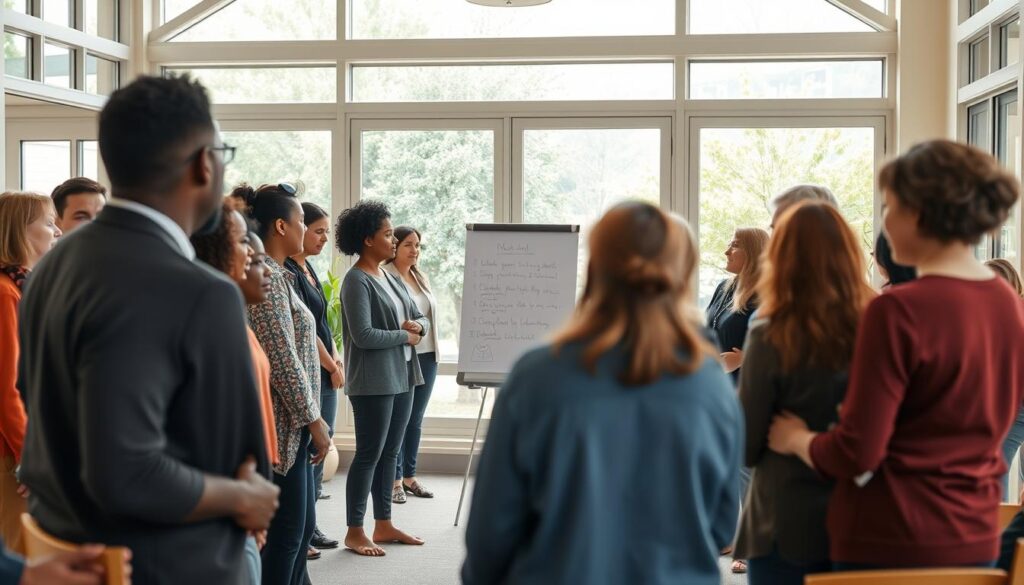
Embracing mental wellness is not just about individual efforts but also about building a supportive community. Here are some ways to foster community resilience:
- Join Support Groups: Connecting with others who share similar mental health challenges can provide a sense of belonging and understanding.
- Volunteer: Helping others through volunteering can give you a sense of purpose and fulfillment, which are essential for mental wellness.
- Participate in Local Events: Engaging in community events can help you feel connected and valued, which are key components of mental wellness.
By focusing on mental wellness and community resilience, you can create a more supportive and nurturing environment for everyone around you. Remember, mental wellness is a journey, and every step you take towards it is a step towards a healthier and happier life.
Embracing the Power of Community
Building a strong community is key to overcoming challenges. It’s about working together and supporting each other. This approach helps us grow stronger and more resilient.
When we come together, we can face any obstacle. We share our experiences and learn from each other. This way, we can find new solutions and support one another.
Being part of a community is vital for our mental health. It gives us a sense of belonging and connection. This feeling helps us feel less alone and more supported.
Here are some ways to build a strong community:
- Join local groups: Look for groups that share your interests. This way, you can meet like-minded people and build connections.
- Volunteer: Helping others is a great way to meet people and make a difference. You can volunteer at local charities or participate in community events.
- Host community events: Organize events like potluck dinners or neighborhood clean-ups. This helps bring people together and fosters a sense of community.
- Support local businesses: By shopping at local stores, you help the community thrive. This also strengthens your connection to the area.
Building a strong community is a journey. It takes time and effort. But the rewards are worth it. A supportive community can help us overcome challenges and improve our mental wellness.
Benefits of Community
Being part of a community offers many benefits:
- Support: You have people to turn to in times of need. They offer emotional support and help you through tough times.
- Connection: You feel connected to others. This reduces feelings of loneliness and isolation.
- Resources: Communities often have resources and services available. These can help you with various needs, from healthcare to education.
- Opportunities: Communities provide opportunities for personal growth. You can learn new skills, explore interests, and find new passions.
Building a strong community is essential for our well-being. It helps us overcome challenges and improves our mental health. By working together and supporting each other, we can create a resilient and supportive community.
Understanding the Importance of Community Resilience
Community resilience is a vital concept that helps communities bounce back from challenges. It’s about building a strong, supportive environment where everyone can thrive. This concept is key to fostering mental wellness and ensuring that communities can face and overcome adversity.
What is Community Resilience?
Community resilience refers to a community’s ability to withstand and recover from difficult situations. It involves the collective efforts of individuals, organizations, and local governments working together. This collaboration helps build a robust network that supports mental wellness and promotes overall community health.
Why is Community Resilience Important?
Community resilience is essential for several reasons. It helps communities adapt to changes, face challenges, and maintain stability. By fostering a supportive environment, communities can enhance mental wellness and ensure that everyone has access to resources and support when needed.
Building community resilience requires a multifaceted approach. It involves creating strong social connections, promoting mental wellness, and ensuring that resources are available for all community members. By focusing on community resilience, we can create a more robust and supportive environment for everyone.
Action Steps for Families
So, what do you do on Monday morning? Forget about making big promises. Start with a simple check-up. Look at your family’s strengths like checking your phone’s battery.
Do you have a strong social network? Know where to find help when you need it?
Host a “Family Summit.” It’s not a trial. It’s a time to talk without phones. Use it to care for yourselves and set routines.
These steps are key to improving mental health at home.
Then, reach out to your community. Find a library program or volunteer work. Building social connections is vital for community strength.
For ideas, check out the 25 small actions that can make a big difference.
Remember, asking for help is a sign of strength. It’s not about going it alone. It’s about working together as a family.