Transitioning from military service is more than just a career change. It’s like coming back from a different world. You move from a place of clear missions to civilian chaos.
The struggle starts inside. That military mindset doesn’t just fade away. Dr. Rhonda Higgins of LACDMH’s VMFS program notes that this makes it hard for veterans to ask for help.
Then, there’s the feeling of being alone. Your biggest experiences are hard for friends to understand. The sense of belonging you had is gone.
Generic advice doesn’t cut it. What’s needed are systems made for veterans. Recent studies on border veterans show how cultural and structural barriers add to the problem. The answer isn’t just a softer landing. It’s a complete overhaul of support systems.
Benefits of Peer Support
What if the missing piece in veteran mental health care wasn’t more meds or therapy? Maybe it’s just someone who speaks your language. Not English versus Pashto, but the language of military service.
Research from the LACDMH Veteran Mental Health First Aid program backs this up. It shows that “Veterans engage better with peers who understand their unique experiences.” This means trust is key to healing.
Imagine a clinician explaining PTSD to you, but a fellow veteran gets it. They throw you a lifeline when you’re drowning. This approach is more than words; it’s a lifeline.
This isn’t about replacing doctors. It’s about adding a powerful tool to help. A peer navigator in Veteran Support Groups knows your language. They can quickly help with VA issues, housing, and benefits.
This method is incredibly efficient. It cuts through red tape fast. Unlike traditional therapy, peer connection happens quickly.
Think of it like this: we ask veterans to switch from a tight-knit unit to solo therapy. It’s like asking an orchestra to play as soloists. Veteran Support Groups bring back that unit cohesion.
This approach fits perfectly with preventive health strategies. Peer support is about keeping mental health strong, not just fixing problems. It’s like regular car maintenance.
It also saves money in the long run. Early help through peer networks means less emergency care and lost work time. But the real value is in the lives saved, not just the money.
You can’t buy empathy or understanding. The connection with a fellow veteran who gets you is powerful. Veteran Support Groups offer more than comfort. They rebuild a sense of community that service can break.
Group Models & Where to Find Them
If you’re looking for a veteran support group, the first question isn’t ‘where,’ but ‘what for?’ The idea of a single model for everyone is unrealistic. Los Angeles has developed a system that matches specific needs with the right resources.
Think of it as a three-pronged approach: the strategic network, the embedded clinical unit, and the family sanctuary. Each operates on a different frequency. Your job is to tune in to the right one.
This is the command center. The LAVC isn’t a single group but a coalition of 13 dedicated working groups tackling specific fronts. It’s policy meets pragmatism. Need help navigating legal re-entry after service? There’s a task force for that. Exploring acupuncture for chronic pain? They’ve got a group on it.
The genius is in the specialization. A female veteran navigating the VA system connects with the Women Veterans working group. Someone facing homelessness engages with the Housing group. It’s a targeted, intelligence-driven model for systemic change and direct resource connection.
The Embedded Clinical Unit: Veterans Mental Health First Aid & Field Services (VMFS)
While the LAVC strategizes, VMFS operates in the trenches. This program integrates clinical support directly into the community fabric. It operates across all eight Service Planning Areas in LA County—no veteran is officially outside its operational radius.
This model provides in-house therapy, field-based services, and critical mental health first aid. It’s the embedded response, bringing clinical expertise to where veterans live, not waiting for them to find a clinic door.
The Family Sanctuary: The UCLA/VA Veteran Family Wellbeing Center (VFWC)
War’s stress fractures don’t stop at the service member. The VFWC understands that reintegration is a family system event. This is a dedicated hub focused on resilience for spouses, children, and parents.
Here, the support group model shifts to building family communication, managing caregiver stress, and helping children understand a parent’s service. It’s a safe space where the battle buddy is your spouse, and the mission is household stability.
Your Tactical Map: How to Find Them
So, you have the models. Here are your coordinates.
- For the Network (LAVC): Search for “Los Angeles Veterans Collaborative working groups.” Their website lists all 13 focus areas. Your entry point is often a general inquiry, which they then route to the specific expert group.
- For Clinical Support (VMFS): Inquire through the VA Greater Los Angeles Healthcare System. Ask for “VMFS” or “field-based mental health services” to connect with their community-embedded teams.
- For Family Focus (VFWC): Look up the “UCLA/VA Veteran Family Wellbeing Center.” They offer open houses, workshops, and direct family counseling. This is the go-to for relational dynamics post-deployment.
The old model asked veterans to fit themselves into a predefined box. LA’s new ecosystem builds the box around the veteran. Your mission, should you choose to accept it, is simply to identify which part of the machine you need to grease. The rest is a matter of following the map.
Understanding the Importance of Veteran Support Groups
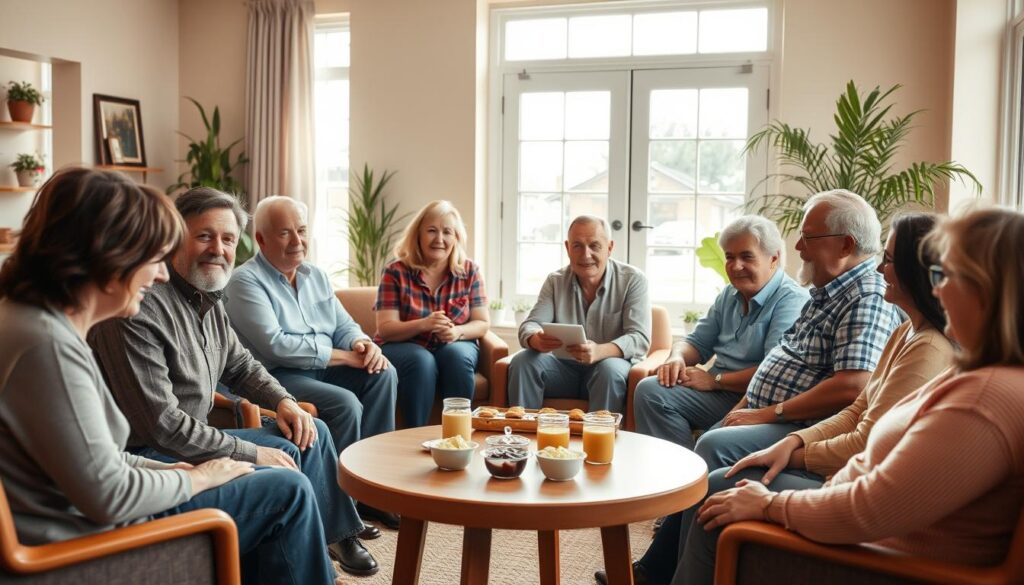
Veteran support groups play a vital role in helping military families cope with the challenges of PTSD. These groups provide a safe space for veterans to share their experiences and receive support from others who understand their struggles. By connecting with others who have gone through similar experiences, veterans can find comfort and healing.
Support groups offer a range of benefits for veterans and their families. They provide a sense of community and camaraderie, helping individuals feel less isolated and more connected. Sharing stories and experiences can help veterans process their emotions and gain new perspectives on their challenges.
One of the key advantages of veteran support groups is the opportunity to receive guidance and advice from peers who have successfully navigated similar situations. Veterans can learn valuable coping strategies and gain insights from others who have overcome their own struggles with PTSD.
Support groups also offer a safe space for veterans to express their feelings and emotions without fear of judgment. This environment of understanding and acceptance allows individuals to open up and share their experiences, fostering a sense of healing and growth.
By participating in veteran support groups, military families can find the support and resources they need to navigate the challenges of PTSD. These groups provide a sense of community, understanding, and connection, helping individuals find strength and resilience in the face of adversity.
Benefits of Veteran Support Groups
Support groups offer numerous benefits for veterans and their families. Some of the key advantages include:
- Connection with others who understand their experiences
- Opportunity to share stories and receive support
- Guidance and advice from peers who have successfully navigated similar situations
- A safe space to express feelings and emotions without fear of judgment
- Access to resources and information to help navigate challenges
By participating in veteran support groups, individuals can find comfort, healing, and a sense of community. These groups provide a safe space for veterans to connect with others who understand their experiences, fostering a sense of belonging and support.
Activities Tailored for Veterans
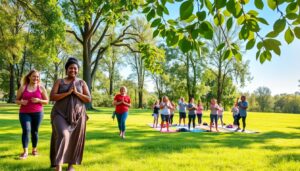
Forget the therapist’s couch—some of the most profound healing happens with dirt under your boots and sky overhead. The civilian world markets “self-care” as bubble baths and scented candles. For veterans, true wellness often requires a mission, a unit, and tangible progress.
Enter the concept championed by groups like the LAVC’s Recreation Working Group. This isn’t about planning company picnics. It’s a strategic exploration of how purpose-driven recreation rebuilds what trauma and transition often strip away. We’re talking about agency, camaraderie, and present-moment awareness.
Think of it as somatic therapy with a side of adrenaline. The body keeps the score, as they say. So why not let it heal through motion? A structured Veteran Support Group that incorporates activity provides a mission without the pressure of a deployment. It offers a unit without the rigid chain of command.
This creates a low-stakes laboratory for rebuilding trust and competence. Casting a fly line becomes a lesson in mindfulness and patience. The rhythmic focus required is a direct counter to hypervigilance.
Team sports, from basketball to rock climbing, re-establish that critical unit cohesion. The shared objective, the nonverbal communication, the earned trust—it’s muscle memory for the psyche. You’re not just passing a ball; you’re relearning how to rely on someone.
Then there’s the creative arts. Woodworking, painting, or writing offers nonverbal processing. It allows emotions too complex for words to find form in grain, color, or metaphor. The workshop becomes a sanctuary for expression without interrogation.
This is the core of the holistic protocol. These activities aren’t distractions from the work. They are the work. They facilitate a critical narrative shift: from a story of illness and deficit to one of capability and adaptation.
Every hike completed, every fish landed, every project finished is evidence. It’s proof of competence written in the language of action. The right Veteran Support Group understands this intrinsically. It provides the framework for veterans to author their own recovery, one adapted activity at a time.
The goal isn’t to forget service. It’s to integrate its strengths—discipline, resilience, teamwork—into a new chapter. Recreation becomes the bridge. It turns the page from what was lost to what can be built, with hands engaged and eyes on the horizon.
Overcoming Stigma
In the military, your mind is like standard equipment. Reporting mental issues feels like reporting a defect in yourself. This hesitation isn’t a weakness. It’s a result of strict protocols.
Studies, like those from the LACDMH Veteran and Military Families Services, show that fear of being seen as weak is a big barrier. This fear stops many from seeking help.
Breaking through this barrier is key. But it can’t be done by shouting. It requires a more subtle approach.
Veteran Support Groups are a game-changer. They operate on a level that doesn’t trigger the usual alarms. They use a peer-to-peer connection, not the usual command structure.
Stigma acts as a defense mechanism. It tries to keep the unit strong, even after service ends. The idea that seeking help is weak is its main defense.
Peer support groups don’t attack this stigma head-on. They build trust and understanding. They talk about real-life problems, not just therapy.
The therapy is woven into the fabric of that trust.
This approach changes everything. Seeing a fellow veteran thrive is more powerful than any pamphlet. When a battle buddy says a group helped them, it carries a lot of weight.
So, overcoming stigma isn’t about veterans becoming less stubborn. It’s about the system getting smarter. It’s about finding a way to mental health that feels like a solution, not a defeat. This path is built by veterans, one trusted connection at a time.
Trauma & Transition Resources
Trauma is not just a bad memory. It’s like a virus that changes how you see the world. Transition is not a short break. It’s a big change with no help or welcome.
Dealing with trauma and transition needs a special plan. It’s like fighting on many fronts at once.
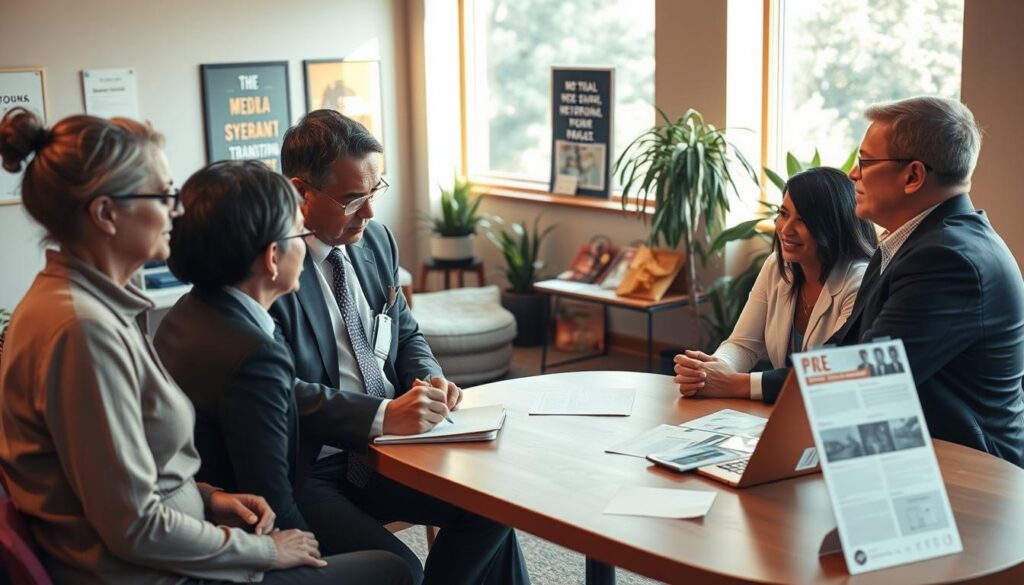
Think of it as building a collection of resources, not just one solution. On the clinical side, groups are making therapy for trauma better. They use things like EMDR (Eye Movement Desensitization and Reprocessing) therapy to help memories lose their scary power.
But there’s more. The Acupuncture and Alternative Medicine group is also making big changes. They’re treating the body’s memory of trauma, not just the mind’s.
Your body doesn’t get therapy terms. It only knows to fight, flee, or freeze. Tools like acupuncture and yoga talk to it in its own language. They help reset a body stuck in a state of alert.
Wraparound care is key here. The best Veteran Support Groups offer many kinds of help. They mix clinical, alternative, and practical support. Without all three, the support system is unstable.
Let’s not forget military families. They feel trauma’s effects too. Places like the Veterans Family Wellness Center help families learn to handle emotions together. This way, they can face PTSD together.
Teaching families how to handle tough moments helps them heal. They learn to spot triggers and calm down situations. This is not just helping; it’s building a strong support system at home.
The landscape for dealing with trauma and transition includes:
- Clinical interventions: EMDR, Cognitive Processing Therapy, prolonged exposure therapy
- Somatic tools: acupuncture, trauma-informed yoga, meditation protocols
- Family systems training: communication strategies, boundary setting, collective resilience building
- Transition scaffolding: career counseling, identity exploration groups, community integration programs
This approach is new because it accepts that life after military service is not clear-cut. It’s about building a life that works, not just fixing what’s broken. It’s like designing a new building.
The best Veteran Support Groups are now more than just groups. They’re places where people can learn, get help, and grow. They mix science with ancient wisdom and real-life skills.
This approach does more than treat PTSD. It helps people and their military families move forward. They start to design a future they can look forward to.
The mission is not to go back to who you were. It’s about becoming someone new and exciting.
Online Meetings
Driving across town to share struggles in a church basement can feel daunting. For veterans, showing up is often hard due to logistics or a busy schedule. It’s not about not wanting to help; it’s about the challenges of getting there.
The digital world has changed this. Online Veteran Support Groups make it easier to connect. They break down the barriers of distance. It’s like having a mobile team meet you where you are, on your screen.
Imagine a veteran in a remote area or a single parent with no time for meetings. For them, online meetings are a lifeline. They offer a way to connect without leaving their home.
Leaders like Tom Babayan at the VFWC saw this need. They made online support a key part of helping families. Now, veterans anywhere can get help from groups across the country.
Online meetings also offer anonymity. Starting to connect is scary. But online, you can control how much you share. It makes it easier for those who need it most to take that first step.
So, are online meetings the same as in-person ones? No, they’re different tools for different needs. The goal of connecting and supporting each other remains the same. But now, more people can reach out.
| Aspect | In-Person Groups | Online/Virtual Groups |
|---|---|---|
| Geographic Reach | Localized; limited to commuting distance. | National or global; connects anyone with an internet connection. |
| Accessibility | Barriers for those with mobility issues, transportation challenges, or remote locations. | High accessibility; ideal for rural areas, those with disabilities, or punishing schedules. |
| Anonymity & Comfort | Lower; requires physical presence and immediate social interaction. | Higher; allows participation from a safe, personal space, easing initial anxiety. |
| Logistics | Requires a physical venue, travel time, and fixed scheduling. | Eliminates travel; often more flexible scheduling options are possible. |
| Specialization | Dependent on local expertise and critical mass of participants. | Easier to find niche groups for specific experiences (e.g., certain MOS, trauma type). |
Studies show online services are here to stay. They’re a key part of helping veterans. With online support, top-notch peer support is just a click away.
The best Veteran Support Groups are those veterans actually join. By going online, we make it easier for them to get help. It’s a big step towards healing.
Connecting to VA Services
Peer support in the veteran community is more than just sharing stories. It’s about finding the hidden paths in a complex system. Navigating the VA can feel like trying to solve a puzzle without the right clues. The forms, the jargon, and the rules can be overwhelming.
A strong Veteran Support Group or a skilled peer navigator can be a game-changer. They act as guides, helping you understand the VA system. They make it easier to access the services you need.
They help turn personal struggles into clear benefits claims. They might go with you to tough appointments, providing support. They also fight for you within the system, helping you avoid the usual frustrations.
Some programs have created shortcuts to help veterans. For example, the Veterans Mental Health Foundation Services (VMFS) has a hotline: 1-800-854-7771, press *3. This hotline is a direct way to get help with benefits and mental health, avoiding the usual delays.
This approach builds a bridge between veterans’ needs and the VA’s resources. The bridge is made of real-life experience and knowledge of the system. It connects the two sides effectively.
Having a guide can make a huge difference. It turns a big, scary institution into a helpful tool. Veteran Support Groups and peer advocates give you the keys to unlock the VA’s services. They make sure the system works for you, not against you.
Community Events and Partnerships
Healing is a solo mission until the community shows up for the parade. A Veteran Support Groups meeting mends the mind. But true reintegration happens when the city itself becomes part of the support system.
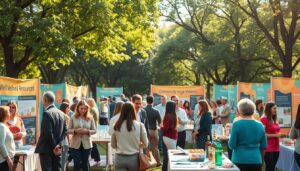
The Los Angeles Veterans Collaborative is a great example. Their monthly meetings are like a strategic command center. Policy gets shaped and resources get aligned. This is where the abstract concept of “community” gets a working group and a to-do list.
A hiring fair from the Career Advancement team and a legal clinic from the Legal & Re-Entry group are tangible results. They show veterans and their military families that their value extends far beyond their service number.
This work of building a supportive ecosystem is a massive undertaking. Organizations like the Wounded Warrior Project act as vital conveners. They fund and align efforts to tackle issues from PTSD to financial wellness. They know lasting change requires a network, not just a program.
The ultimate goal is to move support from the clinic to the commons. The transition home shouldn’t be a burden for the veteran to manage alone. It’s a process the entire community can help facilitate.