Let’s face it – that 5 PM “what’s for dinner” panic is a common struggle. But, there’s a way to break free from this daily cycle.
Planning ahead brings order to our lives. It means fewer trips to the grocery store and saving money. It’s a smart move that combines financial savvy with practicality.
Think about the mental health perks too. Avoiding daily dinner decisions can be a huge relief. Plus, cooking at home is healthier than fast food. It’s like choosing a fine art museum over a quick stop at a roadside stand.
By adopting meal planning, you gain more than just a meal plan. You save time, money, and reduce stress. The benefits are real and can make your life better every day.
Grocery List Templates
Let’s face it, your current grocery list might look like a Pollock painting. Standing in the cereal aisle, trying to decipher a crumpled receipt, is frustrating. It’s hard to tell if you need organic or lactose-free milk.
The key isn’t a fancy app. It’s about using templates that fit your life. Think of it as planning your fridge’s layout.
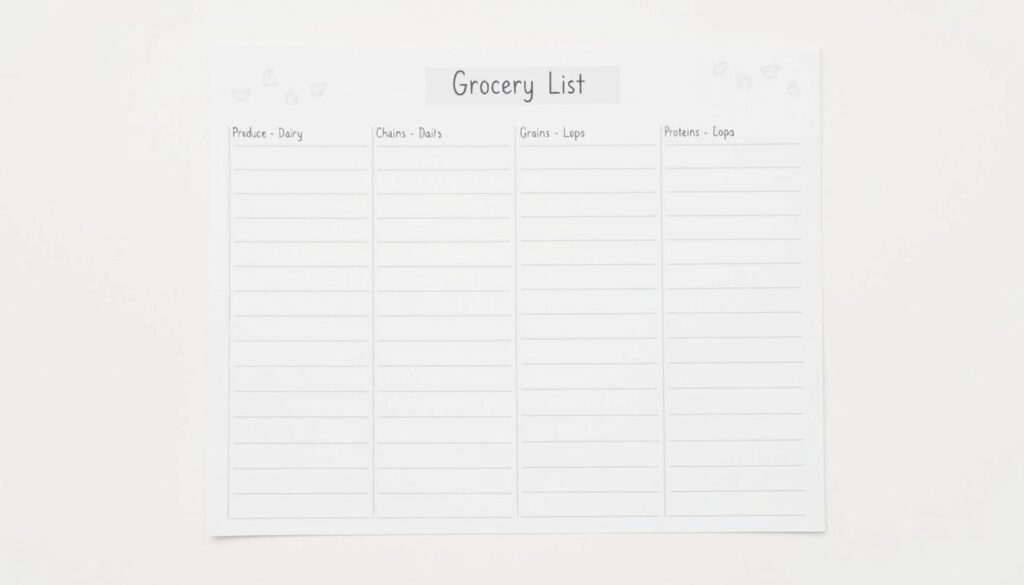
Begin with a “reality check.” Before shopping, look at your weekly schedule. If you have soccer practice on Tuesday, you’ll need quick meals. Work late on Thursday? Leftovers or instant pot meals are your best bet.
Then, do a pantry check. We all have old cans hiding in the back. A good template has columns for what you already have and what you need to buy. This can save you money and help you avoid buying unnecessary items.
For flexibility, include “swaptional” ingredients in your template. If salmon is out of stock, use canned tuna. No fresh basil? Use dried basil from 2019. A good template allows for these swaps.
Supporting local markets is smart, not just virtuous. Fresh ingredients lead to better meals. Your grocery list templates should also include space for seasonal, local finds.
The best templates aren’t perfect. They’re flexible and help you plan better meals. It’s the difference between a list that works for you and one that makes you work for it.
Sample Weekly Menus
Most weekly menus seem like they were made by someone who’s busy. They should be like a jazz band – structured but flexible. This way, they can adapt to life’s surprises.
Swaptional ingredients are great because they’re flexible. They can change based on what you have. Using ground turkey instead of beef or cabbage instead of lettuce is smart, not a compromise.
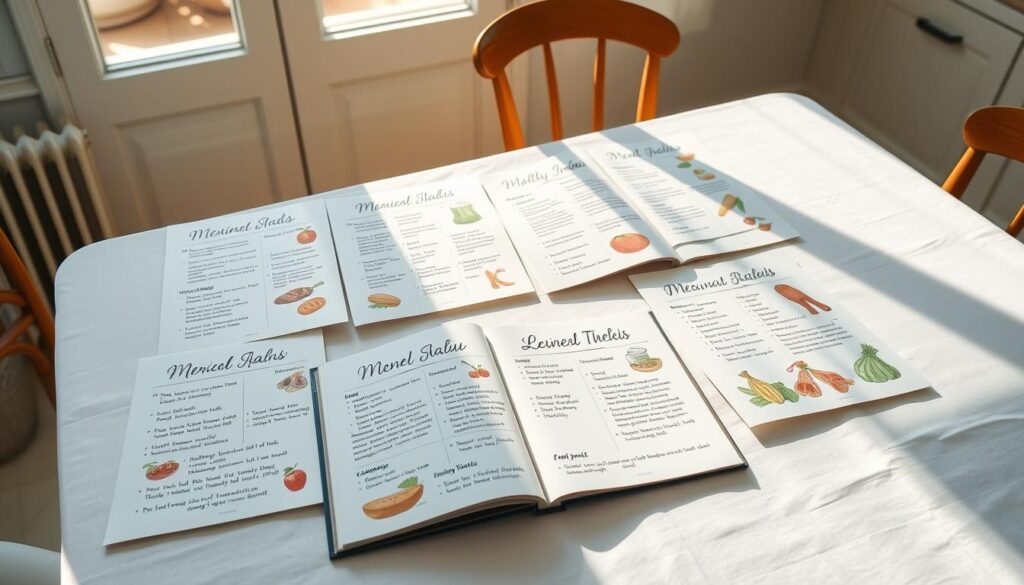
- Monday: One-pan lemon herb chicken with whatever vegetables need rescuing from the fridge
- Tuesday: Make-ahead quinoa bowls that actually taste good after 48 hours
- Wednesday: 30-minute stir fry that uses whatever protein is threatening to expire
- Thursday: Sheet pan fajitas because everyone builds their own (and you wash one pan)
- Friday: Breakfast-for-dinner omelets that use the week’s remaining ingredients
The real skill in sample weekly menus is in finding a balance. Some days you’ll want to try something new. Other days, just using frozen veggies will be a win.
For those who like a plan, this two-week menu plan is a good start. It lets you add your own twist while keeping things simple.
Quick meals don’t have to be bad for you. The idea of cooking in 30 minutes isn’t about rushing. It’s about making things easier without sacrificing taste.
Think of your weekly menu as a guide, not a rule. It can change with the week’s events. The key is to stay flexible and enjoy the ride.
Quick, Nutritious Recipes
Let’s debunk the myth that “quick” means sacrificing flavor or nutrition. The magic lies in recipes that deliver great taste with little effort.
Sheet Pan Chicken Fajitas are a perfect example. They turn a complex dish into a 30-minute wonder. Chicken, peppers, onions, and spices all cook together on one pan. Cleaning up is as easy as making it.
Burrito bowls are culinary genius in a bowl. They’re about creative assembly, not strict recipes. Think of them as edible mosaics where leftovers become intentional cuisine. They’re great for healthy meal prep ideas that you’ll actually eat.
Veggie-Packed Beef Stir-Fry uses what you have. It’s a 20-minute dish that takes whatever veggies you have. The ingredients change, but the method stays the same.
Garlic Herb Salmon with Roasted Veggies shows elegance can be easy. The salmon and veggies cook together, making a meal that feels fancy. The herb crust adds class without adding complexity.
Chicken and Vegetable Soup is more than comfort food. It’s about using ingredients wisely. This soup turns food waste into nourishing meals that freeze well for busy nights.
These healthy recipes respect your time and deliver great nutrition. They’re flexible frameworks, not strict formulas. They let you improvise with what you have.
| Recipe | Prep Time | Key Nutritional Benefits | Flexibility Score |
|---|---|---|---|
| Sheet Pan Chicken Fajitas | 10 minutes | High protein, fiber-rich vegetables | 9/10 |
| Veggie-Packed Beef Stir-Fry | 15 minutes | Iron, vitamin C, lean protein | 10/10 |
| Garlic Herb Salmon | 8 minutes | Omega-3s, antioxidants | 7/10 |
| Chicken Vegetable Soup | 12 minutes | Hydration, immune support | 10/10 |
The beauty of these healthy recipes is their smart design. They make healthy eating easy and sustainable. They turn weeknight cooking into a fun, creative activity.
Involving Kids in Cooking
Inviting kids into the kitchen can be like trying to conduct an orchestra with musicians who don’t know their instruments. It’s a mix of chaos and the chance for beautiful music. But, it might be the best skill we can teach them.
Start by letting kids help plan meals. This turns them from just eating to being part of the process. Suddenly, Tuesday’s dinner isn’t a mystery, but a project they helped plan.
Post the meal plan for everyone to see. This makes things clear and builds excitement. Kids start to see cooking as a fun, creative activity. They’ll get excited about Thursday’s tacos, just like they would for a trip to Disneyland.
Give kids tasks that fit their age. Toddlers can wash veggies with great care. Kids can measure ingredients like scientists. Teenagers can chop veggies and talk about food systems.
Here’s how to set up your kitchen democracy:
- Preschoolers: Washing produce, tearing lettuce, stirring batter
- Elementary age: Measuring ingredients, setting timers, simple mixing
- Tweens and teens: Knife skills (with supervision), following recipes, managing oven temperatures
This isn’t just about getting help. It’s about teaching them about food and cooking. Kids who cook grow up to understand nutrition and can cook for themselves.
The kitchen is a place to learn life skills. Kids learn math, chemistry, and patience. They might even eat the veggies they helped prepare.
Yes, it will be messy and take longer. But seeing a child proudly serve a dish they helped make is priceless. The kitchen becomes a place to grow competent, confident kids.
Overcoming Obstacles
Meal planning can feel like learning a new language. It takes practice. The initial time investment pays off. Think of it as a long-term time savings plan.
Budget concerns? Compare the cost of a fast food run with home cooking. That $25 could make three meals. Strategic shopping stretches your dollar.
Food waste becomes manageable with planning. Leftovers are not failures. They are ingredients for future meals. Yesterday’s roasted vegetables become today’s frittata.
Perfection is not the goal. Progress is. Reducing decision fatigue one meal at a time makes life easier. Start small and build from there.