Emotional Health and Well-being
Emotional health is a vital aspect of overall well-being. It encompasses our mental state, emotional stability, and ability to cope with life’s challenges. By prioritizing emotional health, we can enhance our overall well-being and lead a more fulfilling life.
One key aspect of emotional health is self-awareness. Understanding our emotions, values, and strengths helps us make informed decisions and navigate life’s ups and downs with confidence. Self-awareness allows us to recognize our emotional triggers, develop healthy coping mechanisms, and cultivate positive relationships.
Another important aspect of emotional health is emotional regulation. It involves managing our emotions in a healthy and constructive way. By practicing emotional regulation, we can reduce stress, improve our mood, and enhance our overall well-being.
Building resilience is also essential for emotional health. Resilience refers to our ability to bounce back from adversity and adapt to change. By developing resilience, we can navigate life’s challenges with strength and resilience, even in the face of setbacks or difficult circumstances.
Seeking support is another vital aspect of emotional health. Surrounding ourselves with positive relationships and seeking professional help when needed can provide us with the support and guidance we need to navigate life’s challenges. By building a strong support network, we can foster emotional well-being and enhance our overall well-being.
By prioritizing emotional health and well-being, we can improve our mental state, emotional stability, and ability to cope with life’s challenges. By practicing self-awareness, emotional regulation, building resilience, and seeking support, we can enhance our overall well-being and lead a more fulfilling life.
Benefits of Emotional Health and Well-being
Emotional health and well-being have numerous benefits for our overall well-being. By prioritizing emotional health, we can:
- Improve our mental state and emotional stability
- Enhance our ability to cope with life’s challenges
- Reduce stress and improve our mood
- Build resilience and navigate life’s challenges with strength
- Improve our relationships and foster positive connections
- Lead a more fulfilling and meaningful life
By prioritizing emotional health and well-being, we can enhance our overall well-being and improve our quality of life.
Designing Group-Based Activities
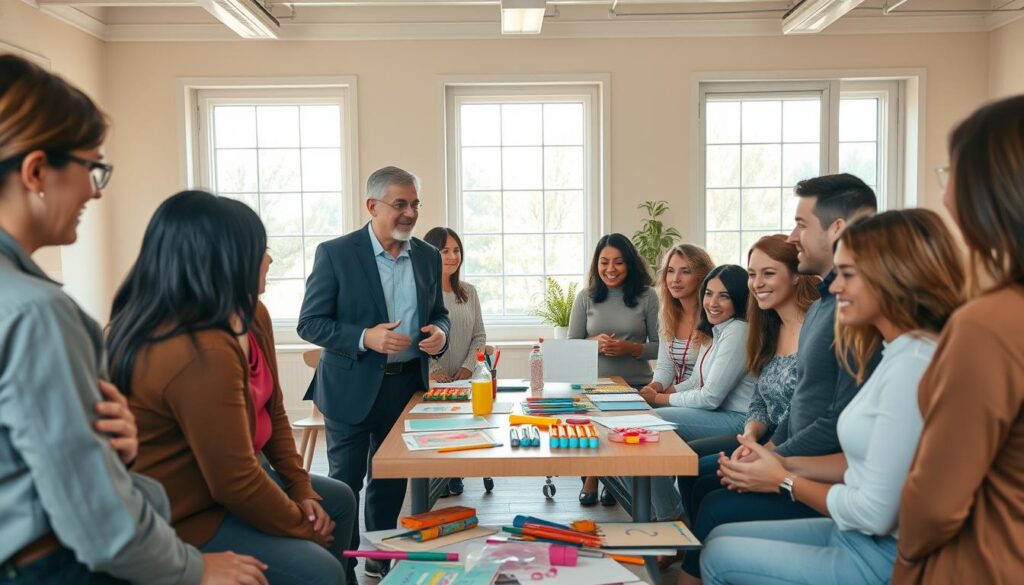
Designing group therapy is not like hosting a book club. A book club has wine and polite disagreement. But, therapeutic group activities are about creating a shared purpose. You’re not just discussing a book; you’re helping people grow.
The first step is to know your purpose. Is it for tackling social anxiety or processing grief? It’s not a one-size-fits-all activity. Your goal sets the direction.
Understanding the needs of your group is key. It answers important questions:
- Is the group open or closed to new members?
- What specific conditions or goals are being treated?
- What are the member demographics and interpersonal histories?
This phase is like casting a play. You need to know the characters before writing the story. Without this, you might end up with chaos instead of a supportive community.
Deciding if the group is open or closed sets the stage. Closed groups build deep trust. Open groups offer flexibility but need strong rituals. Choose carefully.
Many beginners skip the pre-group orientation. This is your chance to set the stage and establish rules. It’s where you turn individuals into a united group.
When you move from theory to practice, you need a variety of tools. Activities must fit each client’s unique path to wellness. Generic icebreakers won’t work.
Here’s a look at different ways to design activities:
| Traditional Approach | Engineered Approach | Outcome Focus |
|---|---|---|
| One-off exercises | Sequential skill-building | Superficial vs. integrated learning |
| Leader-centered direction | Member-facilitated discovery | Dependence vs. empowerment |
| Generic topics | Needs-assessed themes | Relevance vs. disconnection |
The best group activities create a safe space for sharing. They make personal stories universal. This balance is not easy to achieve.
Your design should ask: Does this activity build trust? Does it teach a skill? Does it connect people? If not, start over.
For ideas, check out established group therapy activities. Remember, borrowing is good, but copying without adapting is a mistake.
Designing effective group activities requires careful planning. Every moment should serve the group’s purpose. When done right, the group becomes a powerful tool for change.
FAQ
Q: What is the importance of family wellness?
A: Family wellness is vital for the overall health and happiness of family members. It involves creating a supportive environment where everyone can thrive. By prioritizing family wellness, you can foster a sense of unity and well-being within your household.
Q: How can I create a supportive environment for my family?
A: To create a supportive environment, establish open communication, set boundaries, and encourage emotional expression. Create a safe space where family members feel heard and understood. Encourage empathy and understanding among family members to strengthen your bond.
Q: What are some ways to promote emotional well-being in my family?
A: To promote emotional well-being, prioritize self-care, practice mindfulness, and engage in activities that bring joy and relaxation. Encourage family members to express their emotions and support each other during challenging times. Create a positive and nurturing environment that fosters emotional well-being.
Q: How can I foster a sense of unity and well-being within my family?
A: To foster unity and well-being, engage in activities that promote bonding, such as shared hobbies or family traditions. Encourage gratitude and appreciation within your family by expressing thanks for each other and the blessings in your lives. Create opportunities for quality time and meaningful interactions to strengthen your family bond.
Q: What are some strategies for maintaining a healthy work-life balance?
A: To maintain a healthy work-life balance, establish clear boundaries between work and personal life. Prioritize family time and create dedicated space for relaxation and rejuvenation. Practice self-care and delegate tasks when possible to reduce stress and increase productivity.
Q: How can I promote physical well-being in my family?
A: To promote physical well-being, encourage regular exercise, healthy eating habits, and adequate sleep. Create opportunities for physical activity, such as family sports or outdoor activities. Encourage healthy habits and provide support for each other’s fitness goals.
Q: What are some ways to support mental health within my family?
A: To support mental health, create a safe and non-judgmental space for open conversations about mental well-being. Encourage seeking professional help when needed and provide resources for mental health support. Foster a culture of acceptance and understanding to promote mental well-being within your family.
Q: How can I foster a sense of gratitude and appreciation within my family?
A: To foster gratitude and appreciation, practice gratitude rituals, such as sharing three things you are thankful for each day. Encourage family members to express their gratitude and create opportunities for expressing appreciation for one another. Cultivate a positive and thankful mindset within your family.
Q: How can I create a positive and nurturing environment for my family?
A: To create a positive and nurturing environment, prioritize kindness, empathy, and understanding. Create a safe and loving space where family members feel valued and supported. Encourage positive interactions and create opportunities for growth and learning within your family.
Q: How can I prioritize family wellness?
A: To prioritize family wellness, make it a priority in your daily life. Create a dedicated space for wellness activities, such as yoga or meditation. Schedule regular family wellness activities and make them a part of your routine. Prioritize self-care and encourage family members to do the same.
Q: How can I create a supportive environment for my family?
A: To create a supportive environment, establish open communication, set boundaries, and encourage emotional expression. Create a safe space where family members feel heard and understood. Encourage empathy and understanding among family members to strengthen your bond.
Q: How can I promote emotional well-being in my family?
A: To promote emotional well-being, prioritize self-care, practice mindfulness, and engage in activities that bring joy and relaxation. Encourage family members to express their emotions and support each other during challenging times. Create a positive and nurturing environment that fosters emotional well-being.
Q: How can I foster a sense of unity and well-being within my family?
A: To foster unity and well-being, engage in activities that promote bonding, such as shared hobbies or family traditions. Encourage gratitude and appreciation within your family by expressing thanks for each other and the blessings in your lives. Create opportunities for quality time and meaningful interactions to strengthen your family bond.
Q: What are some strategies for maintaining a healthy work-life balance?
A: To maintain a healthy work-life balance, establish clear boundaries between work and personal life. Prioritize family time and create dedicated space for relaxation and rejuvenation. Practice self-care and delegate tasks when possible to reduce stress and increase productivity.
Q: How can I promote physical well-being in my family?
A: To promote physical well-being, encourage regular exercise, healthy eating habits, and adequate sleep. Create opportunities for physical activity, such as family sports or outdoor activities. Encourage healthy habits and provide support for each other’s fitness goals.
Q: What are some ways to support mental health within my family?
A: To support mental health, create a safe and non-judgmental space for open conversations about mental well-being. Encourage seeking professional help when needed and provide resources for mental health support. Foster a culture of acceptance and understanding to promote mental well-being within your family.
Q: How can I foster a sense of gratitude and appreciation within my family?
A: To foster gratitude and appreciation, practice gratitude rituals, such as sharing three things you are thankful for each day. Encourage family members to express their gratitude and create opportunities for expressing appreciation for one another. Cultivate a positive and thankful mindset within your family.
Q: How can I create a positive and nurturing environment for my family?
A: To create a positive and nurturing environment, prioritize kindness, empathy, and understanding. Create a safe and loving space where family members feel valued and supported. Encourage positive interactions and create opportunities for growth and learning within your family.
Q: How can I prioritize family wellness?
A: To prioritize family wellness, make it a priority in your daily life. Create a dedicated space for wellness activities, such as yoga or meditation. Schedule regular family wellness activities and make them a part of your routine. Prioritize self-care and encourage family members to do the same.
Understanding the Connection Between Emotional Health and Physical Health
Did you know that your emotional health can have a significant impact on your physical health? Research has shown that there is a strong connection between the two, and neglecting your emotional well-being can have serious consequences for your overall health.
When you experience stress, anxiety, or other emotional challenges, your body responds by releasing stress hormones such as cortisol and adrenaline. These hormones can have a negative impact on your immune system, increasing your susceptibility to illnesses and infections.
But that’s not all. Chronic stress and emotional distress can also lead to physical symptoms such as headaches, muscle tension, and digestive problems. It can even affect your sleep patterns, leading to fatigue and decreased energy levels.
So, how can you prioritize your emotional health and improve your physical well-being? Here are some strategies to help you achieve a healthier balance:
1. Practice Mindfulness
Mindfulness is the practice of being present in the moment and fully engaging with your thoughts and emotions. By focusing on the present, you can reduce stress and anxiety, promoting a sense of calm and well-being.
2. Engage in Regular Exercise
Exercise is not only beneficial for your physical health but also for your emotional well-being. Physical activity releases endorphins, which are natural mood-boosters that can help alleviate symptoms of depression and anxiety.
3. Seek Social Support
Surrounding yourself with supportive friends, family, or a therapist can provide emotional comfort and help you navigate through challenging times. Social connections play a vital role in maintaining emotional well-being.
4. Prioritize Sleep
Getting enough sleep is essential for both your physical and emotional health. Lack of sleep can lead to increased stress levels, decreased mood, and a weakened immune system. Aim for 7-8 hours of sleep each night to support your overall well-being.
5. Practice Self-Care
Self-care is about taking care of yourself and doing things that nourish your mind, body, and soul. Engage in activities that bring you joy, whether it’s reading, taking a relaxing bath, or practicing yoga. Prioritize self-care to enhance your emotional health.
By prioritizing your emotional health and implementing these strategies, you can improve your physical well-being and overall quality of life. Remember, taking care of your emotional health is just as important as taking care of your physical health.
FAQ
Q: What are some fun group activities for kids?
A: Fun group activities for kids include scavenger hunts, arts and crafts, and outdoor games. These activities help kids bond and have fun together.
Q: How can I plan a fun group activity for kids?
A: To plan a fun group activity for kids, consider their interests and age range. Choose activities that are engaging and safe for all participants. Make sure to provide clear instructions and ensure everyone has a chance to participate.
Q: What are some creative group activities for kids?
A: Creative group activities for kids include arts and crafts, storytelling, and role-playing. These activities encourage imagination and creativity while promoting teamwork and collaboration.
Q: What are some outdoor group activities for kids?
A: Outdoor group activities for kids include sports, nature walks, and scavenger hunts. These activities promote physical activity, exploration, and teamwork.
Q: What are some educational group activities for kids?
A: Educational group activities for kids include science experiments, history lessons, and language classes. These activities promote learning and exploration while fostering teamwork and collaboration.
Q: What are some group activities for kids’ birthday parties?
A: Group activities for kids’ birthday parties include games, crafts, and outdoor adventures. These activities create memorable experiences and help kids celebrate their special day.
Q: What are some group activities for kids’ summer camps?
A: Group activities for kids’ summer camps include outdoor adventures, arts and crafts, and sports. These activities promote learning, exploration, and teamwork while providing a fun and engaging experience for kids.
Q: What are some group activities for kids’ field trips?
A: Group activities for kids’ field trips include educational tours, interactive exhibits, and hands-on experiences. These activities promote learning and exploration while providing a fun and engaging experience for kids.
Q: What are some group activities for kids’ community events?
A: Group activities for kids’ community events include volunteer work, cultural celebrations, and neighborhood gatherings. These activities promote teamwork, community spirit, and social responsibility.
Q: What are some group activities for kids’ school events?
A: Group activities for kids’ school events include talent shows, class competitions, and educational workshops. These activities promote teamwork, creativity, and learning while fostering a sense of community and school spirit.
Using Art, Music, & Movement
Sometimes, we feel too much and can’t find the right words. Language can’t always capture our true feelings. To find the truth, we need to go straight to our emotions.
Art, music, and movement are like emotional translators. A collaborative art project shows our family’s true dynamics. It reveals who stands out and who supports others, without words.
In a Music Sharing Circle, music speaks louder than words. A song can tell more about a teenager’s feelings than any words. It’s a raw, honest message.
Movement, like mindful yoga, teaches us that feelings are physical. Anxiety isn’t just a thought; it’s how our body feels. A body mapping exercise lets us see where we feel emotions in our body.
These activities offer a common language. A group mandala creation or expressive art storytelling lets everyone share their story. It’s about the journey, not the end result. The scribbles, rhythms, and stretches are all part of our shared story about family wellness.
| Creative Modality | Core Activity | Emotional Target | Ideal For Families Because… |
|---|---|---|---|
| Art & Sensory Play | Group Mandala, Collaborative Mural, Body Mapping, Sensory Games | Non-verbal expression, identifying physical stress, building shared focus | It removes the pressure to be “good.” The focus is on the shared action, not artistic critique. |
| Music & Sound | Music Sharing Circle, Rhythm Creation, Playlist Curation | Cultural connection, mood articulation, creating shared auditory space | Music is a powerful, passive connector. A shared playlist becomes a family’s unofficial soundtrack. |
| Movement & Body | Mindful Yoga, Stretching Circles, Expressive Dance, Guided Relaxation | Somatic awareness, releasing physical tension, grounding | It equalizes. Everyone has a body; everyone can participate at their own level, together. |
Combining these activities creates magic. A session might start with a game, then move to drawing, and end with stretching. This mix, as seen in creative therapies, offers a powerful way to express emotions.
So, let’s stop talking and start creating. Grab a crayon, play a song, or breathe together. We might find the conversation we’ve been seeking.
Outcomes & Feedback
In a world obsessed with data analytics and KPIs, measuring emotional health feels like trying to quantify a sunset. We’ve got dashboards for everything except inner peace. So how do we know if these group sessions are actually moving the needle, or just providing a weekly dose of mildly therapeutic socializing?
The answer requires shifting from spreadsheet thinking to human observation. Real progress in emotional wellbeing often announces itself in whispers, not press releases. It’s the member who, for the first time, names an emotion before it drowns them. It’s the observed increase in empathetic listening within the circle.
Group therapy, when done right, doesn’t just improve mental states—it enhances self-awareness and promotes genuine personal growth. The data confirms this: participants regularly report improved emotional health alongside better physical wellbeing. But the evidence lives in the subtle shifts.
Think of feedback not as a report card, but as a compass. It guides the journey without judging the traveler. We look for the quiet victories: a decrease in self-critical language, the application of coping skills outside the room, a reduction in that exhausting mental loop of rumination.
Qualitative feedback might be as simple as a closing round where each person shares “one word for how you’re leaving.” These micro-expressions often reveal more than any survey. They capture the emotional temperature of the room in real-time.
Quantitative measures have their place too. Periodic check-ins using scaled questions about loneliness, anxiety, or connection provide a baseline. They’re the before-and-after photos of the soul. But they work best when paired with human stories.
Here’s what to track if you’re facilitating:
- Language shifts: Are participants moving from “I am anxious” to “I feel anxiety”? That tiny grammatical distance represents huge emotional growth.
- Group dynamics: Is there more cross-talk? More supportive interruptions? These are signs of safety being built.
- Applied learning: When someone shares how they used a breathing technique during a work crisis, that’s the gold standard.
The activities themselves are designed to meet various therapeutic goals, supporting each client’s unique journey. But the true measure isn’t in the design—it’s in the lived experience between sessions.
We’re basically hunting for evidence of what researchers call “improved emotional health.” Sometimes it looks dramatic: a breakthrough moment of clarity. More often, it resembles someone simply sitting straighter, making more eye contact, or laughing more freely.
In our data-obsessed culture, we want metrics for everything. But some transformations resist easy measurement. The analytical part of our mission demands we look for observable signs, while the human part reminds us that not everything that counts can be counted.
The outcomes that matter most in emotional health work are often the ones that would look trivial on a spreadsheet. A shared silence that isn’t awkward. A tissue passed without comment. A vulnerability met with collective nodding instead of fixing.
These are the data points of healing. They don’t fit neatly into Excel, but they’re the most important numbers we’ll never actually calculate.
FAQ
Q: What are some fun group activities for kids?
A: Fun group activities for kids include scavenger hunts, arts and crafts, and outdoor games. These activities help kids bond and have fun together.
Q: How can I plan a fun group activity for kids?
A: To plan a fun group activity for kids, consider their interests and age range. Choose activities that are engaging and safe for all participants. Make sure to have enough adult supervision and provide necessary equipment or materials.
Q: What are some creative group activities for kids?
A: Creative group activities for kids include arts and crafts, storytelling, and role-playing. These activities encourage imagination and creativity while promoting teamwork and collaboration.
Q: What are some outdoor group activities for kids?
A: Outdoor group activities for kids include sports, nature walks, and scavenger hunts. These activities promote physical activity, exploration, and teamwork.
Q: What are some educational group activities for kids?
A: Educational group activities for kids include science experiments, history lessons, and language classes. These activities promote learning and exploration while fostering teamwork and collaboration.
Q: What are some group activities for kids’ birthday parties?
A: Group activities for kids’ birthday parties include games, crafts, and themed activities. These activities create a fun and memorable experience for the birthday child and their guests.
Q: What are some group activities for kids’ summer camps?
A: Group activities for kids’ summer camps include outdoor games, arts and crafts, and educational workshops. These activities provide a fun and engaging experience for kids during their summer break.
Q: What are some group activities for kids’ field trips?
A: Group activities for kids’ field trips include educational tours, interactive exhibits, and hands-on experiences. These activities provide a unique and educational experience for kids while promoting teamwork and collaboration.
Q: What are some group activities for kids’ community events?
A: Group activities for kids’ community events include volunteer work, cultural festivals, and neighborhood gatherings. These activities promote community engagement, teamwork, and socialization.
Q: What are some group activities for kids’ school events?
A: Group activities for kids’ school events include talent shows, class competitions, and educational workshops. These activities promote teamwork, creativity, and academic achievement.
Q: What are some group activities for kids’ family gatherings?
A: Group activities for kids’ family gatherings include board games, outdoor games, and arts and crafts. These activities promote bonding, teamwork, and create lasting memories for the whole family.
Directory of Local Resources
In today’s world, finding local resources is more than just listing numbers. It’s about creating a map for family wellness support. Where do you go after a group session?
A good directory is all about the details. It’s not just about copying numbers from websites. It’s about adding notes on who to call first, which programs are best, and which services are reliable.
Let’s organize the resources. A good directory sorts by urgency and need, not just alphabetically. This makes it easier to find help when you need it most.
The Four Quadrants of Support
1. Immediate Crisis Support
This is your emergency help. You need quick, reliable resources. Look for national hotlines, local crisis text lines, and 24/7 centers. The key is to know which one is the fastest and most suitable for your needs.
Start with the Mental Health America resource finder for national options, then check local providers.
2. Ongoing Therapeutic Support
Here, curation is an art. List therapists by specialty, like child-focused or trauma-informed. The important part is knowing who offers affordable services.
This makes the list more than just a list. It becomes a tool for ongoing family wellness.
3. Skill-Building & Education
Skills prevent problems. This section includes workshops, classes, and seminars. Look for local colleges, libraries, and nonprofits.
The Sage’s tip: Find out which workshops have the best completion rates and use proven methods.
4. Community Connection & Recreation
Isolation harms emotional health. This section lists activities that bring people together. Look for sports leagues, art clubs, and community gardens.
Check if these groups are welcoming and fun. Details like this matter a lot.
| Resource Type | What to Look For | Key Annotation Question | Update Frequency |
|---|---|---|---|
| Crisis Hotlines | 24/7 availability, trained responders | Average answer speed & follow-up protocols? | Quarterly |
| Therapy Practices | Specialties, insurance accepted, modalities | Real sliding-scale availability & waitlist time? | Bi-Annually |
| Parenting Workshops | Evidence-based curriculum, facilitator credentials | Post-workshop support or community formed? | Annually |
| Community Recreation | Inclusivity, cost, skill-level required | Social atmosphere & genuine connection focus? |
Creating this directory takes patience and organizational skills. Start with official sources like United Way’s 211 and local mental health boards. Then, add grassroots knowledge from school counselors and community leaders.
Keep the directory up to date. A digital document is better than a printed one that becomes outdated. Assign someone to check links and numbers every quarter.
This directory turns ideas into actions. It helps families find support beyond just talking about it. It shows that family wellness is a journey, not a weekend workshop.
Your local support map is ready to be created. The first step is just a phone call or website visit away. The journey continues after the group session ends.
Understanding the Connection Between Emotional Health and Physical Health
Did you know that your emotional health can have a significant impact on your physical health? Research has shown that there is a strong connection between the two, and neglecting your emotional well-being can have serious consequences for your overall health.
When you experience stress, anxiety, or other emotional challenges, your body responds by releasing stress hormones such as cortisol and adrenaline. These hormones can have a negative impact on your immune system, increasing your susceptibility to illnesses and infections.
But that’s not all. Chronic stress and emotional distress can also lead to physical symptoms such as headaches, muscle tension, and digestive problems. It can even affect your sleep patterns, leading to fatigue and decreased energy levels.
So, how can you prioritize your emotional health and improve your physical well-being? Here are some strategies to help you achieve a healthier balance:
1. Practice Mindfulness
Mindfulness is the practice of being present in the moment and fully engaging with your thoughts and emotions. By focusing on the present, you can reduce stress and anxiety, promoting a sense of calm and well-being.
2. Engage in Regular Exercise
Exercise is not only beneficial for your physical health but also for your emotional well-being. Physical activity releases endorphins, which are natural mood-boosters that can help alleviate symptoms of depression and anxiety.
3. Seek Social Support
Surrounding yourself with supportive friends, family, or a therapist can provide emotional comfort and help you navigate through challenging times. Sharing your feelings and experiences with others can help you gain perspective and find solace.
4. Prioritize Sleep
Getting enough sleep is essential for both your emotional and physical health. Lack of sleep can lead to increased stress levels, decreased mood, and a weakened immune system. Aim for 7-8 hours of sleep each night to support your overall well-being.
5. Practice Self-Care
Self-care is about taking care of yourself and doing things that nourish your mind, body, and soul. Whether it’s taking a relaxing bath, reading a book, or enjoying a hobby, make time for activities that bring you joy and help you unwind.
By prioritizing your emotional health and taking proactive steps to manage stress and anxiety, you can improve your physical well-being and enhance your overall quality of life.

Remember, your emotional health is just as important as your physical health. By taking care of your emotional well-being, you can create a strong foundation for a healthy and fulfilling life.