Forget the juice cleanse. The real wellness hack isn’t in your fridge; it’s in a circle.
We’re sold a million-dollar lie: that self-care is a solo sport. Journal alone, meditate alone, conquer your inbox alone. But what if the path to sanity isn’t through more isolation, but through its ancient antidote?
Enter the women’s circle. Dismiss it as a hippie relic at your peril. This isn’t just kumbaya. It’s a strategic, subversive reclaiming of something we’ve lost: a judgment-free zone where the exhausting performance of “having it all together” is now optional.
Think of it as part support group, part intellectual salon, part sacred ritual. It’s a sanctuary, a timeless tradition where the divine feminine isn’t a buzzword but a lived experience of shared strength. In our atomized, productivity-obsessed world, these circles are experiencing a quiet resurgence—from Brooklyn to Silicon Valley—not because they’re trendy, but because they’re necessary.
This is about more than feeling good. It’s a pragmatic counter to the loneliness epidemic, a direct response to our innate human need for deep connection, specially during life’s transitions. It’s foundational women’s mental health work, disguised as community. Let’s unpack why.
Unique Needs for Women
Imagine trying to tune into a faint radio signal while someone’s blasting heavy metal next door—that’s often what mixed-gender discourse feels like for women’s specific experiences. The signal-to-noise ratio is fundamentally off. A women’s circle adjusts the dial.
Is this exclusionary? Only if you consider a research lab “excluding” non-scientists. These circles create controlled environments designed to amplify specific frequencies—the shared reality of navigating a world with a complicated relationship to the feminine. It’s less about who’s not in the room and more about what can now be heard.
So what unique needs get addressed here that often get static elsewhere? Let’s break it down analytically.
First, there’s the need for a vocabulary of cycles. We’re not just talking biology. This is about creative energy, project timelines, and emotional rhythms. Society loves linear narratives: point A to point B. Women’s lives often pulse in seasons and spirals. A circle provides the language for this.
Second, there’s the need to process experiences without the “well, actually.” From workplace microaggressions to the seismic identity shift of mothering, some topics require a baseline of shared understanding. You shouldn’t have to explain the context while you’re unpacking the trauma.
Lastly, there’s the hunger for a spirituality that isn’t borrowed. Many traditional structures feel… architecturally masculine. Circles connect women to an inner divinity that feels organic. This fosters profound self-awareness and what some call strengthened intuition.
The data is clear. These spaces allow for deep exploration of personal power and collective healing. They honor life transitions our culture often rushes past. They make room for creative expression that isn’t about product, but about process.
| Aspect of Experience | Addressed in Women’s Circle | Typical Mixed Setting |
|---|---|---|
| Cyclical Awareness | Central focus; honored as natural wisdom | Often dismissed as “moodiness” or irregular |
| Emotional Processing | Primary purpose; safe, uninterrupted space | Secondary to task; may be minimized or solved |
| Spiritual Exploration | Rooted in feminine archetypes & intuition | Often follows patriarchal or neutral frameworks |
| Creative Expression | Process-oriented, non-judgmental | Often product-focused, evaluative |
This isn’t about creating an echo chamber. It’s about establishing a baseline resonance. Once that frequency is clear and strong, engaging with the wider world becomes more intentional, less exhausting.
The ultimate goal of women’s wellness in this context? Not isolation, but integration. The circle becomes the charging station. The clarity gained there powers everything else.
Group Activities & Focus Areas
The modern women’s circle is more than just a casual meetup. It’s like a podcast for your mind, with each part designed to reach deep. It’s not just talking; it’s building something.
Every meeting has a clear plan, starting with a Welcome ritual. It’s not just saying hello. It’s about letting go of the day’s stress through meditation. The goal is to truly arrive, not just show up.
The heart of the circle is the Sharing Circle. Here, listening is the only thing that matters. There’s no interrupting or giving advice unless asked. This practice is more powerful than many mental health programs. It creates a safe space where real feelings can be shared.
What gets shared? The circle covers many topics. They explore:
- Life Stories & Trauma: Sharing past experiences without jargon.
- Motherhood & Fertility: The honest truth about creation and loss.
- Body & Sexuality: Taking back control in a judgmental world.
- Family Relationships & Dynamics: Sorting out complex family issues.
- Experiences of Violence or Abuse: Finding a voice in silence.
- Dreams & Aspirations: Remembering to want things for oneself.
This is where caregiving support is at its strongest. It’s not about self-care lectures. It’s a place to share the weight of caring for others. The group helps carry the burden, not just one person.
Then, the Core Activity kicks in. This is where the circle’s theory meets real experience. The activities are varied but always meaningful:
Guided Meditations help release anxiety or set boundaries. Creative Expression lets the subconscious speak when words fail. Nature Connection grounds discussions in the bigger picture. For example, a moon ritual can help see personal struggles as part of a universal cycle.
Each activity is a tool. A writing prompt can unlock memories. A discussion on caregiving support can offer more practical help than any HR seminar. The goal is to engage the brain and spirit fully, beyond just thinking.
The circle ends with a Reflection period. This is the time to reflect on what resonated. What will you carry forward? It turns the circle’s energy into something you can use, not just let go of.
This structured approach to women’s wellness is why these circles are effective. They offer a safe space for emotional truth to emerge. The activities are not just extras. They are key to building connection and making women’s wellness a shared journey.
Motherhood, Caregiving, and Beyond
Motherhood in America is seen as either perfect or painful, with little in between. We see perfect photos of motherhood on Instagram. But the truth is, it’s hard work, like 3 AM feedings, and society doesn’t help much.
Women’s circles offer a different view. They are places where women can talk about tough topics like fertility issues and pregnancy loss. A study on fertility challenges shows how sharing stories can help. It’s not just talking; it’s practical solidarity for the hard parts of mothering.
The work of motherhood is tough, both physically and emotionally. It’s okay to feel exhausted and joyful at the same time. The circle supports you, without asking you to be grateful.
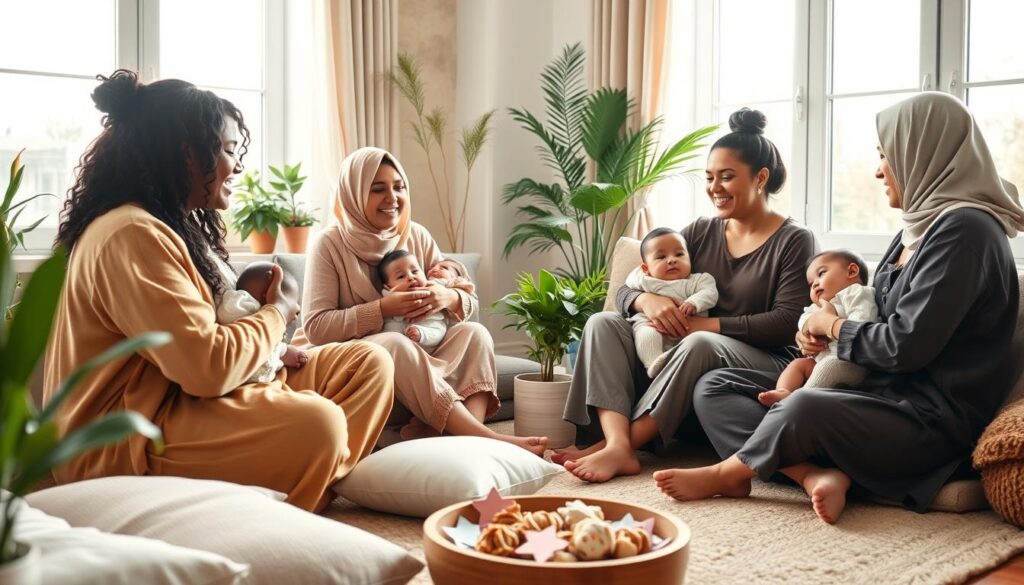
Caregiving is unpaid work that keeps families going. It’s not just for kids, but also for aging parents and partners with disabilities. Our culture values this work, but doesn’t support it well. Burnout is common, and caregiving support is often just an idea.
Circles are for everyone, not just at certain life stages. They help with all kinds of caregiving needs. Whether it’s for a baby or an aging parent, the need for support is the same.
In a circle, you can be honest about how you’re feeling. You can share tips, laugh together, and find support. This is essential infrastructure, not just for ourselves. It’s how we build a community, one honest conversation at a time, with real caregiving support and a new view of mothering.
Safety and Inclusion
Safety in women’s spaces isn’t just about feeling cozy. It’s about being structurally sound. Think of it as the psychological backbone of women’s wellness. Without it, everything falls apart.
So, what does this look like in real life? It means having strict rules that ensure everyone’s privacy. Confidentiality is key. What’s shared in the circle stays there, always.
Next, there’s the importance of listening without judgment. No advice, no unsolicited tips. Just listening. Sometimes, a talking piece is used to keep everyone’s voice heard. These practices are the foundation for Women’s Mental Health to thrive.
Therapists call this a “holding container.” It’s a space that can handle big emotions without breaking. Creating such a space requires careful planning, not just good feelings. It turns a meeting into a safe haven.
But safety isn’t enough without inclusion. Who feels welcome in these spaces? Are they diverse, or only for a select few? Do LGBTQ+ women feel included, or just tolerated?
Discussing women’s wellness circles today means talking about their past suppression. Witch hunts were about taking away female power. Today, we must actively fight against this history of exclusion.
We need to build safe, inclusive spaces, one rule at a time. This means looking at our own biases. It means asking tough questions about who’s included and who’s not. An inclusive space is not an accident; it’s a design choice.
When done right, these spaces are powerful. They foster real connection and authenticity. This is where Women’s Mental Health support truly happens, not just in theory.
The key takeaway? Don’t settle for just feeling safe. Demand spaces that are safe, by design, for everyone. That’s the difference between a casual gathering and a real movement.
Family Support & Participation
Let’s talk about the family reunion no one looks forward to. It’s the one in your mind every holiday. You’ve got the narcissistic parent, the estranged sibling, and the in-laws who ignore boundaries. We share these stories and learn from them.
This is like a class in understanding family dynamics. We study it like a sociologist studying a unique tribe. We aim to take back our story from the family script we never chose.
Sharing these stories in a safe space helps a lot. It turns silent anger into something we can talk about. You see your aunt’s constant criticism is really about her own dreams.
Then, we learn to set boundaries. We go from talking about it to actually doing it. How do you handle a guilt trip? What’s your plan for a tense dinner?
But there’s a catch. How does this change your role in the family? Does being more aware make you a better partner? Does loving yourself mean you’re less resentful mothering?
Yes, it often does. Being clear outside the family changes how you act inside. You stop playing roles and start responding. It’s not rebellion; it’s growth.
For many women, the circle is like a chosen family. This caregiving support group is a substitute for biological ties. It’s a sisterhood based on growth, not blood.
Why does caregiving support matter? It’s because you can’t give what you don’t have. You need support to be a good mother and partner.
Consider these changes that often happen:
- From Fixer to Witness: You stop trying to fix everyone and learn to just be present.
- From Guilt to Choice: You start to choose how you participate, not just because you have to.
- From Reaction to Response: You get a moment to think before reacting, which helps you make better choices.
This work has big effects. As research shows, strong support networks help your mental health. Your circle is your emotional support system.
This is like applying systems theory to your family. Change one part (you), and the whole family has to adjust. Sometimes, it’s a big change.
The goal is to interact with your family from a place of fullness, not emptiness. To give love that’s freely chosen, not forced. That’s the magic of caregiving support—it fills you up so you can be yourself.
Your family might always be a bit complicated. But your ability to handle it with grace and boundaries? That gets a big boost. And that’s a powerful form of mothering—of yourself and everyone around you.
Integrating Professional Programs
What if your next career breakthrough wasn’t found in a LinkedIn algorithm, but in a circle of women passing a talking stick? The data shows women are using these spaces to launch their careers. One member moved from marketing to mindfulness coaching. Another wrote a children’s book.
This isn’t just chance. It’s a strategy. These circles are not just emotional havens. They are professional incubators with better snacks.
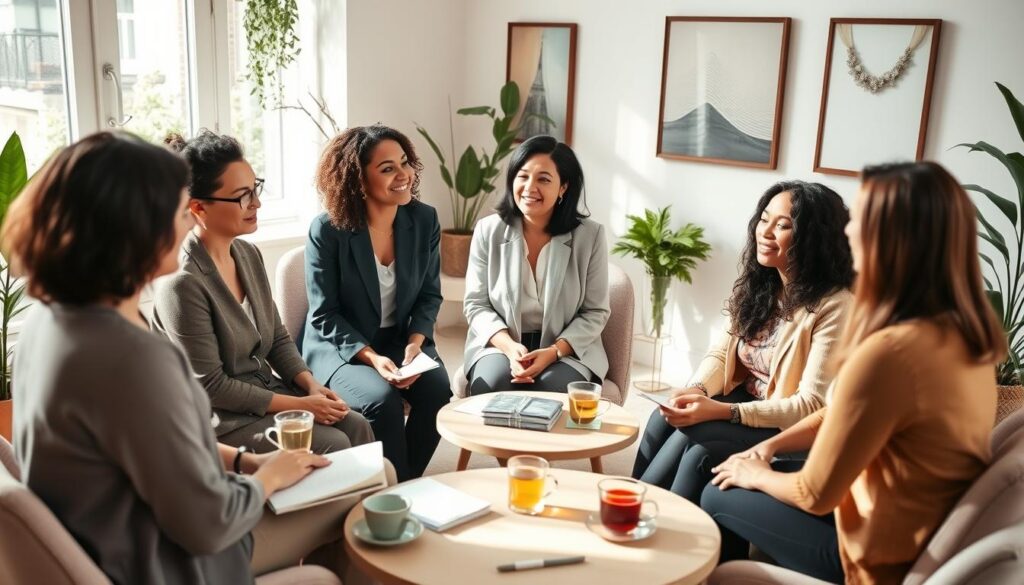
Here, you can share your dreams without fear. Unlike a boardroom, where you face risk assessments, circles offer support and brainstorming. This shift is key.
The mechanism is simple. First, it’s a safe space for “unrealistic” ambitions. Fear of sounding naive disappears. Second, you get honest feedback without corporate politics. Third, you find genuine cheerleaders who support your success.
This approach boosts Women’s Mental Health and professional courage. You can’t take big risks when you’re burned out or anxious. The circle’s support helps you build a strong foundation.
Let’s compare this to the old way. The old model is vertical, focusing on finding a senior mentor. The new model is horizontal, finding peers. The former feels transactional. The latter feels like a collective uprising.
| Aspect | Traditional Corporate Mentorship | Professional Women’s Circle Support | Key Differentiator |
|---|---|---|---|
| Structure | Hierarchical, one-on-one | Egalitarian, peer-to-peer | Power dynamics are flattened from the start. |
| Feedback Quality | Often filtered, politically aware | Radically honest, agenda-free | You hear the unfiltered truth about your idea. |
| Network Type | Industry-specific, vertical | Cross-disciplinary, horizontal | Connections span fields, sparking innovation. |
| Risk Tolerance | Generally risk-averse | Encourages calculated leaps | The group provides a safety net, enabling bolder moves. |
This isn’t just theory. Our second source notes members starting new projects from circle insights. Why does it work? Speaking the scary thing aloud makes it less terrifying. Sharing your dreams with supportive faces turns them into real projects.
The holistic approach of women’s wellness sees professional stagnation as a symptom of personal disconnection. You can’t optimize a career while ignoring the person in it. Circles address the whole system, supporting Women’s Mental Health and career clarity.
So, can sisterhood be a business strategy? The evidence screams yes. It’s peer-to-peer mentoring, fueled by herbal tea and radical honesty. The next unicorn startup might be plotted between sips of lavender tea, in a living room, far from Silicon Valley. The professional program is already integrated. You’re just sitting in it.
FAQ
Q: What is the role of a mother in a family?
A: A mother plays a vital role in a family, providing love, care, and support to her children. She is often the primary caregiver, ensuring the well-being and nurturing of her children. Mothers also contribute to the emotional and financial stability of the family, making sacrifices for the benefit of their children.
Q: How does motherhood impact a woman’s life?
A: Motherhood can have a profound impact on a woman’s life, both positively and negatively. It can bring immense joy and fulfillment, but it also comes with challenges such as sleep deprivation, emotional exhaustion, and the loss of personal freedom. Women often have to make sacrifices and adjust their priorities to accommodate the needs of their children.
Q: What are the challenges faced by mothers in today’s society?
A: Mothers in today’s society face various challenges, including societal expectations, work-life balance, and the pressure to be perfect. They often have to navigate the demands of work, childcare, and personal responsibilities, while also dealing with societal stereotypes and unrealistic expectations.
Q: How can mothers find support and balance in their lives?
A: Mothers can find support and balance in their lives by seeking out resources such as parenting groups, online communities, and professional help. They can also prioritize self-care, set boundaries, and seek support from their partners and other family members. Building a support network and finding ways to manage stress and prioritize their own well-being is essential for maintaining balance.
Q: What is the impact of motherhood on a woman’s identity?
A: Motherhood can have a significant impact on a woman’s identity, as it often becomes a central part of her life. It can shape her sense of purpose, values, and priorities. While motherhood can bring a sense of fulfillment and purpose, it is important for women to maintain their own identity and pursue their own interests and passions.
Q: How can mothers find joy and fulfillment in their roles?
A: Mothers can find joy and fulfillment in their roles by embracing the challenges and rewards of motherhood. They can find joy in the everyday moments with their children, such as watching them grow and learn. They can also find fulfillment in nurturing their children’s development and creating a nurturing environment for them to thrive.
Q: What is the importance of motherhood in society?
A: Motherhood is essential to the well-being and development of children. Mothers play a critical role in shaping their children’s emotional, social, and cognitive development. They provide love, support, and guidance, helping children grow into well-adjusted and confident individuals. Motherhood also has a positive impact on society as a whole, contributing to the well-being of families and communities.
Resources & Event Calendar
So, you think a women’s circle could solve your modern chaos. Great idea. Now, let’s find one. This guide is your quick start, like a spiritual “how-to” without the fluff.
First, you need to search for these gatherings.
- The Digital Agora: Use Meetup.com, Eventbrite, or Facebook Groups. Search for “women’s circle,” “sacred space,” or “wellness gathering” in your city.
- Community Ground Zero: Look at bulletin boards at yoga studios, indie coffee shops, libraries, and community centers. They often list local women’s wellness events.
- The Niche Networks: Websites focused on holistic living or spiritual practices have directories. It’s like finding a curated list.
Found a circle? Don’t just sign up. Ask the facilitator a few questions first:
- “What’s the guiding philosophy or intention of this circle?” (Is it feminist, spiritual, or social?)
- “What are the group norms around sharing and confidentiality?”
- “What is the typical format?” (Is it online, a day workshop, or a weekend retreat?)
Now, think about the vibe and cost. Wear comfy clothes and bring a shawl. Circles vary from cozy to structured. Your jewelry is your personal touch.
Prices vary too. You’ll find free or donation-based circles, and others that cost more. Your budget helps guide you.
For those with caregiving duties, finding time is key. Online circles can be a lifesaver. Local meetups are essential. Choose what works for you.
Want to start your own circle? Can’t find one? Be the leader. Begin with your living room and a few friends. The rules are yours to make.
Joining a women’s wellness circle is a smart move. It’s about making intentional choices. This guide is your roadmap. The circle is waiting for you.
Understanding the Connection Between Mothering and Mental Health
Research has shown a strong link between mothering and mental health. Mothers often face unique challenges that can impact their mental well-being. Factors such as societal expectations, caregiving responsibilities, and the emotional demands of motherhood can contribute to mental health issues.
Studies have found that mothers are more likely to experience depression, anxiety, and other mental health conditions compared to non-mothers. The emotional strain of caring for children, managing household responsibilities, and meeting societal expectations can take a toll on a mother’s mental health.
It is important to recognize the impact of mothering on mental health and provide support to mothers. By acknowledging the challenges they face and addressing the societal and cultural factors that contribute to these challenges, we can work towards improving the mental well-being of mothers.
Creating a supportive environment that values and acknowledges the emotional labor of mothering is essential. This includes providing resources, such as counseling services and support groups, to help mothers cope with the demands of motherhood.
By understanding the connection between mothering and mental health, we can work towards creating a society that values and supports mothers. This includes promoting mental health awareness, reducing stigma around mental health issues, and providing resources and support for mothers to prioritize their own well-being.
Statistics on Mothering and Mental Health
| Statistic | Percentage |
|---|---|
| Mothers are more likely to experience depression compared to non-mothers | 30% |
| Mothers are more likely to experience anxiety compared to non-mothers | 40% |
| Mothers experience higher levels of stress compared to non-mothers | 50% |
| Mothers are more likely to experience burnout compared to non-mothers | 60% |