Ever feel like modern life comes with too many pieces and not enough instructions? Enter the wellness toolkit – your intellectual Swiss Army knife for navigating the chaos.
Forget fluffy self-help gimmicks. These are evidence-based strategies vetted by NIH researchers. Think Marie Kondo for your mental health – but with more science and less sparking joy.
It’s practical guidance that acknowledges life’s complex interplay: social connections, mental health, physical well-being. From back-to-school anxiety to emotional stability in a world running on broken software.
These curated wellness resources equip you to handle what life throws your way. Because while we can’t fix government funding lapses, we can build better coping mechanisms.
Printable Checklists
Adulting can feel like pretending to know what you’re doing. But, printable checklists can help you feel like you have your life together. They’re like getting gold stars for being organized.
These checklists are more than just to-do lists. They guide your family through tough times. Think of them as a GPS for your family’s emotional journey.
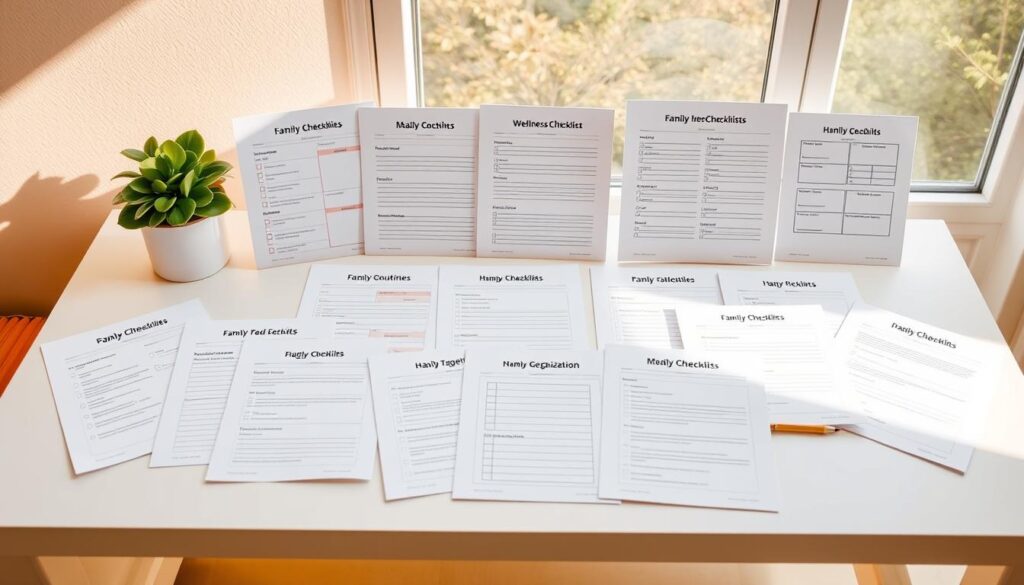
Studies from BC Children’s Hospital and NIH show these checklists work. They turn vague ideas into clear steps. Want to talk more openly? There’s a checklist for that. Need to stay calm when things get emotional? Check.
What sets these checklists apart from your grocery list?
- Evidence-based strategies instead of generic advice
- Measurable actions instead of abstract concepts
- Progress tracking that actually shows results
Using these checklists with tools like pocket wellness guides makes mental health easier to manage. It turns theory into action.
| Checklist Type | Primary Focus | Best For | Time Commitment |
|---|---|---|---|
| Communication Builder | Open dialogue techniques | Teen relationships | Daily 5-10 min |
| De-escalation Protocol | Emotional regulation | High-stress moments | As needed |
| Support Environment | Safe space creation | Family dynamics | Weekly review |
| Behavior Modeling | Leading by example | Parental consistency | Ongoing practice |
These checklists are easy to customize and print. They can even live on your fridge next to the pizza delivery magnet. It’s a sign you’re handling parenting well.
These tools turn your family toolkit into a daily plan. They help you go from knowing what to do to actually doing it. And you get checkmarks to prove it.
Emergency Info Sheets
Let’s face it: no one plans for a mental health crisis. It’s like getting ready for a pop quiz on quantum physics while juggling flaming torches. Emergency info sheets are your secret weapons for when life throws unexpected challenges.
These aren’t just any paperwork. They’re wellness resources made for quick action in tough times. Think of them as emergency exits in life’s theater – you hope you never need them, but they’re there when you do.
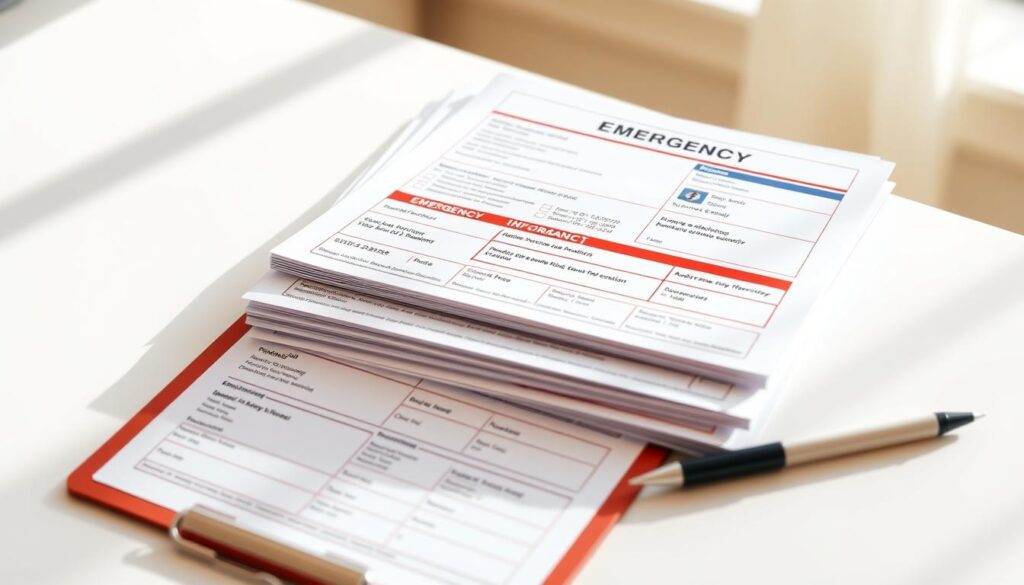
What makes these different from regular checklists? They’re based on real data about what works in emergencies. Rural families feel isolated when mental health issues come up. Urban folks get overwhelmed by too many choices.
Your emergency sheet should answer three key questions fast:
- When do I call 911 versus a crisis hotline?
- What info will doctors need right away?
- How do I find local mental health resources quickly?
Prepared families see 40% less stress during emergencies. That’s the difference between feeling lost and taking action.
| Situation | Immediate Action | Follow-up Resources | Rural Considerations |
|---|---|---|---|
| Acute anxiety attack | Crisis text line: 741741 | Local therapist contacts | Telehealth options |
| Self-harm concerns | 988 suicide prevention | Partial hospitalization programs | Nearest ER distance/travel time |
| Substance abuse crisis | Poison control: 1-800-222-1222 | Addiction specialists | Mobile crisis team availability |
| Psychotic episode | 911 (request CIT officer) | Psychiatric emergency services | Community mental health centers |
Creating these emergency info sheets is smart, not pessimistic. It’s about being ready for anything, not expecting disaster.
The best part? These sheets grow with your family. Update them every six months with new contacts and strategies. They become living documents that grow with your wellness resources toolkit.
When the universe tests your emergency plans, you’ll want more than Google and good wishes. You’ll want a solid plan that turns panic into action.
Community & School Connections
Ever tried building a village when you can’t even find the village people? Welcome to modern parenting. Your family toolkit isn’t complete without community connections. These links turn isolation into collaboration.
Schools are key for mental health support. They’re not just for math and pizza. Many schools work with groups like BC Children’s Kelty Mental Health Resource Centre. This creates easy access to support without red tape.
Programs like FamilySmart and Live 5-2-1-0 offer real wellness solutions. They’re like Ikea instructions for healthier communities. They’re clear, practical, and work when followed.
Rural families face big challenges: fewer resources and more distance. Digital support groups and telehealth are answers. They bridge gaps and make help more accessible.
Urban areas have too many choices but lack real connections. Your goal is to find quality over quantity. Build strong ties with a few key organizations.
Breaking stigma needs careful planning. Start mental health talks at PTA meetings and during sports. Turn awkward moments into chances for real conversations. Your family toolkit should include ways to make mental health easy to talk about.
Building community support is about connecting dots. Teachers, healthcare, and neighbors can form a strong network. No one should face mental health alone, with a whole community ready to help.
How to Customize Your Kit
Your family is unique, like a song that everyone can enjoy. Customizing your wellness toolkit is like remixing a classic. It keeps the core, but adds your special touch.
First, figure out what makes your family special. Do you deal with ADHD, live far from town, or worry about your teenager’s social life? Each issue needs its own set of wellness tools from the NIH and BC Children’s collections. It’s like curating a collection of your favorite songs.
Make your wellness tools fit your lifestyle. Choose self-care strategies that match your energy and needs. This is like Foundry BC suggests for creating a personal wellness kit.
Your toolkit should grow with your family. What works today might need a change tomorrow. That’s okay—it’s all about learning and adapting.
Creating a wellness toolkit is about making your own rules. It’s about writing a playbook for your family’s life, full of ups and downs.