Imagine a Saturday morning with your hands in the soil. You’re surrounded by neighbors, sunlight, and the quiet of growing things. This is what a community garden workday is all about.
These events mix volunteering with wellness. They aim to grow shared green spaces and gather fresh, local food. For you, it’s a chance to get active and connect with nature. For the community, it’s a step toward solving food access issues.
From small plots in Richmond to big gardens like California’s The Root 66 Garden, these spaces are key. They become places for learning, sharing, and growing together. Each garden has its own vibe, but they all share a mission of connection and care.
Their impact is clear. Places like the Jones Gardens in Staunton are expanding to fight food insecurity by growing thousands more pounds of organic food for families. Whether in the city or suburbs, these gardens help us stay connected and care for each other.
Site Selection and Soil Safety
Before planting the first seed, a community garden’s future is shaped by its location and soil health. These elements are the foundation for a safe, productive, and welcoming space for all.
Finding the right spot is more than just empty land. Successful projects, like Richmond’s Six Points Community Garden, start by transforming vacant lots. This revitalizes neighborhoods and puts unused land to good use.
Initiatives like a “Food Justice Corridor” take it further. They strategically place gardens to improve fresh food access in areas that need it most.
Several vital factors determine success when looking for a location:
- Sunlight: Most vegetables need at least six hours of direct sun daily.
- Water Access: A reliable water source is essential for irrigation.
- Community Accessibility: The site must be easy for gardeners of all ages and abilities to reach.
- Soil Quality: The existing ground condition dictates the work needed to grow food safely.
The table below outlines the core considerations for evaluating a garden site.
| Site Selection Factor | Why It Matters | Key Questions to Ask |
|---|---|---|
| Sun Exposure | Direct sunlight is fuel for plant growth and fruit production. | Are there tall buildings or trees casting shade for most of the day? |
| Water Availability | Plants need consistent moisture, specially in summer. | Is there a working spigot on-site, or will you need to collect rainwater? |
| Soil Safety | Urban soils may contain contaminants like lead from past land use. | Has the soil been tested for heavy metals? What is the site’s history? |
| Legal Security | Gardens need stability to justify long-term investment. | Do you have a multi-year lease or permission from the landowner? |
Prioritizing Soil Testing and Remediation
Once a site is chosen, the focus immediately shifts to soil safety. This step is particularly critical in urban areas. Testing for lead and other heavy metals should always be the very first action. Local cooperative extension offices often provide low-cost test kits for this exact purpose.
If contaminants are found, do not despair. Raised beds filled with clean soil are a proven, safe solution. They create a strong protective barrier between the plants and the contaminated ground below.
Building healthy soil is an ongoing, seasonal process. It involves constantly adding organic matter like compost, aged manure, or leaf mold. Ultimately, these amendments vastly improve soil structure, drainage, and nutrient content.
Many urban gardens adopt strict no-till methods to protect the delicate soil ecosystem. Instead of turning the soil deeply, layers of compost and mulch are simply added on top. This practice fosters earthworms and beneficial microbes while simultaneously preventing weed growth.
This philosophy of care perfectly mirrors the long-term stewardship seen in successful gardens like The Root 66. Their commitment clearly shows that a community garden is not a one-time project. Rather, it is a living space that thrives through continuous, gentle care for the land. By prioritizing a thoughtful location and committing to soil health, a community garden successfully lays the groundwork for seasons of abundance.
Volunteer Tasks by Season
Volunteering in a community garden is a year-round job. It’s not just for summer. Urban farming follows nature’s schedule, with workdays that match the seasons. This means there’s always something to do, from planting seeds to planning next year’s garden.
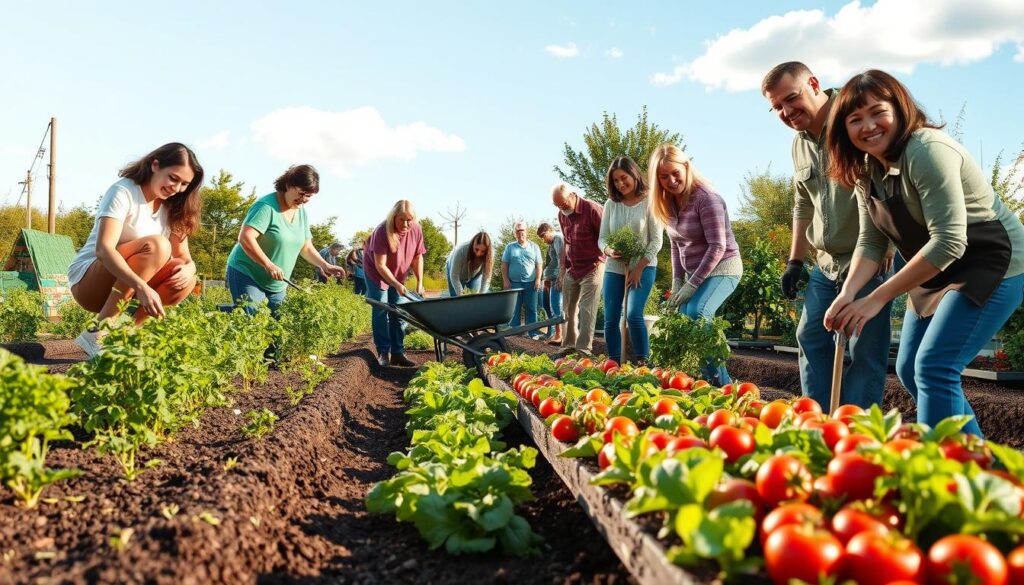
Gardens like Richmond’s Blackwell Community Garden and Broad Rock Community Garden have regular workdays. The Root 66 Garden’s FoodShare Co-op also needs help from its members. This hands-on work is key to growing food locally.
Spring: The Season of Preparation and Planting
When the ground thaws, spring workdays start. Volunteers do several important tasks to kick off the growing season.
- Bed Preparation: Turning over soil, adding compost, and creating raised beds for optimal plant growth.
- Sowing Seeds: Planting cool-weather crops like lettuce, peas, and radishes directly into the prepared soil.
- Transplanting: Moving seedlings started indoors, such as tomatoes and peppers, into their garden homes.
- Infrastructure Repair: Fixing fences, trellises, and pathways damaged over the winter.
Summer: The Season of Maintenance and Growth
Summer is when plants grow fast. Volunteers need to keep up with maintenance and protection.
- Watering: Deep, regular watering is key, even in dry spells. Volunteers manage irrigation or water plots by hand.
- Weeding: Keeping beds weed-free helps plants get enough water and nutrients.
- Pest Monitoring: Finding and controlling both good and bad insects with organic methods.
- Succession Planting: Planting fast-growing crops like beans and greens to keep yields high.
Autumn: The Season of Harvest and Reflection
Fall is a time of plenty and preparation for winter. Workdays are filled with harvests and important tasks.
- Harvesting: Picking ripe vegetables like squash, pumpkins, and root crops for the community.
- Seed Saving: Collecting seeds from heirloom plants to use next year, preserving genetic diversity.
- Putting Beds to Rest: Cleaning up, adding mulch, and planting cover crops to protect the soil.
- Community Events: Hosting harvest festivals or food preservation workshops.
Winter: The Season of Planning and Projects
Even when the garden is quiet, there’s work to do. Winter workdays focus on planning and projects for spring.
- Garden Planning: Mapping out crop rotations and planting schedules for the next year.
- Tool Maintenance: Cleaning, sharpening, and repairing tools for the garden.
- Building Structures: Building cold frames, compost bins, or sheds indoors or on milder days.
- Educational Workshops: Attending or helping to organize sessions on garden planning, seed starting, or sustainable practices.
This guide shows urban farming is a year-round effort. Volunteer needs exist all twelve months. Each task teaches practical skills in sustainable food production. By joining these workdays, volunteers help the garden thrive and become part of the local food system.
Composting and Water Conservation
Turning food scraps into compost and catching rainwater are absolutely key to urban farming. These actions effectively turn waste into valuable resources. Consequently, they create a sustainable cycle that helps both the gardens and the planet.
Building Soil Health Through Composting
Composting massively boosts soil health. People collect plant trimmings, leaves, and kitchen waste to make organic compost. They must turn the piles often to speed up the natural breakdown process. Ultimately, this creates an incredibly nutrient-rich compost.
This compost is then carefully added to the garden beds. It deeply improves soil health and fertility without using any harmful chemicals. It is a great example of community resourcefulness, much like the local seed-keeper shelters that save seeds for future crops.
Innovative Water Conservation Methods
Water conservation is also vital, especially in traditionally dry areas. Gardens use several innovative methods to save water:
- Rainwater Harvesting: They collect rainwater from roofs into barrels for plants.
- Drip Irrigation: This method waters plants directly, cutting down on evaporation and runoff.
- Mulching: Mulch keeps the soil moist and stops weeds.
- Plant Selection: They choose plants that need less water.
Some gardens, like the Root 66 Garden, go even further. They have their own well and use solar power. This shows how to be truly self-sufficient with water and energy.
Composting and water saving are at the heart of a strong garden. They cut costs, lessen harm to the environment, and show a cycle of growth. Gardening offers many health benefits, connecting us to nature’s cycles.
Learning these skills makes urban farming more than just growing food. It’s a way to care for the environment and teach the community about sustainability.
Harvest Shares and Cooking Demos
Community gardens do more than grow food; they teach us about nutrition and cooking. The journey from seed to table is where food meets wellness. This connection is key to lasting health.
Different gardens share food in creative ways. The method depends on the garden’s goals and community needs.
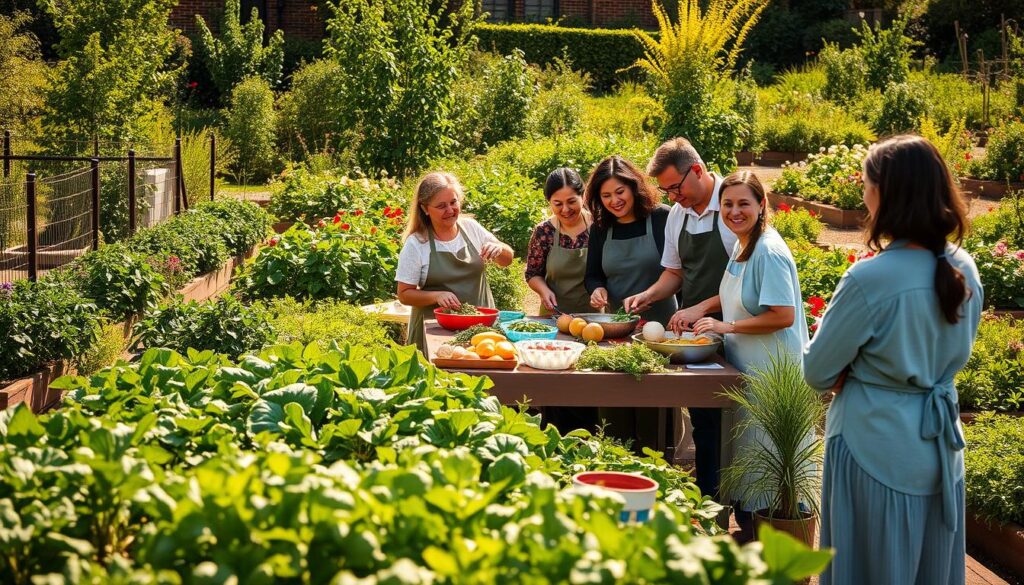
Choosing the right way to share food ensures no waste. It also makes sure everyone can get food, no matter their budget or schedule.
| Distribution Model | How It Works | Key Benefit | Real-World Example |
|---|---|---|---|
| Membership Shares | Members pay a seasonal fee or volunteer time for a weekly box of produce. | Builds a committed community and provides predictable harvests. | FoodShare Educational Co-op |
| Free Farmstands | Open tables or stands where anyone can take what they need, no questions asked. | Removes all barriers to access for immediate food support. | Fonticello Food Forest |
| Community Cookouts | Garden-grown food is cooked on-site and shared as a free communal meal. | Fosters social connection and demonstrates simple, delicious recipes. | Broad Rock Community Garden |
| You-Pick Areas | Designated plots where visitors can harvest ripe produce themselves. | Engages people directly with the source of their food and reduces labor. | Many school and public gardens |
Harvest shares are just the start. The next step is learning to cook with the fresh produce. This is where cooking demos and nutrition workshops make a big difference.
Educators like Brandi Jaramillo, a certified holistic nutritionist, lead these sessions. They show how to turn garden bounty into everyday meals. Workshops often focus on plant-based cooking and simple herbal remedies.
These hands-on lessons tackle common kitchen challenges. How do you cook an unfamiliar vegetable? What’s the best way to preserve a sudden glut of zucchini? How can you make a nutritious, budget-friendly meal in under 30 minutes?
Answering these questions bridges the gap between harvesting and healthy eating. People gain the skills to use every bit of their share. This maximizes the health benefits of the fresh produce.
The result is a stronger, healthier community. People learn to value whole foods. They gain confidence to try new recipes. This cycle of growing, sharing, and cooking builds true food security.
Youth Education and School Ties
For educator Jessika Shutt, a garden plot is more than just soil. It’s a tool for teaching life lessons. She creates chances for kids to grow their own food and learn about gardening. This hands-on experience is key to teaching them about nutrition.
Working with local schools boosts this effort. The Van Lew Community Garden, near Bellevue Elementary, is a great example. It lets kids easily join garden activities during school. Other places, like the Chimborazo Playground Community Garden, have special areas for kids to learn and play.
These gardens are like living labs. Kids see plants grow and learn where food comes from. This knowledge helps them understand the value of eating well. When they grow their own food, they’re more likely to eat it.
Programs vary to meet different needs and ages:
- School Field Trips: Classes go on structured visits to plant, weed, or harvest. It’s part of their science lessons.
- After-School Gardening Clubs: These clubs offer a chance for deeper learning and friendship.
- Student Plot Assignments: A small group or class gets to care for a garden bed. It builds pride and ownership.
The benefits stretch far beyond just nutrition. Garden work actively teaches kids about the environment and personal responsibility. It helps them view food as an intricate part of nature, community, and their own overall health.
Funding, Tool Libraries, and Metrics
A community garden’s long-term success relies heavily on solid foundations. Projects like The Root 66 Garden grow incredibly fast thanks to generous donations and volunteer help. Similarly, Richmond Grows Gardens offers massive support and resources across the entire city.
Keeping a large garden going requires several different funding sources. Local grants, plot fees, private donations, and fundraising events all heavily help out. Ultimately, this money pays for essential seeds, water, and tools, keeping the garden alive.
Furthermore, it is incredibly important to make gardening highly accessible to all. A robust tool library lets everyone share expensive gardening tools. This drastically cuts costs and builds a strong sense of community. It effectively makes sure everyone can afford to plant and care for their specific plots.
Measuring overall success is absolutely vital for future funding. Organizers track the exact pounds of produce given to local food banks. They also meticulously count volunteer hours and workshop attendance. Ultimately, these impressive numbers clearly show the garden’s massive impact.
Finally, regular surveys help organizers see exactly how gardens improve lives. They clearly show if community members are eating more fruits and veggies. This crucial data actively helps get more financial support and clearly shows the gardens’ incredible benefits for community health and nutrition.