Adulthood doesn’t come with a guide on eating right. So, we’re diving into the basics of nutrition. We’ll look at the five main food groups with the detail of a scientist.
Why does spinach count as a veggie whether it’s raw or cooked? How are whole grains smarter than refined ones? And why is protein important for every cell in our body?
We’ll talk about measurements that aren’t really measurements. And how oils can be both good and bad for us. For more info, check out the Mayo Clinic’s nutrition basics.
This isn’t just about food—it’s about understanding our eating habits. Welcome to Nutrition 101 meets culinary commentary.
Nutrient Needs by Age
Nutrition isn’t one-size-fits-all. It changes a lot from birth to adulthood. Each stage has its own needs, like different levels of energy.
Pregnancy is like preparing for a space mission. You need more folate, iron, and calcium. It’s not just about eating for two.
Babies and toddlers need foods that are full of nutrients. They can be messy, so foods need to be strong. Iron is very important for them.
As kids grow, they face new challenges. They need protein, calcium, and vitamins D and E. These help them grow fast.
Teenagers need a lot of calories and protein. They grow fast and need energy for sports and school. It’s like they’re athletes.
Adults need to watch their calories. They need to keep their muscles and bones strong. It’s time to be careful about what they eat.
Older adults need more nutrients but fewer calories. They need calcium for bones and protein for muscles. Fiber helps their digestion.
| Life Stage | Key Nutrients | Special Considerations | Daily Calorie Range |
|---|---|---|---|
| Pregnancy | Folate, Iron, Calcium | Increased needs for fetal development | 2,200-2,900 |
| Infants (0-12 months) | Iron, Zinc, Vitamin D | Breast milk/formula provides complete nutrition | Based on weight |
| Toddlers (1-3 years) | Iron, Calcium, Healthy Fats | Small, frequent meals; nutrient density critical | 1,000-1,400 |
| Children (4-8 years) | Protein, Calcium, Vitamin D | Establishing healthy eating patterns | 1,200-2,000 |
| Teens (9-18 years) | Protein, Calcium, Iron | Rapid growth requires increased everything | 1,800-3,200 |
| Adults (19-50 years) | Fiber, Protein, B Vitamins | Maintenance mode; prevent chronic disease | 1,600-3,000 |
| Older Adults (51+) | Calcium, Vitamin D, Protein | More nutrients, fewer calories needed | 1,600-2,400 |
Kids health isn’t about being perfect. It’s about knowing their needs change fast. They might eat well one day and not the next.
Every age has different needs. Toddlers and teenagers need different things. It’s like they need different cars to get where they need to go.
Good kids health means understanding these changes. It helps you win at mealtime. Knowing why your child needs extra iron is key.
Balanced Snacks & Meals
Welcome to a world where every food group gets its fair share. Your dinner plate is like a peace summit. Vegetables and fruits take up half the space, providing the nutrients we need.
Protein and grains are like the necessary partners. They give us energy and stability. But they shouldn’t overshadow the veggies and fruits. This balance is key to good family nutrition.
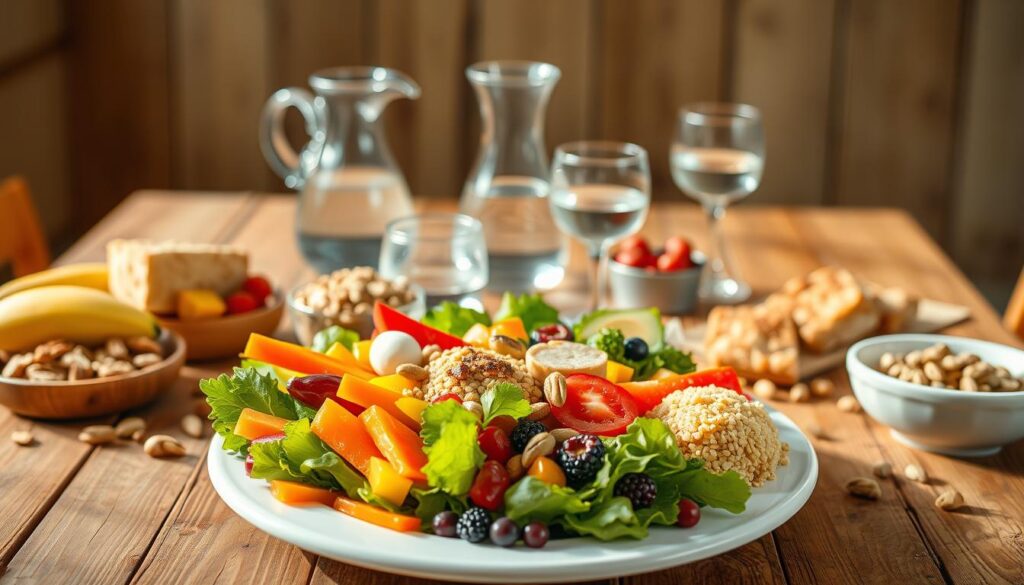
Nutritional diplomacy is all about finding the right balance. For example, six baby carrots are as valuable as half a cup of kidney beans. These facts help us negotiate with picky eaters.
Creating meals that please everyone requires smart planning. It’s about making broccoli the star, not the villain. Good family nutrition means everyone feels happy and satisfied.
Healthy eating is about finding the right balance, not perfection. Treats are okay, but they shouldn’t overshadow healthy foods. A cookie doesn’t undo the good of a salad.
Think of meals as a balanced ticket for your family. Each dish should please different tastes. This is the secret to lasting family nutrition.
View snacks as investments in your health, not just emotional comfort. An apple with peanut butter is a deal between fruit and protein. It keeps you going between meals.
The best nutrition plans are those that work in real families. Aim for solutions that keep the basics of nutrition in mind. This way, you can enjoy family nutrition without strict rules.
Sample Meal Plans
Let’s face it: knowing about nutrition is easy until you’re hungry at 6 PM. That’s when family nutrition kicks in. It turns food groups into meals that families can enjoy.
Meal planning is like telling stories with food. Each day has a start (breakfast), middle (lunch), and end (dinner). And no, cereal isn’t the hero every time.
Here’s the cool part: one ounce of grains can be a slice of bread or three cups of popcorn. Yes, popcorn is a whole grain. It’s a surprising twist in family nutrition.
Practical Building Blocks
Based on daily intake recommendations, here’s a sample day:
- Breakfast: Greek yogurt with berries (1 cup dairy + 1 cup fruit)
- Lunch: Turkey wrap with whole wheat tortilla (2 oz protein + 2 grain equivalents)
- Dinner: Salmon with quinoa and roasted veggies (4 oz protein + 2 grain equivalents + 2 cup vegetables)
Life Stage Adaptations
Meal planning changes with age and lifestyle. Teenagers need more calories than toddlers. Office workers need different lunches than construction workers. The key is making adjustments.
| Life Stage | Breakfast Example | Lunch Example | Dinner Example |
|---|---|---|---|
| Young Children | Scrambled eggs + whole wheat toast | Quesadilla with avocado | Ground turkey pasta sauce |
| Teens | Oatmeal with nuts + fruit | Chicken rice bowl | Beef stir-fry with extra rice |
| Adults | Smoothie with protein powder | Large salad with grilled chicken | Fish with sweet potato + greens |
The secret is to be flexible. Some days you’ll make a perfect meal. Other days, just enjoy the popcorn. That’s family nutrition in action.
Remember, these are just ideas. Swap proteins, try different veggies, and play with grains. The goal is to improve, not be perfect. And if all else fails, breakfast for dinner is always a good choice. Sometimes, pancakes are just what you need.
Common Mistakes
Ever feel like you’re navigating a nutritional minefield while trying to make healthy choices for your family? Welcome to the club where even the most vigilant parents get bamboozled by clever packaging and misleading labels.
Let’s play detective with your pantry. That “low-fat” yogurt you proudly serve? It’s often a sugar bomb in disguise. Food manufacturers have perfected the art of removing fat only to replace it with enough sweetener to make a soda blush.

Serving sizes represent another classic trap. The nutritional information on that cereal box assumes you’re feeding a bird, not a growing child. Who actually eats just ¾ cup of cereal? This portion distortion makes comparing products about as reliable as a weather forecast.
Beverage choices deserve their own special section in the hall of nutritional shame. That 100% fruit juice? Nutritionally, it’s closer to soda than to whole fruit. You’re getting all the sugar without the fiber that makes fruit actually healthy.
Plant-based milks present their own challenges. Many almond and oat milks contain more additives than actual nuts or grains. They’re basically flavored water with a fancy price tag and health halo.
Here are the biggest offenders in kids health nutrition:
- Yogurt tubes with more sugar than a candy bar
- Cereals that are basically cookies with vitamins sprayed on
- Fruit snacks masquerading as actual fruit
- Granola bars that are basically dessert in wrapper
- Vegetable chips that have never met an actual vegetable
The solution? Read labels like you’re investigating a political scandal. Look beyond the front-of-package claims and examine the actual ingredients. Your kids health depends on seeing through the marketing magic to what’s actually in the food.
Family Challenges
Let’s face it: nutritional guidelines were made by people who’ve never fed a picky toddler or a teenager who cares about animal rights. The difference between what’s suggested and what works in family nutrition is huge. It’s where dreams of healthy eating often fail.
Seafood is recommended at 8-10 ounces a week, but it’s hard to get kids to eat it. They might say fish is too fishy or shrimp is too small. It feels like trying to convince tiny critics to eat something other than chicken nuggets shaped like dinosaurs.
Vegetarianism can turn into a big argument in the house. One day they love burgers, the next they’re quoting animal rights videos. You end up cooking two meals and wondering if tofu can taste good.
Managing treats is another challenge. Life without cookies is dull, but explaining moderation to kids is tough. They see broccoli as punishment and cake as a reward. You become a food diplomat, trying to balance health with what they actually eat.
The true skill in family nutrition isn’t following all the rules. It’s about making it through each day without losing your mind. Even getting veggies into them is a win, even if they’re hidden in spaghetti sauce.
Action Plan
Your nutritional peace treaty starts with small changes, not big ones. It’s like a diplomatic way to eat—finding a balance between what’s good for you and what you like.
Make sure you get the vitamins you need from everyday foods. Learn to read nutrition labels like a pro, looking for vitamins in foods you might not expect. Try to eat half of your plate with vegetables.
Begin with easy changes using simple nutrition tips. Aim for progress, not perfection. Start with one change this week and keep adding more.