The common image of caregiving is a heroic, solitary figure. It feels like a solo mission in a leaky boat.
You’re constantly bailing water while everyone on shore offers vague, cheerful help. “Let me know if you need anything!” they shout. We’re not here to assign blame. We’re here for a radical reorganization.
Forget the myth of going it alone. The modern solution is strategic. Think of it less as a support group and more as your personal board of directors.
This board runs the most demanding startup: sustaining another person’s well-being. This is your caregiver support network, or what we call a Circle.
Established models in fields like oncology show a clear structure. There’s an inner ring of family, a middle ring of friends, and an outer ring of community resources.
Formal supports like doctors and therapists have their place. A key role is the “gatekeeper,” who manages the well-intentioned chaos.
This isn’t about adding more to your list. It’s about building a team that turns a drowning feeling into command of a fleet. Ready to map your own caregiver support system?
Mapping Caregiver Needs: Your Tactical Blueprint for Time, Respite, and Education
Mapping caregiver needs is like planning a heist. You need to know what’s missing, who can get it, and how to escape. Your respite is your escape route. Without it, you’re just a well-meaning burglar in a house full of motion sensors.
The first step is not recruiting your crew. It’s doing a ruthless audit. You move from feeling overwhelmed to knowing exactly what you need, like someone to handle pharmacy runs every Thursday. This is how top support systems work, from cancer centers to brain injury associations.
Your audit focuses on three pillars: Time, Respite, and Education. Let’s break them down.
Time is your most depleted resource. Where does it actually go? Track it for a week. You’ll find black holes: two-hour pharmacy waits, the daily call to insurance that goes nowhere, the grocery trip that derails an afternoon.
Respite is not a luxury. It’s the oxygen mask you put on yourself first. It’s the two-hour block where you are not “on call.” It’s the gym session, the coffee with a friend, the simple act of remembering your own name. Mapping this means scheduling it like a critical medical appointment.
Education gaps are silent anxiety generators. Are you unsure about new medication side effects? Confused by physical therapy exercises? This isn’t about getting a nursing degree. It’s about identifying the specific knowledge you lack that keeps you up at night.
Now, translate this audit into actionable asks. Use the proven method of categorizing tasks: daily, weekly, or occasional. This is where you match people to needs. Your neighbor who works nights might not be good for morning sits, but they’re perfect for picking up a prescription at 4 PM. Your tech-savvy niece can handle online bill pay, an occasional but critical task.
A critical note: not everyone close to you is equipped to help. Your emotionally fragile sister might be a terrible choice for direct care but a wizard at researching community resources. This is strategic delegation, not a popularity contest.
| Need Category | What It Looks Like (Examples) | Potential Delegation Match | Ideal Frequency |
|---|---|---|---|
| Time (Logistics) | Grocery shopping, prescription pick-up, laundry, house cleaning | Neighbor, local teen, paid errand service | Weekly |
| Respite (Self-Care) | 2-hour afternoon break, Saturday morning off, attending a personal appointment | Trusted family member, volunteer from faith group, respite care partner | 2-3 times per week |
| Education (Knowledge) | Understanding new dementia behaviors, managing insulin injections, navigating hospice benefits | Support group leader, hospital social worker, online caregiver course | Occasional (As needed) |
| Time (Administrative) | Insurance phone calls, sorting medical bills, scheduling appointments | Organized friend, family member with flexible schedule | Weekly/Occasional |
| Respite (Emergency) | Last-minute coverage for a personal crisis or illness | Backup family member, professional respite service | Rare but critical |
This table isn’t just a pretty chart. It’s your battle plan. It forces specificity. “I need a break” becomes “I need a two-hour respite every Tuesday afternoon.” Suddenly, you have something concrete to ask for.
The process itself is empowering. You stop being a victim of circumstances and become the commander of your support resources. You begin to see your week not as an inevitable avalanche, but as a series of manageable tasks, many of which can be handed off.
This clarity is the foundation of why caregiver support matters. It transforms well-intentioned but vague offers of help into a precise, operational system. It turns your silent scream into a shared to-do list.
So grab a notebook, or open a spreadsheet. Start listing. Categorize. Match. This is how you build a circle that doesn’t just send thoughts and prayers, but actually shows up with the right tools at the right time.
Meeting Cadence and Hybrid Options
Forget herding cats. Running a good caregiver support network is about finding a rhythm everyone can follow. You’ve found the players and understood their needs. Now, how you operate will make all the difference.
The secret is not just weekly or monthly meetings. It’s both. Today’s world needs a mix of in-person and online interactions. A weekly Zoom call keeps things running smoothly. But a monthly in-person meeting is where the real connection happens.
This mix respects everyone’s time. It keeps the small talk out of the way. So, when you meet, you can really talk about what matters.

At the heart of this system is a regular update email. It’s a lifeline that saves your energy. It answers “how are things?” for everyone at once. Plus, a shared calendar makes planning easier.
But why just email? Apps can make asking for help easier. They turn vague offers into clear actions.
Here are some tools to help your caregiver support team:
- Lotsa Helping Hands: The master of coordination. It creates a private space for organizing meals, rides, and visits.
- CaringBridge: Great for health updates. It keeps everyone informed without overwhelming the primary caregiver.
- MealTrain: Specialized and brilliant. It solves the problem of too much food by organizing deliveries.
This isn’t about replacing human connection with technology. It’s the opposite. These tools help free up time for the real connection that matters. The goal is to spend more time caring and less time organizing.
Respite Partnerships and Volunteer Pools
Imagine if every request for help didn’t land on just two people. That’s what we aim for with respite logistics. It’s not about luxury, but sanity.
Most caregivers find respite like a last-minute search. They text anyone who might be free next Thursday. But what if you had a system? A network where everyone knew their role?
Formal partnerships are key. We’re not just talking about favors from friends. Think about adding paid support members like Personal Support Workers (PSWs) and case managers. They form the “inner ring” of support.
The “outer circle” includes community resources. Think of the local faith group that delivers meals or the retired neighbor who’s great with spreadsheets. These are not random favors, but assets waiting to be organized.
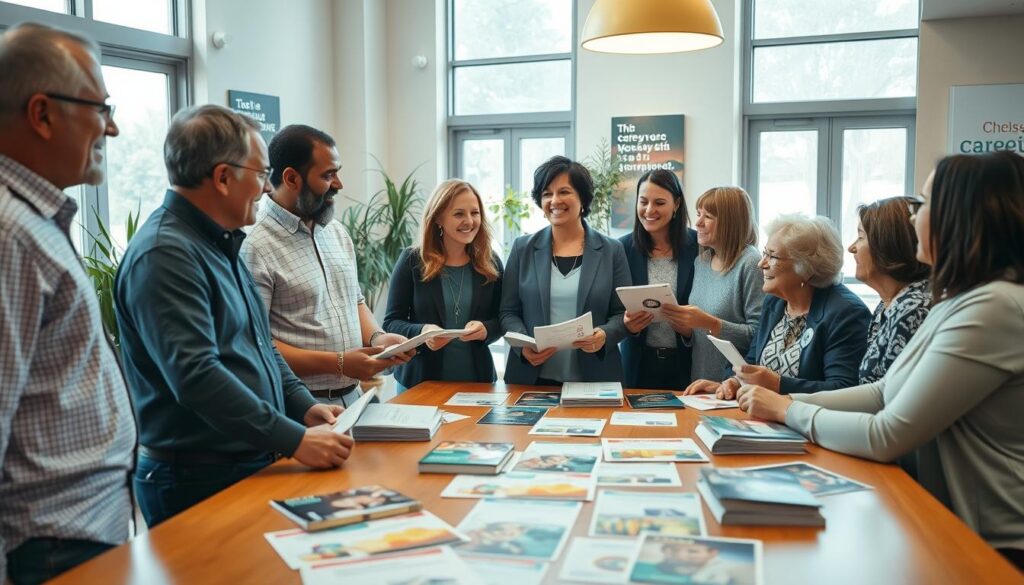
Let’s look at Jim’s men’s group from the podcast. They went from being a “casserole brigade” to a care coordination team. They divided tasks based on skill and location.
Local members did tasks like grocery runs and home repairs. Remote members provided emotional support and handled online tasks. They created a hybrid volunteer pool that worked well without burning anyone out.
This move from chaos to structure is key. It’s about using your cousin’s accounting skills wisely. It’s about matching needs with skills in a sustainable way.
To build this, start by checking your network. Who has what skills? Who has time? Who knows community organizations? Then, have the conversation: “Here’s how we can help in a way that works for you.”
The result is better respite coverage and a support system where everyone feels valued. Care becomes shared, manageable, and dignified.
Stress Management Toolkit
We’re not talking about bubble baths here. We’re building your mental defenses. In elder care, “stress management” is often seen as just a list of scented products. That’s a big mistake.
Your mind is like mission control, not a weekend getaway. Letting it fall apart is not noble. It’s a strategic failure that hurts everyone, including the person you’re caring for. This toolkit is about keeping your mind in top shape.
The key tools aren’t apps or gadgets. They’re human qualities in your support network. Think of someone with a sense of humour as your emotional airbag. They can diffuse tension with a joke.
A good listener is like a pressure release valve. They let you vent without judgment or unwanted advice. Their empathy is validation that your feelings are real and hard.
Your Caregiver Circle’s main job is to protect your mental energy. They need to make sure you have time for self-care. This isn’t indulgence; it’s essential for your well-being.
So, what does a real stress management toolkit look like? It’s a mix of internal changes and external actions, all supported by your circle. Let’s explore it.
| Tool | Purpose | How to Deploy | Circle’s Role |
|---|---|---|---|
| The Boundary | Prevents emotional and time-based overflow. | Schedule “off-duty” hours and communicate them clearly. | Respects the boundary and enforces it when you waiver. |
| The Designated Vent | Provides a safe outlet for frustration without collateral damage. | Pre-arrange with one circle member for weekly “dump sessions.” | Listens without fixing. Offers empathy, not solutions. |
| Micro-Respite | Offers rapid cognitive resets to prevent burnout. | Take 20-minute blocks for a walk, music, or deep breathing. | Handles immediate tasks or simply provides presence during these blocks. |
| Humor Infusion | Disrupts stress cycles and maintains perspective. | Share a funny meme, recall a silly memory, watch a short comedy. | Initiates light-hearted interaction and shares the load of finding levity. |
Notice a pattern? Every effective tool needs a team. The circle isn’t just for elder care help. It’s the team that keeps you running smoothly.
This approach changes care from a solo effort to a team effort. When your support network helps protect your mind, you don’t just survive elder care. You become a more present, patient, and effective caregiver.
Impact Stories and Advocacy
Data outlines the framework, but human stories pour the concrete. Let’s talk about Jim, Art, and Grace.
Their journey is the blueprint. It started with polite distance, then frustration, and ended with a Circle of Care agreement. This pact helped them through terminal illness, Medical Aid in Dying (MAID), and grief. It’s a story full of depth.
These stories do more than inspire. They make the struggle normal and offer a clear path. They also fuel advocacy. When you share how a caregiver’s support changes lives, you start to change the elder care conversation.
Your story can lead to policy changes. To make this happen, you need a support system. Organizations that offer technical assistance and support are key.
Your circle’s success proves a smarter, more compassionate elder care approach. What will your story show?