Wellness Fair
The Wellness Fair at the Tulsa State Fair is a must-visit for anyone looking to improve their health and well-being. This event offers a wide range of activities and services designed to promote overall wellness.
Health Screenings
One of the key highlights of the Wellness Fair is the availability of health screenings. These screenings provide an opportunity for attendees to get their vital signs checked and receive personalized health advice. Whether you’re concerned about blood pressure, cholesterol levels, or other health metrics, the health screenings at the Wellness Fair can help you stay on top of your health.
Wellness Workshops
In addition to health screenings, the Wellness Fair also features a variety of wellness workshops. These workshops cover topics such as nutrition, stress management, and mental health. Attendees can learn valuable tips and strategies to improve their overall well-being and make informed choices about their health.
Interactive Activities
The Wellness Fair also offers a range of interactive activities designed to promote physical activity and mental well-being. From yoga sessions to fitness demonstrations, there’s something for everyone to enjoy. These activities provide a fun and engaging way to stay active and focused on wellness.
Whether you’re looking for health screenings, wellness workshops, or interactive activities, the Wellness Fair at the Tulsa State Fair has something for everyone. Take advantage of these opportunities to prioritize your health and well-being.
Types of Support Group Booths
A successful health expo is all about variety in its support group booths. It’s like putting together a play with experts, storytellers, and interactive experiences. Each booth type meets a different need.
Choosing the right mix is key. If you get it wrong, your event feels like a trade show. But if you get it right, you create a real community.
The Informational Heavyweight
This booth is all about facts. Groups like the American Heart Association are experts at this. They bring downloadable fact sheets, like “Life’s Essential 8” or stroke information.
The goal is to be the authority. These booths answer the “what” and “why.” They give you the facts to fight fear with knowledge.
But too much data can be boring. It’s like reading a medical book from start to finish. It’s necessary but not always exciting.
The Experiential Zone
In this area, feelings come first. An art show about mental health challenges is a great example. A painting about anxiety can say more than many pamphlets.
This booth invites reflection. It doesn’t preach. It lets visitors connect with stories through color, texture, and form. It makes health concepts real and personal.
Here, numbers become stories. It’s the difference between knowing depression rates and feeling a blue-toned canvas.
The Peer Support Hub
This booth is the heart of the expo. It’s not about selling products. It’s about people sharing empathy. These are peer support programs where people with experience help others.
Imagine talking about grief with someone who’s been through it. Or discussing addiction recovery with someone who knows the journey. This booth values authenticity over expertise.
The power here is connection. It’s the “me too” moment that breaks isolation. It turns the expo into a support network.
| Booth Type | Engagement Style | Primary Goal | Best For Attendees Who… |
|---|---|---|---|
| Informational Heavyweight | Cognitive, Fact-Based | Educate & Provide Resources | Seek data, need clear guidelines, are research-oriented |
| Experiential Zone | Emotional, Sensory | Evoke Empathy & Personal Connection | Learn through stories, respond to art, process feelings |
| Peer Support Hub | Relational, Conversational | Build Community & Reduce Stigma | Want shared experience, need validation, seek ongoing support |
So, how do you mix these in your expo? Think of your floor plan as an ecosystem. The informational booths are like trees—providing structure. The experiential zones are like flowers—adding beauty. The peer support hubs are like soil—nourishing everything.
Aim for a mix that guides attendees on a journey. They might start with facts at an AHA booth. Then feel those facts at an art display. And discuss it all at a peer circle. That’s the journey from head to heart to community.
Your booth lineup shouldn’t be random. It should be a conversation. Each type speaks a different language. Together, they tell a complete story about health, healing, and connection.
Family and Youth Activities
Think of family activities as a key to your health message. An awareness event that only talks to adults is hard to get through. But, when you engage the youngest ones, they become your best helpers.
It’s all about simple economics. A parent’s attention goes to their child’s happiness. A craft table or a friendly dog makes a positive space. Here, you can talk about stress, nutrition, or mental health in a natural way.
The “Grandkid Corner” is your secret tool. It’s not just babysitting. It’s a place where kids learn without realizing it. Imagine making “mindfulness jars” or a “veggie stamp” art station. These activities teach kids about calm thoughts and healthy foods.
The design of these activities is smart. Each one targets a different part of community wellness:
| Activity Type | Apparent Fun | Covert Educational Goal | Wellness Pillar Addressed |
|---|---|---|---|
| Mindfulness Jar Craft | Sparkly, sensory play | Introduces emotional regulation tools | Mental & Emotional |
| Simple Obstacle Course | Running, jumping, play | Promotes physical activity as fun | Physical |
| Pet Therapy Sessions | Cuddling with adorable animals | Reduces stress, lowers social anxiety | Emotional & Social |
| “Thank You” Card Decorating | Arts and crafts for volunteers | Fosters gratitude and community connection | Social & Emotional |
Then, there are therapy animals. Working with a local shelter or therapy animal group is more than a photo. It’s a lesson in non-verbal communication. When someone is petting a dog, talking about stress or loneliness becomes easier.
This partnership is a win for everyone. The event gets more people involved, the shelter gets noticed, and attendees feel better. It’s a great way to talk about their stress or loneliness.
The goal is to mix physical, mental, and emotional health into fun activities. You’re not just hosting a health talk with a kid’s area. You’re creating a community playground where awareness comes from enjoying yourself. When families leave talking about the puppy or the craft they made, the message stays with them. It’s tied to a happy memory, not a pamphlet.
Volunteer Recruitment
The success of a wellness fair depends on volunteers. Without them, even the best plans are just ideas. Recruiting volunteers is more than filling spots; it’s about building a team.
You need a mix of skills and personalities. Imagine a team like a movie crew. You’ll need someone to organize, someone to connect with the community, and someone to solve unexpected problems.
Don’t just look for anyone. Look for people with skills and a desire to help. Make volunteering sound like a chance to be part of something important. People want to help with a purpose.
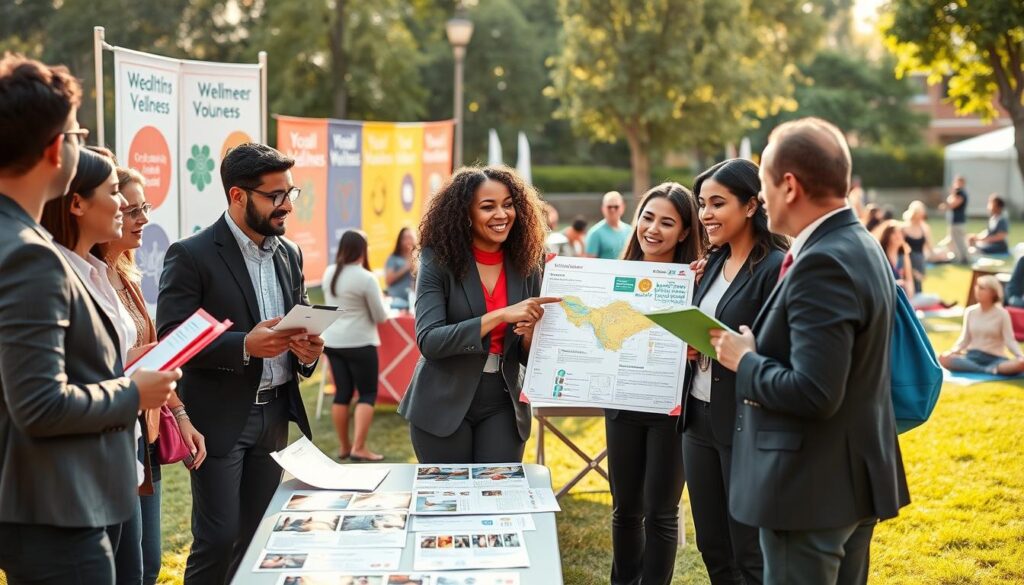
Begin by clearly defining roles. Who will check in vendors? Who will watch the kids? Who will handle lost items? Make detailed job descriptions to attract the right people. Clear roles mean a smooth wellness fair.
Involve local groups early. Health clinics, yoga studios, and community centers often have volunteers. These people can become long-term supporters and spread the word about your event.
Your message should be exciting. Don’t use boring language. Talk about the impact, community, and fun. Mention the skills volunteers will learn, like event management and public speaking.
Remember, recruitment is a two-way street. You’re not just getting help; you’re giving an experience. Treat volunteers well, and they’ll help not just this event but others too.
Marketing & Outreach
Your health expo announcement faces tough competition. It’s up against endless scrolling, streaming, and the internet’s endless content. Your outreach must stand out as a headline act in this busy world.
Think of it as a show for two different audiences. You need to reach those who trust the morning paper and those who live online. Ignoring either group is a big mistake.
The Old Guard Stil Has Its Uses
Traditional media is like the broadcast news of local outreach. A well-placed article in the community paper carries a lot of weight. It’s trusted. Radio spots during drive time catch people when they’re focused.
Partnering with churches, libraries, and community centers to distribute flyers is more than just paper. It’s about trust by proxy.
This approach speaks to a demographic that values institutions. It says, “This event is official, important, and for everyone.”
The Digital Game Changer
Digital marketing for a health expo is about building a community before the event. Your goal is to make the expo feel like a must-attend event.
Start with a clear event page (Facebook Events, Eventbrite) as your digital home base. But a page is just a billboard. You need to bring it to life.
- Share Real Stories: Facts tell, but stories sell. A short video testimonial from a past attendee or a local doctor carries more emotional weight than any list of features.
- Launch a Hashtag Campaign: Create a simple, empowering tag like #MentalHealthMatters or #[YourTown]Wellness. Encourage partners and early registrants to use it. This isn’t just promotion; it’s creating a searchable, public record of excitement.
- Create Shareable Infographics: An eye-catching graphic about “5 Signs of Burnout” or “How to Talk to Your Teen About Stress” is a public service announcement that people willingly share. It provides value first, promotion second.
- Host Live Q&A Sessions: Schedule a 20-minute Instagram Live with a nutritionist or therapist. This cuts out the middleman, builds authority, and makes expertise feel accessible. It answers the “what’s in it for me?” question in real time.
The magic is in the mix. A radio ad drives someone to your Facebook page. A shared infographic prompts a question answered in a Live session. Each piece supports the other.
Choosing Your Channels: A Strategic Breakdown
Not all platforms are created equal. Your resources are finite. Use this table to allocate your effort where it counts the most for your specific goals.
| Marketing Channel | Best For | Key Action | ROI (Return on Involvement) |
|---|---|---|---|
| Local Newspaper & Radio | Building broad, cross-demographic awareness & legitimacy. | Secure a feature story, not just a calendar listing. | High for reaching non-digital natives and establishing community trust. |
| Social Media (Facebook/Instagram) | Targeted engagement, community conversation, and visual storytelling. | Run event page, share stories/infographics, host Live Q&As. | Highest for direct interaction and building pre-event buzz. |
| Community Partner Networks | Hyper-local, trusted dissemination of flyers and word-of-mouth. | Provide partners with easy-to-share digital kits and physical materials. | Essential for grassroots credibility and reaching specific groups. |
| Hashtag Campaign | Amplifying reach and creating a unified, trackable conversation. | Choose one clear hashtag and use it consistently everywhere. | Moderate to High; turns attendees into promoters. |
The most effective health expo marketing campaign doesn’t feel like marketing at all. It feels like an invitation to a conversation that’s already getting good. Your job is to start talking, listen to the replies, and make sure everyone knows where the party is.
Community Partnerships
Creating a successful awareness event is all about teamwork. Think of it like Batman, Wonder Woman, and The Flash working together. Your event needs a diverse team too.
These partnerships turn your event into a community movement. It’s not just about giving out handouts. You’re building strategic alliances. It’s like modern diplomacy, but with better snacks.
| Partner Type | What They Bring | What They Gain | Best For |
|---|---|---|---|
| Healthcare Providers | Medical credibility, screening equipment, expert speakers | Community visibility, patient outreach, CSR fulfillment | Educational booths, health assessments |
| Fitness & Wellness | Demo classes, activity leaders, healthy lifestyle expertise | Client acquisition, brand alignment, local marketing | Interactive activities, movement breaks |
| Aligned Businesses | Venue space, product donations, customer access | Goodwill, targeted exposure, employee engagement | Sponsorship, giveaways, vendor areas |
| Nonprofit Orgs | Volunteer networks, subject expertise, established trust | Mission advancement, partnership growth, resource sharing | Co-hosted events, joint outreach |
Start with the obvious big players. Local hospitals and clinics are like Iron Man. They bring tech, precision, and credibility. Ask for resources, not just money.
Could they set up blood pressure screening stations? Maybe a cardiologist can give a quick talk on heart health? This makes your awareness event real and tangible.
Then, find the energizers. Fitness centers, yoga studios, and wellness coaches are like Spider-Men. They’re agile, friendly, and great with crowds. They can lead a group stretch or a fun fitness challenge.
Their presence makes your event about living well, not just learning. It adds action to the lectures. People remember how they felt, not just what they heard.
Don’t forget about aligned businesses. The organic grocery store, the local pharmacy, and healthy meal delivery services are like Hawkeyes. They’re precise, reliable, and have a specific skill set.
They might donate healthy snacks or offer discounts. In return, they connect with a health-conscious audience. It’s commerce with a conscience.
Now, find your secret weapon. Your local American Heart Association office. This isn’t a cold call. It’s a request to join forces. Use their office search tool to find your nearest chapter.
Ask if they have a volunteer ambassador or speaker available. Their endorsement adds instant legitimacy. It shows your awareness event is part of a respected movement. You’re not starting from scratch. You’re joining the convoy.
Remember, effective nonprofit community partnerships need clear expectations. Draft a simple one-pager for partners. Outline what you need and what they’ll get. Transparency builds trust.
Follow up with personalized thank-yous. Did the pharmacy’s free screenings draw a crowd? Mention it. Did the yoga studio’s demo become the talk of the event? Say so.
This coalition-building does more than fill booths. It weaves your cause into the community’s fabric. Long after your awareness event ends, these connections remain. That’s how momentum becomes a movement.
Wellness Fair
The Wellness Fair at the Grand Rapids Comic Con is a treasure trove for those seeking to enhance their well-being. This event is a perfect opportunity to explore various health and wellness services, all under one roof. Attendees can indulge in a range of activities designed to promote physical and mental health.
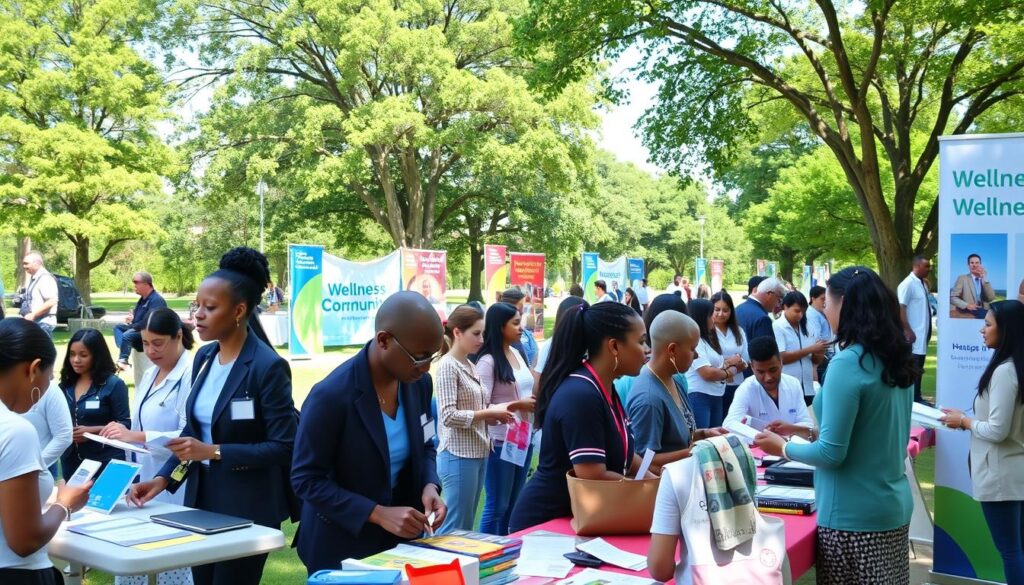
Health and Wellness Services
At the Wellness Fair, you’ll find a variety of health and wellness services. From yoga sessions to meditation workshops, there’s something for everyone. These activities are designed to help attendees relax and rejuvenate, ensuring they leave the event feeling refreshed and revitalized.
Interactive Activities
The Wellness Fair is not just about services; it’s also a hub for interactive activities. Visitors can participate in fitness classes, engage in mindfulness exercises, and even take part in health screenings. These interactive activities make the Wellness Fair a dynamic and engaging part of the Grand Rapids Comic Con experience.
Whether you’re looking to improve your physical health or simply unwind, the Wellness Fair at the Grand Rapids Comic Con has something for you. It’s a unique opportunity to combine your love for comics with your commitment to well-being.
Accessibility & Safety
An inaccessible health expo is like a library with locked doors—it defeats its own purpose. We’re not just talking about compliance here; we’re talking about basic human decency. If someone can’t get to your event, or feels unsafe once they arrive, your messages about wellness are lost.
Transportation is the obvious starting point. Arranging shuttle services from senior centers or partnering with local ride-share programs isn’t charity—it’s logistics. It acknowledges that not everyone has a car, can drive, or wants to navigate parking. This isn’t an add-on service; it’s the first welcome mat you roll out.
But physical access is a multi-layered cake. Are your pathways wide enough for wheelchairs and walkers? Is the flooring stable and slip-resistant? I’ve seen more than one event where the “accessible” entrance was through a service alley next to dumpsters. The message that sends is louder than any keynote speaker.
Then there’s the sensory landscape. Large crowds, bright lights, and constant noise can be overwhelming. Designating a quiet room isn’t coddling; it’s recognizing neurological diversity. It says, “We want you to participate in a way that works for your brain.” Your signage should follow the same principle: clear, high-contrast, and using plain language.
Safety is the silent partner to accessibility. We plan not for disaster, but for dignity. Visible first aid stations staffed with actual medical personnel transform anxiety into assurance. Marked emergency exits aren’t just a fire code requirement—they’re a psychological comfort. On a hot day, free water stations do more than prevent dehydration; they prevent your event from becoming its own public health advisory.
Each of these elements—from the shuttle bus to the water cooler—builds what I call ambient trust. Attendees may not notice each detail consciously, but they’ll feel the cumulative effect. They’ll sense an event that was planned by people who thought about their actual experience, not just their registration fee.
Ultimately, a truly accessible and safe health expo does more than host people. It honors them. It turns public health from an abstract concept into a tangible, felt reality. And that’s the whole point, isn’t it?
Measuring Event Success
Measuring an awareness event’s impact is like conducting an autopsy on a celebration. You need to look beyond the surface cheer to find what actually worked. Headcount tells you how many bodies showed up. It doesn’t tell you if their minds or hearts did.
The real metrics live in two places: the spreadsheet and the story. Quantitative data is your cold, hard evidence. How many health screenings were completed? How many people signed up for the new support group? Track these numbers religiously. They’re your baseline for growth.
Qualitative feedback is where the magic—and the brutal truth—hides. This isn’t about tallying “satisfied” vs. “unsatisfied” on a form. It’s about the handwritten note saying, “For the first time, I didn’t feel alone.” It’s the vendor suggesting a better traffic flow. It’s the volunteer who noticed the ASL interpreter was overwhelmed.
Send surveys. Make them short, smart, and brutally easy to complete. Ask attendees, vendors, and volunteers three core questions: What worked? What didn’t? What would make you come back? This feedback is gold. It’s your blueprint for the next awareness event.
Look beyond your immediate circle. Did local media pick up the story? Did you strengthen a community partnership? Did a city council member stop by? These are soft-power wins that amplify your message far beyond the event grounds.
For a deeper dive into the numbers game, check out this guide on event metrics and calculations. It breaks down the math so you don’t have to.
Ultimately, the ROI of an awareness event isn’t measured in dollars. It’s measured in connections made, stigma reduced, and resources discovered. Did you move the needle on public consciousness? That’s the only metric that truly counts.
Post-Event Follow-Up
The curtain falls. The last booth is packed away. Most events end here, with a whimper. A truly great wellness fair has a long tail.
Think of your event as a spark. The follow-up is the effort to turn it into a sustained flame. It’s the difference between throwing a great party and building a lasting community. Send that thank-you email to volunteers with the group photo. Morale is currency. Share survey highlights on social media to show you listened.
Connect the person who signed up for diabetes support with the actual local group leader. Use the feedback you gathered to refine your approach for the next health fair. Establish peer programs or continue social media engagement. This is how you provide ongoing support.
For a systematic approach, consider tools like The Events Calendar’s guide to post-event. It turns logistical chaos into a nurturing sequence.
Don’t just close the file. Nurture the connections you made at your wellness fair. That’s the real encore.