Coordinating group movement across generations can be tough. It’s like trying to parallel park a school bus in a snowstorm. But, the goal isn’t to make it hard. It’s to architect joy.
Your first task isn’t picking games. It’s defining your “why.” Is it to burn toddler energy, bridge the gap between grandparents and teens, or create a shared memory without screens?
We learn from the pros. Successful programs, like the Move For Fun Playbook, focus on four key things: Inclusion, Involvement, Enjoyment, and Evaluation. It’s like a democratic playdate where everyone gets a say.
Models like Igniting Fitness Possibilities (IFP) start with a “QuickStart” phase. It’s a non-competitive mix of activities. The aim is to put joy at the centre and avoid the pressure to perform.
So, before planning anything, define your mission. Make sure everyone can join in. A great day is one where no one feels left out.
Setting Objectives and Accessibility Standards
A field day without clear goals is like a symphony without a conductor. It has the chance to be beautiful but often ends in chaos. You might have the right setting and crowd, but without a leader, it’s just disorganized.
This role isn’t just about blowing a whistle. It’s about being a stage manager, a political expert, and a referee all at once. The leader reads the room’s mood and changes games to keep everyone engaged. They explain rules clearly and ensure everyone plays fairly, so no one gets upset.
Your event needs a solid plan. The Move For Fun playbook is great for this. Think like a community organizer, not just a party planner. Look at your location carefully to make sure it’s welcoming.
Is there accessible parking? Are the bathrooms easy to use and close by? Is there a path for strollers and wheelchairs? Is there shade or a covered area for people to rest? These are not just extras; they’re essential for making your event welcoming.
You need help to make this happen. Building local partnerships is key. Work with the community centre for help with logistics. Get permits and equipment from the parks department. Ask a sporty neighbour or a teen for help.
This team does more than fill spots. It makes your field day a part of the community. It increases attendance and makes everyone feel involved. It turns a solo effort into a team effort, which studies show makes exercise more enjoyable.
So, set your goals carefully. Are you aiming for bonding between generations? Just fun? Getting people active? Then, focus on making your event accessible and teaming up with the right people. The right place and team can make your ideas a reality.
Venue, Equipment, and Staffing
Finding the right venue for your family fitness day is key. It’s not about a perfect field but avoiding chaos. The space should welcome yoga, strollers, and kids’ energy with ease.
Your venue is the first step to a great event. Look for flat, shaded areas with easy access to restrooms and water. Set up a central area for gatherings and then spread out activities.
Choosing the right equipment is important. It shows what your event is all about. Whether it’s for fun or fitness, have a variety of activities.
- Essentials: Cones, soft balls, spoons and eggs, ropes, camera phones, and lots of pool noodles.
- The Tactical Menu: Include games like Capture the Flag and Photo Scavenger Hunts. They’re fun and strategic. But avoid activities that might cause injuries.
It’s all about finding the right balance. An egg toss is fun, but dodgeball might be too intense. Choose activities that everyone can enjoy.
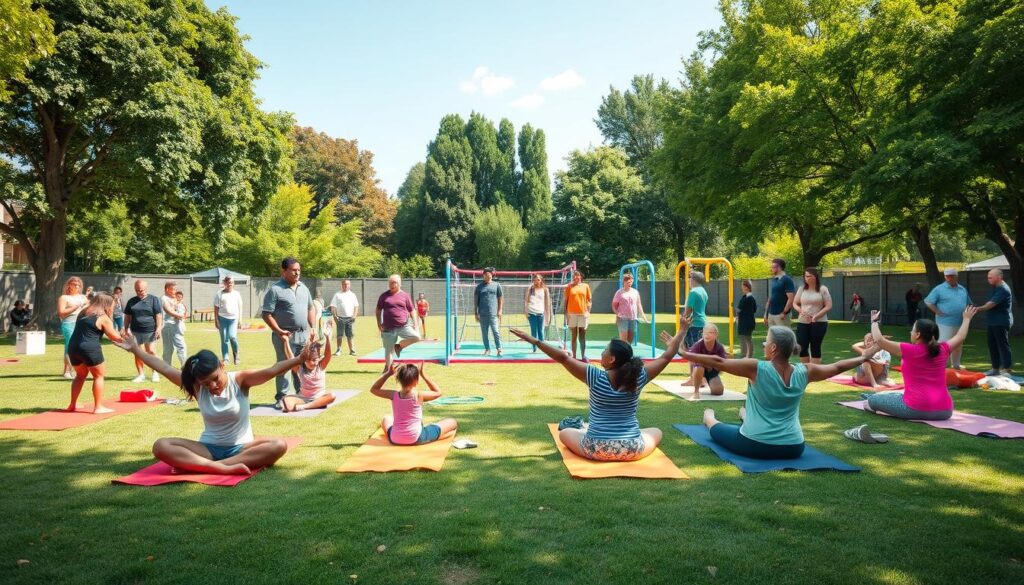
Staffing is also critical. You need people who can help and encourage, not just enforce rules. Recruit station captains and have volunteers ready to assist.
A good volunteer makes sure everyone has fun. They help kids and adults alike find their place in the activities. This human touch turns a list of games into a real community event.
Sample Stations (Relay, Yoga, Stroller Walk, Balance Games)
Forget Olympic trials; our station lineup turns every participant into a co-conspirator of fun, regardless of age or ability. This is where the rubber meets the road—or the grass, if you will. Each station is a microcosm of our core principle: inclusion. According to the Move For Fun Playbook, the fact of being active together matters infinitely more than the specific sport. So, we’re engineering shared moments, not competitions.
Let’s break down the blueprints. The goal isn’t to crown a champion. It’s to generate that collective buzz of participation. Think co-operative games, as emphasized in programs like the IFP’s. The win condition? Shared laughter.
First, the relay. The classic race gets a democratic overhaul. Can the baton be a brightly colored scarf, easier for small or less-grippy hands? Can the “run” be a wheel, a brisk walk, or a joyful bounce? Absolutely. The distance is short. The teams are mixed-age. The point is the hand-off, the encouragement, the collective effort. It’s a perfect primer for family fitness.
Next, the yoga corner. Leave the complex poses for the studio. Here, we emphasize feeling over form. Offer seated poses, partner stretches, and breathwork. Use imagery everyone can connect with—”reach for the cookie jar,” “melt like a snowman.” It’s mindfulness for the masses, no flexibility required.
The stroller walk is inherently adaptive. It’s a mobile social hour with cardio benefits. Map a short, scenic loop. Encourage parents, grandparents, and kids to stroll, chat, and point out clouds. It’s low-impact, high-connection, and welcomes anyone who can walk or roll.
Lastly, balance games. This isn’t a tightrope act. Set up simple challenges: standing on one foot on a flat mat, balancing a beanbag on your head, or even seated balance challenges. The activity adapts instantly to ability. Can it be done sitting down? Of course. The laughter comes from the wobble, not the perfection.
Here’s a quick-reference guide to these cooperative hubs:
| Station | Primary Action | Inclusive Twist | Simple Props |
|---|---|---|---|
| Adaptive Relay | Team-based movement sequence | Scarf baton; run/walk/roll options | Cones, colorful scarves |
| Community Yoga | Gentle movement & breathwork | Seated & partner poses; focus on feeling | Mats, optional yoga blocks |
| Stroller Walk | Guided walking loop | Pace-set by participants; all walkers/rollers welcome | Route map, welcome sign |
| Balance Games | Fun stability challenges | Seated or standing options; no failure state | Beanbags, flat balance pads |
Notice a pattern? Every station is designed so no one feels like a benchwarmer. This inclusive approach is the non-negotiable line item in your budget of fun. It transforms a simple gathering into a meaningful family fitness experience. For more insights on orchestrating group activities, check out our guide to personal trainer events.
Ultimately, these sample stations prove a point. The heart of true family fitness isn’t found in who crosses the line first. It’s in the collective grin that spreads when everyone, truly everyone, is included in the play.
Inclusivity for Adaptive Needs
What makes a field day truly inclusive? It’s not just about winning. It’s about recognizing everyone’s effort. Instead of giving out cheap ribbons, create rewards that celebrate everyone’s unique contributions.
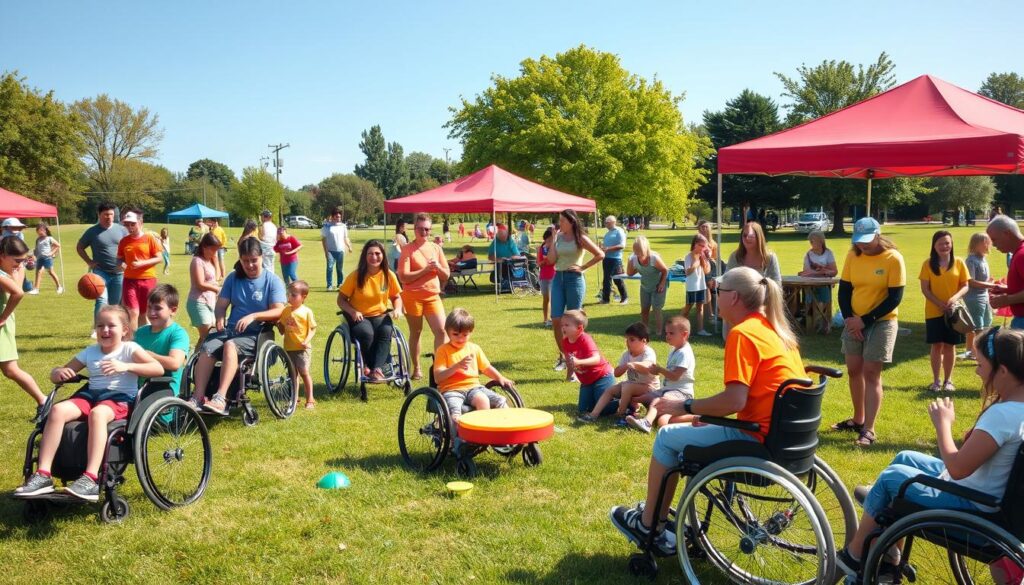
A plastic whistle is just trash. The Move For Fun Playbook offers better ideas. Give out activity cards or plan team outings. These are keepsakes that show everyone’s hard work is valued.
So, who pays for these special rewards? Local businesses can help. They make your event a part of the community. Look for small, local partners, not just big companies.
Work with the local smoothie bar for discounts. The indie bookstore can give out book prizes. Even the hardware store might sponsor the tug-of-war. Their support makes your event special.
These partnerships help everyone. Local businesses gain goodwill. Participants get unique rewards. Your field day becomes a cherished tradition. Everyone feels like they’re part of something big.
Prize Ideas and Local Sponsor Partnerships
Getting local sponsors is more than just getting free stuff. It’s about making your event a part of the community. Think of it like a local election. The best campaigns win because they have support from the neighborhood, not just outside money.
Your family fitness day works the same way. It needs the community’s support to succeed.
The prize table is like a promise to your participants. It’s something tangible and motivating. But, it should be quick and rewarding. Nobody wants to wait for hours to get their prize.
Also, change how you think about prizes. Instead of just rewarding winners, make sure everyone gets something. This approach is more about celebrating effort than just winning.
- Experiential Coupons: Free months at the local rock-climbing gym or family passes to the pool. These keep family fitness going.
- Local Business Swag Bags: Gift cards to smoothie bars, branded water bottles, or cookies. It’s all about supporting local businesses.
- “Golden Sneaker” Trophies: Fun, handmade awards for things like “Best Team Spirit” or “Most Creative Stroller Decor.” The sillier, the better.
- Family Activity Kits: A box with frisbees, jump ropes, and chalk. It’s a portable playground.
Sponsors are key to making these prizes happen. A partnership is a fair exchange. You offer them visibility to a family-friendly crowd. They give you resources and help make your event legitimate.
This is a win-win situation, connected to the community’s health through shared efforts.
When asking for sponsorships, offer different levels. This shows you’ve thought it through and gives businesses choices.
| Sponsor Tier | Investment | Benefits |
|---|---|---|
| Local Hero | Donate prizes or refreshments | Logo on event signage, social media shout-out |
| Community Partner | Cash contribution ($250-$500) | Featured station naming rights, logo on all participant materials |
| Title Sponsor | Major underwriting | Naming rights for the entire day, prime logo placement, speaking opportunity |
When prizes and sponsors match up, magic happens. That smoothie bar coupon in the swag bag brings in customers. The rock-climbing gym pass introduces new families. You’re not just hosting an event; you’re boosting local economies.
In the end, a well-thought-out prize table and local partners do more than give out prizes. They create a lasting community tradition where family fitness is supported by everyone. This turns a one-day event into a regular community gathering.
Weather and Safety Protocols
Every great production needs a script and a liability waiver. This is where your inner project manager gets to shine. Don’t wing the schedule; architect it.
Borrow from the Move For Fun playbook session structure. Start with a welcome and warm-up block—five to ten minutes of silly stretches. Move into the main play block with your rotating stations for sixty to eighty minutes. Conclude with a cool-down and a critical evaluation period.
That final question, “What was your favourite station?” is your real-time focus group data. It’s pure gold for refining future multi-age activities. For the legalities, keep it simple but sound. Use a template.
The key for a family waiver is having one document a parent signs for the whole tribe, covering all minors. Include clear language about photo releases if you plan to document the day. These documents are the unsexy scaffolding that holds your beautiful, chaotic day of fun securely in place.
Consider them the constitutional documents of your fledgling fitness republic. They ensure the safety and structure that make truly inclusive multi-age activities possible, rain or shine.