Let’s be honest – we’ve all had mornings where we wake up feeling like extras in a zombie apocalypse. That groggy, brain-fogged state isn’t just inconvenient; it’s a public health crisis the World Health Organization actually declared an epidemic.
The data doesn’t lie: tiredness causes more traffic accidents annually than alcohol and drugs combined. But beyond the dramatic statistics, sleep deprivation quietly murders our joy for life and ability to reach our true sleep hygiene.
Proper sleep hygiene isn’t about counting sheep – it’s neurological maintenance, emotional regulation, and metabolic health rolled into one nightly reboot. Well-rested people make better food choices and healthier social decisions. They’re less likely to impulse-buy at 3 AM or snap at loved ones before breakfast.
As research from the Mental Health Foundation confirms, quality rest helps process information, consolidate memories, and undergo essential maintenance processes. Treating sleep like an optional luxury is like trying to run a Ferrari on vegetable oil.
Good sleep hygiene transforms how we engage with the world – making us sharper, kinder, and frankly, more human.
Setting Bedtime Routines
Bedtime routines can feel like a battle with tiny dictators. We’ve all dealt with “one more story” requests and sudden thirst emergencies. And then there are the deep questions that pop up when it’s time to sleep.
Dr. Caraballo offers a simple yet powerful tip: “A bedtime routine doesn’t have to be long or complicated. The best routine is one that’s consistent and calm.” It’s not about strict rules. It’s about creating a soothing signal to your brain that it’s time to relax.
Good kids sleep routines are like a ballet, not a chaotic mess. Dawn Howarth suggests practical tips for your family. It’s not about following a strict plan. It’s about finding what works best for you.
Creating these routines is like installing antivirus software for your family’s emotional health. It brings a sense of safety and predictability, even as sleep takes over.
The Architecture of Effective Bedtime Routines
Effective kids sleep routines have key elements but can be tailored to your family. They’re like a framework that sets boundaries but also allows for personal freedom.
| Element | Traditional Approach | Smart Adaptation | Why It Works |
|---|---|---|---|
| Visual Charts | Verbal reminders | Picture-based sequence | Makes the chart the “bad cop” |
| Transition Warnings | Sudden activity shifts | 10/5/2-minute alerts | Respects cognitive processing time |
| Choice Architecture | Parent-directed activities | Limited options (“Book A or B?”) | Provides autonomy within boundaries |
| Sensory Integration | Ignore environmental factors | Weighted blankets, soft lighting | Addresses physiological calming needs |
Using visual charts can change bedtime for the better. The chart outlines the steps – brush teeth, put on pajamas, read a story, then lights out. It becomes the rulebook, not you.
These methods work because they respect kids’ brains while setting clear rules. They’re like a constitution for your evening routine, guiding everyone.
For more help, check out the Sleep Foundation’s resources. They offer tips that can help all family members. Sleep hygiene is for everyone, not just adults.
Remember, it’s not about being perfect. It’s about making progress. Some nights will be peaceful, others chaotic. The key is to keep trying.
Your kids sleep routines are the rhythm of your evening. They may not always be perfect, but they’re essential for rest and getting ready for tomorrow.
Screen-Free Evenings
Digital devices have taken over our evenings, just like Netflix takes over our attention. That glowing screen isn’t just fun – it’s messing with your sleep hygiene. It tricks your brain into thinking it’s daytime, not bedtime.
The science behind this is simple yet powerful. Blue light from screens stops melatonin production, like a toddler interrupting a call. Your brain can’t tell the difference between sunlight and screen light. It just knows “light means stay awake.”
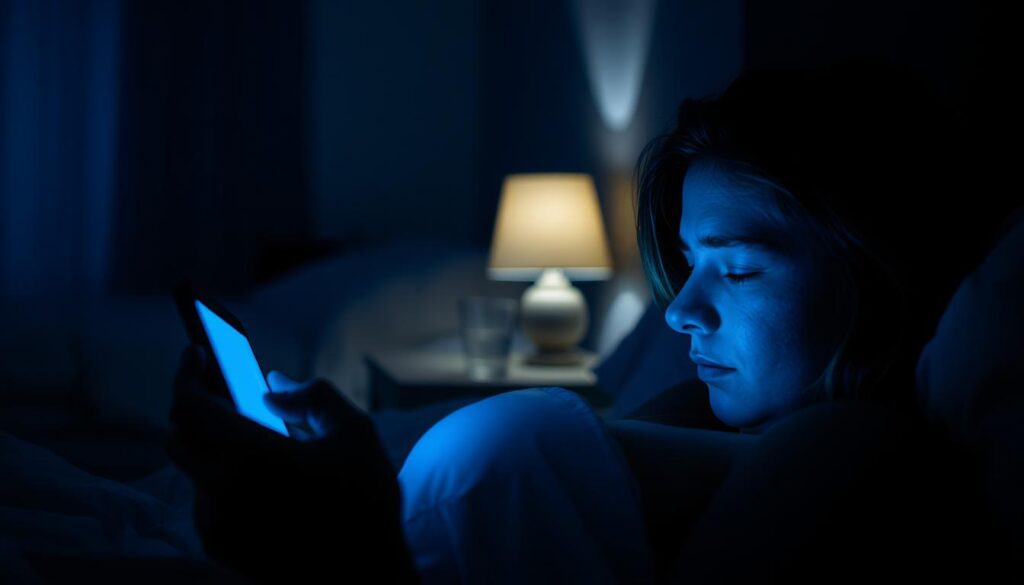
Dr. Caraballo suggests staying off screens for an hour before bed. It’s not about hating tech; it’s about our biology not keeping up with tech. Try setting a homework schedule that keeps teens off laptops for that last hour.
Dawn Howarth points out that adults aren’t immune to tech’s effects. We all get caught up in “just one more episode” or “quick email check” that turns into hours. The research on electronics and sleep shows it’s not just about willpower. It’s a fight against our bodies.
Screen detox doesn’t mean giving up tech. Here are some actually workable tips:
- Enable night mode on devices 2 hours before bedtime
- Charge phones outside the bedroom – yes, really
- Replace evening scrolling with physical books or podcasts
- Create a “digital sunset” ritual where screens get put to bed first
Good sleep hygiene means treating devices like guests. Appreciate their value but know when to kick them out. Your brain will reward you with better sleep, without the digital hangover.
Sleep-Friendly Environments
Creating the perfect sleep sanctuary isn’t about luxury bedding. It’s about understanding our brains need cave-like conditions to feel safe. Our kids’ sleep routines suffer when we ignore this.
Temperature is key, as our bodies don’t like central heating. Dr. Caraballo says the ideal sleeping temperature is around 68 degrees. This helps your body drop its core temperature by 1-2 degrees to sleep.
Darkness is also important, not just for avoiding eye strain. It helps trigger melatonin production. We need cave-dark, not “I can see my dresser” dark.
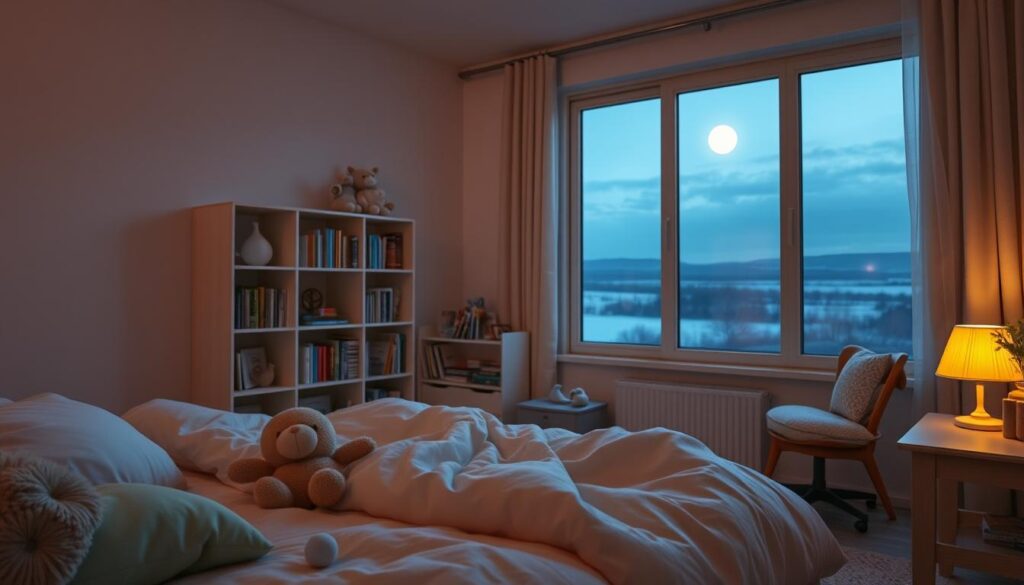
Noise is another silent killer of quality rest. It’s not just loud noises, but also the hum of electronics. True quiet means no sounds that keep the brain alert.
Dawn Howarth’s insight shows environmental factors are more than physical. They’re psychological signals that reassure our ancient brain. Get the environment right, and you create “sleep permission.”
| Environmental Factor | Ideal Condition | Common Problems | Impact on Sleep Quality |
|---|---|---|---|
| Temperature | 68°F (20°C) | Overheated rooms, heavy pajamas | Disrupts natural thermoregulation cycle |
| Light Exposure | Near-total darkness | Night lights, electronics LEDs | Suppresses melatonin production |
| Noise Level | Consistent quiet or white noise | Street noise, household sounds | Triggers micro-arousals throughout night |
| Air Quality | Well-ventilated, slightly humid | Dry air, allergens, stuffiness | Affects breathing comfort and oxygen intake |
The real magic happens when these elements work together. A cool, dark, quiet room doesn’t just create physical comfort. It sends a primal all-clear signal that lets the nervous system stand down.
Think of it as sleep Feng Shui: arranging environmental elements to work with biology. The result? Kids who don’t just sleep, but sleep deeply enough to restore and develop. Now that’s a smart investment in tomorrow’s future.
Monitoring Progress
Think you’re improving your sleep? That’s cute. Without tracking, you’re just guessing. It’s like navigating a new city without a map.
Monitoring your sleep isn’t about being obsessed. It’s about knowing what works, not just hoping it does.
Don’t be Sherlock Holmes of sleep. But knowing what works is better than guessing. That’s what separates the pros from the amateurs.
A simple sleep diary is your secret weapon. No need for complicated spreadsheets. Just something easy to use.
Here’s what your sleep diary should include:
- Bedtime and wake-up times (be honest – no cheating)
- How long it took to fall asleep
- Number of nighttime awakenings
- Sleep quality rating (1-10 scale)
- Daily habits that might affect sleep
The goal is to spot patterns, not aim for perfection. Look for trends, not just numbers. Did stopping Instagram improve your sleep? Did that coffee mess up your night? The data will tell you.
Understanding your sleep data is a mindset shift. You’re not judging yourself, you’re gathering facts. Think of it as solving a mystery, not being a dictator.
| Metric to Track | What It Reveals | Actionable Insight |
|---|---|---|
| Time to Sleep Onset | How quickly you fall asleep | Indicates pre-bed routine effectiveness |
| Sleep Efficiency | Percentage of time actually sleeping | Shows sleep quality versus quantity |
| Wake After Sleep Onset | Nighttime awakenings | Reveals environmental or stress factors |
| Sleep Consistency | Bedtime/wake-time regularity | Measures routine establishment |
The biggest mistake? Quitting after a week if you don’t see big changes. Real progress takes time, like watching hair grow.
Don’t aim for perfect sleep. Just understand your sleep better than anyone else. That’s where the real power is.
So, start tracking. It might surprise you. And you’ll have proof to show your partner about their snoring.
Common Barriers
Let’s face it—if perfect kids sleep routines were simple, we’d all be well-rested and calm. But, modern life gets in the way.
Teenagers often become night owls due to hormonal changes. Anxiety also peaks when it’s dark. Dawn Howarth says, “Many parents fight bedtime battles every night.” It’s a common problem.
Using screens before bed is a big problem, as research shows. Snoring, restless legs, and 2 AM worries add to the challenge.
Dr. Caraballo says, “Parents know when to seek help for sleep issues.” Recognizing these obstacles is key to better sleep routines. Sometimes, we need expert advice to improve.