Getting a guy to go to the doctor can be tough. It’s like trying to get a big guy to sit for a poetry reading.
Doctors’ offices often make people uncomfortable. The white coats and cold rooms can stop conversations before they begin.
We’re changing the game. What if doctors’ offices were replaced by gyms? What if heart health advice came from barbers?
Gyms and barbershops are perfect for real talks. They’re places where people feel at ease.
This approach is more than just a nice idea. It’s a smart way to improve public health.
It’s like a secret mission against diseases. The tools are free weights and haircuts. The goal is to make talking about health normal in places people already feel comfortable.
Quick Screenings and Risk Scores
Think of your body as a complex dashboard. Quick screenings are like the diagnostic trouble codes you can’t ignore. It’s not a long, detailed physical. Instead, it’s fast biometrics that show your health in seconds.
Three key areas are checked: blood pressure, cholesterol, and blood sugar. A quick blood pressure check can hint at future hypertension. A simple blood test can show if you’re at risk for diabetes, starting at age 35 and every three years after.
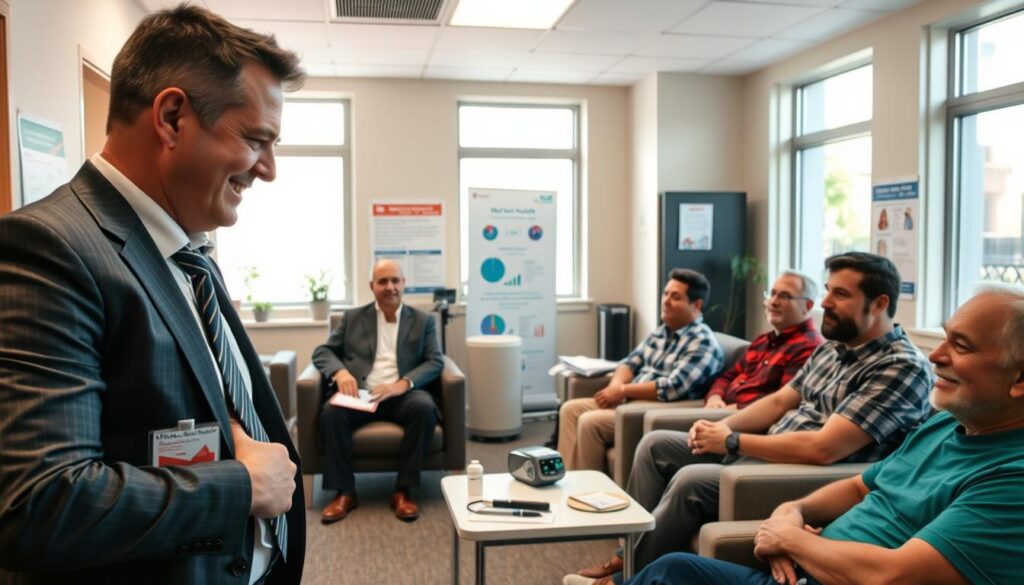
The talk about prostate health is nuanced. For men 55-69, the PSA test is a complex decision. It’s about weighing risks against benefits, based on your health history. For more on this, check out prostate health screenings.
Other checks include looking for infectious diseases and checking for moles. These tests give you a real-time risk score. This is like a health bar for your body. Quick knowledge is a powerful tool.
| Screening | Recommended Start | Frequency | The Data Point |
|---|---|---|---|
| Blood Pressure | Age 18+ | At every check-up | Silent predictor of stroke & heart attack. |
| Cholesterol (Lipid Panel) | Age 20+ for baseline | Every 4-6 years (low risk) | The ledger of your heart health future. |
| Diabetes (Blood Glucose) | Age 35 | Every 3 years | Early warning for metabolic syndrome. |
| Prostate Cancer (PSA) | Shared decision-making at 55-69 | Varies by individual risk | The nuanced signal in prostate health. |
The goal is not to worry you. It’s to turn vague fears into clear data. Your blood pressure, cholesterol, and PSA level are key health metrics. Knowing these numbers is the first step to better health.
Small‑Group Talks on Stress and Sleep
The idea of a stress-free male is a myth that’s harming us. It’s a myth that’s quietly killing us, one sleepless night at a time. After the blood pressure cuffs come off, our Men’s Health Nights focus on the mind.
We move away from the clinic feel. Imagine a roundtable in a trusted barbershop or gym lounge. This is where real barbershop outreach happens. It’s a space where you can be yourself.
Chronic stress isn’t just a feeling; it’s a chemical flood. Cortisol, the main stress hormone, on a constant loop wreaks havoc. It raises blood pressure, encourages fat storage, and wears down your mood, leading to depression.
Poor sleep alone hikes your risk for heart disease. Together, they’re a tag team undermining your foundation.
And what about prostate health? While the direct links are complex, we know systemic inflammation from chronic stress and poor sleep is a universal agitator. Why would your prostate be immune? The body doesn’t operate in silos.
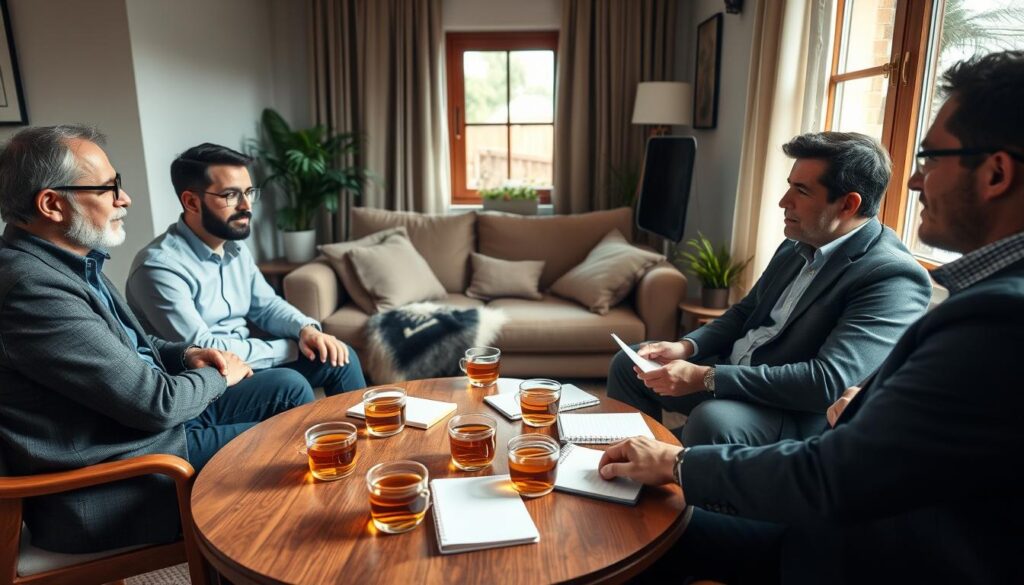
Our job is to facilitate, not lecture. We create small-group sessions that are part support group, part masterclass in self-preservation. The goal is a safe space where vulnerability isn’t weakness—it’s strategic intelligence.
We use storytelling. “Why does a bad night’s sleep feel like a hangover?” “Why does work stress live in your neck and shoulders?” These aren’t just complaints. They are diagnostic questions.
This is the revolutionary, therapeutic core of the model. Talking about stress management to lower your risk of heart disease becomes tangible. Planning for 8 hours of sleep shifts from a luxury to a non-negotiable defense strategy. It’s not therapy; it’s a tactical debrief with your peers.
That’s the power of this real talk. In the simple act of sharing, the myth of the stoic male crumbles. What gets built in its place is something far more durable: a practical understanding of your own health.
Fitness Demos (Strength Circuits)
Health isn’t just talked about; it’s shown through exercise. We’re not trying to be superheroes. Our goal is to build strength that everyone can achieve.
It’s like a live-action test. We focus on big movements and keeping our heart rates up. This fights against health problems like poor metabolism and heart disease.
Being active is key to staying healthy. Regular exercise helps keep weight in check and prevents diseases. But how do we make exercise a regular habit?
We show it through action. Our plan uses simple, quick workouts that need little equipment. It’s perfect for events like barbershop outreach. Here’s a circuit to boost metabolism and build strength:
- Goblet Squats: Works the legs and core.
- Push-Ups (or Incline Push-Ups): Builds upper body and chest.
- Bent-Over Rows: Great for pulling strength and posture.
- Farmer’s Carries: Simple yet effective for grip and stability.
These exercises are powerful. They work many muscles at once, raising your heart rate and improving heart health. The burn is your body getting stronger.
There’s also a mental benefit. The feeling after working out is from endorphins, which help reduce stress and improve mood. Building physical strength also strengthens your mind. It’s a cycle of empowerment.
In barbershop outreach, this demo is more than a workout. It’s a shared experience that breaks down barriers. It shows health is something you do, not just something you get from a doctor.
So, we move from talking to doing. The message is clear: fighting chronic disease starts with exercise. It’s about building strength in a place where community and health meet.
Incentives and Follow‑Up Appointments
Let’s face it: sometimes, a free t-shirt can motivate more than a health pamphlet. We’re not judging; we’re working with what motivates people. The key to a Men’s Health Night isn’t just the workout or the questions. It’s turning interest into action.
We use a two-part plan to make this happen. First, we offer an immediate reward. Then, we make sure the next step is easy to take.
Incentives are key to getting people to care about their health. We talk about branded fitness gear, wellness tracker raffles, or free trainer sessions. These aren’t just rewards; they’re ways to encourage good behavior. They say “thank you” and help people remember to take care of themselves.
| Incentive Type | Psychological Lever | Intended Outcome |
|---|---|---|
| Branded Performance Shirt | Identity & Commitment | Wearable reminder that reinforces the “health-active” self-image. |
| Raffle for Fitness Tech | Excitement & Anticipation | Generates buzz, extends engagement beyond the event night. |
| Partner Gym Session Pass | Reducing Friction | Lowers the barrier to starting a new fitness routine immediately. |
The real magic happens after the event. We make sure the health journey continues. A concerning heart health score or a prostate health flag shouldn’t end with the event. That’s why we set up follow-up appointments right away.
Imagine booking a 15-minute consult for the next week with a clinic partner from your phone. We use the idea of regular health checks, like flu shots, to make it seem normal. “You got your numbers tonight,” we say. “Let’s schedule a quick chat to understand them.”
This makes the follow-up seem like a routine part of life, not a scary medical visit. It’s the next step in taking care of yourself.
This process closes the loop. It turns a one-time screening into an ongoing conversation. The man who learned about heart health now has a chance to talk about his cholesterol. The one with prostate health questions can get answers in a private setting.
We make a night of awareness into a plan for action. All personal data is kept private, as promised in our privacy and data security policy.
The goal is to make commitment easy. The incentive gets him started. The follow-up system keeps him on track. It’s the difference between a fun night and the start of a healthier life.
Measuring Participation and Outcomes
So, what’s the ROI of a healthier community? In the age of big data, even goodwill needs to show its work.
We look beyond just counting people. The real success is in men who follow up after a check-up. It’s also about those who talk in small groups and feel less stressed later. Our main goals are to improve heart health and catch prostate health issues early.
This makes a good deed into a real public health effort. As research on male participation barriers shows, knowing what works helps make strategies last.
Good barbershop outreach isn’t just about showing up. It’s about real progress—stronger community bonds and actual health gains. Like youth wellness programs, you need clear results to prove it works.
The proof is in the paperwork. And in the healthier patients.