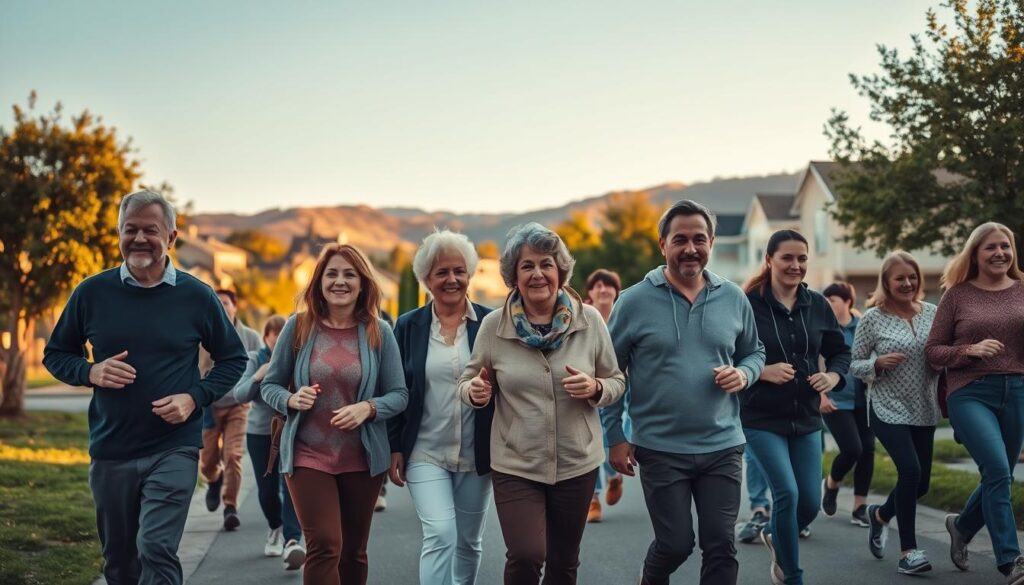
In today’s world of digital noise, starting a walking club is a bold move. It’s not about joining a protest. It’s about creating a real-world community through walking.
Leave behind the leotards of the past. Think about the power of walking together. It’s good for your heart and helps everyone feel connected.
Studies show walking groups can lower disease risks. They help with blood pressure and bone health. They also fight loneliness in our busy lives.
Joining a walking group turns solo walks into a social event. You get the exercise and the chance to connect with others. Walking is America’s favorite workout because it’s easy and safe.
This mix of exercise and friendship is powerful. It’s not just about physical health. It’s also about mental well-being. Who knew talking about local news could help prevent strokes?
Picking Safe Routes and Meeting Points
Your first task as a walk leader is to make it easy for people to join. Smart route planning is your key. You’re like an urban planner and a camp counselor combined. The planner deals with the setup, and the counselor makes the journey exciting.
The meeting point is essential. It should be easy to find. Look for places with plenty of parking or near bus stops. This makes it simple for everyone to get there.
Choose a central spot, like the local library or a café patio. This is your group’s meeting place. From there, you can have different routes to keep things interesting.
Make the path interesting to keep everyone engaged. Avoid boring routes like six identical cul-de-sacs. Instead, find unique spots like waterfront paths or historic areas.
But safety always comes first. Avoid rough paths and dark areas. Stick to well-lit, even surfaces. Make sure the path is wide enough for people to walk together.
Think about rest stops and amenities along the way. Having water fountains and restrooms can make the walk more enjoyable. These details can turn a tough walk into a pleasant stroll.
| Meeting Point Type | Parking Availability | Transit Access | Bad-Weather Backup | Vibe Factor |
|---|---|---|---|---|
| Café / Library Steps | Variable (Street/Meter) | Usually High | Low (Must go inside) | High (Social, Cultural) |
| Park Pavilion | High (Lot Often Available) | Low to Medium | Low (Covered but Open) | High (Natural, Scenic) |
| Community Center | High (Dedicated Lot) | Medium | High (Indoor Space) | Medium (Functional) |
| Mall Entrance (Pre-open) | Very High | Very High | Perfect (Indoor Route) | Low (Commercial) |
Always have a backup plan for bad weather. The local mall is a great option. It’s climate-controlled and safe. It’s not the most exciting place, but it’s better than canceling.
You’re creating an exciting experience, not a dangerous one. It’s a special ritual for your group. Use a walk audit toolkit to make sure your route is safe and enjoyable.
Pace Groups and Attendance Tracking
The first rule of a successful walking group is simple: never force a marathoner to stroll with a philosopher. It’s not just about fitness; it’s about social physics. The natural speed-walker and the contemplative ambler, together, are like The Odd Couple on the move. The answer is not a single group, but different pace groups.
Your rule is the “Talk Test.” If you can chat about a neighbor’s new lawn without getting winded, you’re good. If you can recite epic poetry easily, you might need a faster group. This rule helps answer the question: How will you accommodate people who walk at different speeds?
As the walk leader, your job is to help everyone get along by letting them walk at their own pace. Suggest a “hare” group and a “tortoise” group start together. Your goal is to keep the whole group happy, even if that means letting smaller groups form.
Identify places to rest and even plan shorter routes for those who need it. This planning turns what could be a problem into a solution for everyone.
Then, keep track of who’s there. That “Attendance List and Emergency Contact Information” sheet is not just a formality. It’s a way to show you’re committed. Seeing your name on the list often can make you feel like you’re really part of the group.
This tracking creates a sense of responsibility and pride. It’s not about watching people; it’s about celebrating their presence. This simple act turns a casual walk into a strong community tradition. Everyone, no matter how fast or slow, finds their place.
Safety (lighting, crossings, hydration)
Hydration, footwear, and visibility are key for a safe walking group. Without them, your group’s safety is at risk. It’s not about taking the fun out of walking. It’s about keeping everyone safe and comfortable.
Water is essential for everyone. Hydration is a must for your group. Make sure everyone has a water bottle. Take breaks to drink water and check on each other.
Feet are important too. Blisters can ruin a walk. Wear wicking socks and supportive shoes. Choose light, breathable clothes for comfort.
Visibility is critical. Visibility shows you’re there. Stick to well-lit paths and wear reflective gear. Use sunscreen during the day to avoid sunburn.
Crossing streets is a big deal. Use eye contact and a raised hand to signal drivers. Follow the official guidelines for safe crossing.
Before you start, check a few things. Lock your car and check the weather. A little bug spray can keep bugs away. Safety is important for a fun walk.
Accountability: Text threads and badges
Forget the friend knocking on your door—modern accountability buzzes in your pocket at dawn. That 6:45 AM text thread, humming with weather reports and mild existential dread, is the ghost in the machine of habit formation. It’s where good intentions get a gentle, digital nudge toward action.
This digital campfire becomes your group’s central nervous system. It’s not just for rain checks and start times. It’s where memes are shared, latecomers are gently shamed, and the collective will to move is reinforced. The simple act of typing “see you in 10” creates a social contract far more binding than a silent promise to yourself.
But let’s elevate the game. Why stop at texts? Enter badges. Not the scout kind, but digital or verbal accolades. Think “10-Walk Streak,” “All-Weather Warrior,” or “Hill Conqueror.” It sounds silly until you realize adults are just children with better credit scores. We all crave recognition.
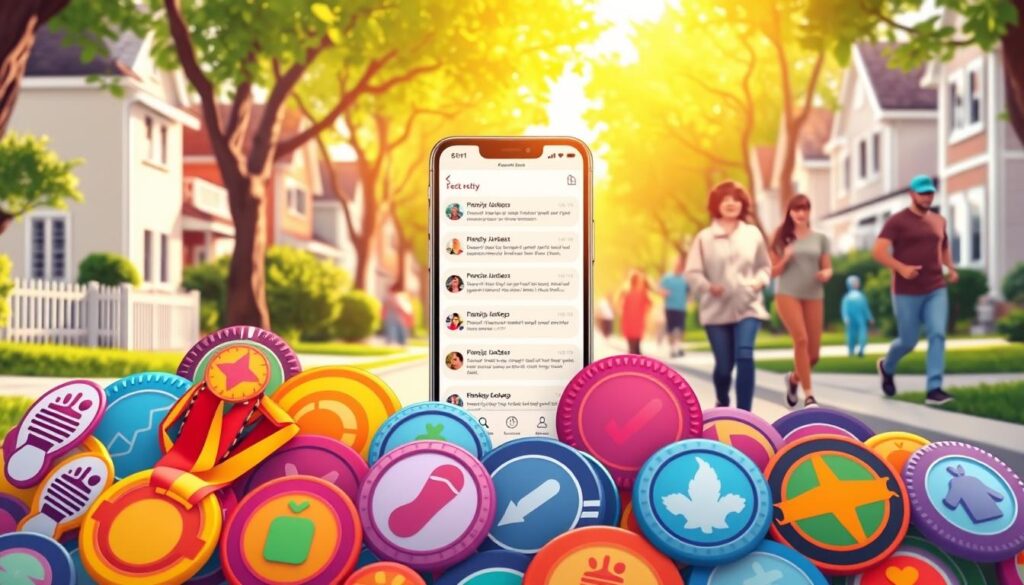
These micro-celebrations inject gamification into a mundane activity. They transform a simple walk into a game with visible progression. A badge is a story you can tell about yourself, a tiny monument to your consistency.
This system needs fuel: data. The Walk Leader Handbook suggests members track progress on paper, online, or with a fitness app. Recording dates, distance, and how you felt turns abstract effort into concrete achievement. That data point—”I walked 30 miles with the group this month”—is a powerful narrative.
Choosing your tracking method is key. Each has its own psychology. Paper is tactile and permanent. An app is automated and always with you. An online log is shareable and builds a community record. Your method should fit your group’s personality.
| Tracking Method | Best For | Key Advantage | Motivation Boost |
|---|---|---|---|
| Paper Log | The tactile learner, the ritualist. | Physical act of writing reinforces commitment. | Seeing your handwriting fill a page. |
| Fitness App | The data nerd, the convenience seeker. | Automatic tracking, maps, and pace data. | Weekly summaries and achievement pop-ups. |
| Online Group Log | The social butterfly, the team player. | Shared progress creates friendly competition. | Public recognition and group cheers. |
Combine these tools. Use a Facebook group for broad organization and promotion, as community health manuals suggest. Then, let the intimate text thread handle daily logistics and morale. Feed your badge system from the tracking data. This creates a self-reinforcing loop.
Accountability is no longer a chore. It’s the architecture of your new habit. The text thread is the heartbeat. The badges are the trophies. The log is the proof. Together, they build a story of progress that’s far more compelling than any solitary stroll could ever be.
Seasonal Challenges and Partnerships (Parks, Libraries)
Think of your local park district and library as allies in your quest for year-round community steps. Boredom can kill any group. But, new ideas and partnerships can save the day.
Your park system is eager to help. They have trails, paths, and events all year. Plan a “First Day of Fall Foliage Foray” at their visitor center.
The library is a treasure trove of stories and space. Use their community room for meetings. And, borrow their archives for a “Historical Haunts” tour. These partnerships bring in resources and credibility.
Use the calendar to your advantage. Turn workouts into events with fun themes. This makes exercise more enjoyable.
- Holiday & Awareness Walks: A reflective MLK Day “Walk for Service.” A Wear Red Day stroll for heart health. A “Tax Day Trauma Trek” for communal venting.
- Thematic Costume Walks: An “Ugly Sock Safari.” A “Tacky Holiday Sweater Stroll.” An all-white “Ghost Walk” at dusk. The dress code is social glue.
- Activity-Based Walks: A silent “Nature Listen Walk.” A “Dance Walk” with a portable speaker. A “Photo Scavenger Hunt” walk.
Always end at a local café. The post-walk coffee is where friendships grow. Ask for feedback to keep the community engaged.
These aren’t just gimmicks. They’re ways to build community lore. People will remember the “Ugly Sock Safari” more than just a walk. It’s how you create a lasting community bond, taking community steps together that echo far beyond the walk.
How to Measure Impact
How do you measure the success of a walking group? The answer lies in numbers: miles walked, heart rates, and pounds lost. This data is key for grants and a solid business plan.
The real success is harder to measure. Look at the Walk Leader Handbook. It shows that local walk leaders are key. When people feel supported, they keep walking for a year. They become community champions.
Track the spontaneous potluck after the walk. Count the dog-sitters and recipe sharers. Note the 80-year-old who says her doctor is “thrilled.” You’re building a strong community.
This is the quiet work of making cities better. You’re making streets safer. You’re reducing car use for short trips. The neighborhood becomes easier to navigate.
Measure both the numbers and the stories. The data shows success. The stories prove it. The legacy is a community of strangers becoming a neighborhood staple. That’s real impact.