Let’s be honest – when most people picture gardening, they imagine their grandmother’s rose bushes or that neighbor who’s way too proud of his tomatoes. But what if I told you that digging in the dirt might be the most revolutionary act of self-care? It’s like the invention of the yoga mat, but for your hands.
A well-organized community garden brings amazing benefits for both personal wellness and neighborhood health. It’s not just about growing food. It’s about reducing food insecurity and creating social connections that would make Facebook blush.
Research shows that gardening can reduce stress by 30%. In today’s world, that’s basically a superpower. Studies confirm what seasoned growers have known all along: getting your hands dirty is the best therapy money can’t buy.
From neglected spaces turning into vibrant oases to measurable improvements in nutrition and social inclusion, the evidence keeps growing. It turns out the solution to food deserts isn’t more convenience stores. It’s getting people together to grow real food.
How Community Gardens Work
Community gardens are like green social networks. They use photosynthesis as their algorithm and get “likes” from real plants. These gardens turn empty urban spaces into lively places for plants and people.
The American Community Garden Association tracks over 2,100 gardens in North America. Each garden has its own way of working. Some have elected boards, while others share food like at a potluck.
There are many types of community gardens. Neighborhood gardens turn empty lots into gardens. Allotment gardens let you rent a plot. School gardens teach kids where food comes from.
These gardens started during wartime. Now, they focus on wellness gardening and building community. They do more than just grow food.
Let’s look at how different gardens focus on community and wellness:
| Garden Type | Primary Focus | Typical Governance | Wellness Benefits |
|---|---|---|---|
| Neighborhood Gardens | Food Production | Community Voting | Physical activity, fresh produce |
| Allotment Gardens | Individual Plots | Rental System | Stress reduction, personal space |
| School Gardens | Education | Teacher-Led | Nutrition education, hands-on learning |
| Demonstration Gardens | Teaching Methods | Expert-Led | Skill development, community workshops |
| Institutional Gardens | Service Provision | Organization-Run | Therapeutic activities, social connection |
There’s a garden style for every community need. Whether it’s a church garden or a therapeutic garden, they all aim to help. These spaces offer wellness gardening experiences that help both people and communities.
Successful gardens mix different approaches. They might have both personal plots and shared areas. This mix creates a special place where community and individuality meet.
Group Activities (Workshops, Planting Days)
Forget boring corporate team-building exercises. Community gardens are where real social connection happens. They turn from empty lots into lively places where people enjoy each other’s company.
Studies show people feel 40% more connected through these activities. It’s a big deal in our world where we’re often alone.
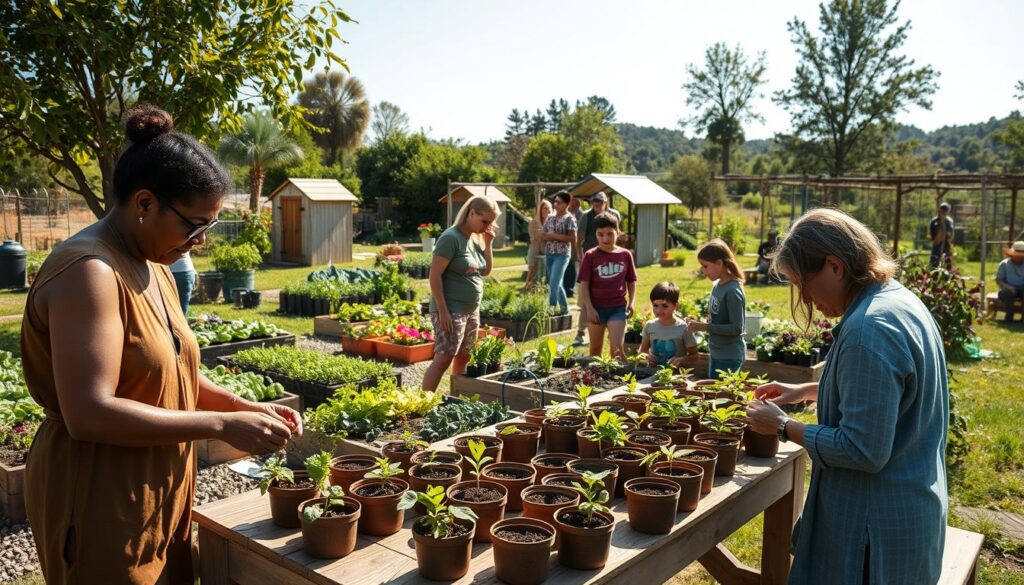
These gatherings are special. Spring planting days fill the air with hope as neighbors team up to grow tomatoes. Summer workshops are where everyone shares skills, from canning to vertical gardening.
These events help us build strong relationships. It’s more than just liking your neighbors. It’s about creating a community that feels like home.
The benefits are clear:
- Social inclusion and participation rates soar
- Less depression and anxiety from real connections
- Learning about different cultures in a fun way
- Feeling good about helping your community
Harvest celebrations are big events where everyone enjoys zucchini bread. These gatherings, from planting to harvest, are key to our mental health. Experts in horticulture therapy see them as natural support systems.
It’s not just about growing food. It’s about building strong relationships. The dirt and tomatoes help us connect and make real friends.
That’s healthy living that can’t be found in gyms or smoothies.
Accessibility Features
Traditional gardening often overlooks those who can’t kneel, bend, or carry heavy watering cans. But, modern community garden designs are changing this. They’re making these spaces more inclusive, turning them into places of innovation.
Raised beds at wheelchair height are a game-changer. They eliminate back strain and make gardening easier for everyone. Add tools with ergonomic grips, and gardening becomes accessible for those with arthritis or mobility issues.
Smart gardens also test for soil contamination. This is important to keep everyone safe from harmful substances. Safety is always the top priority.
When gardens follow universal design principles, magic happens. They include:
- Sensory gardens for neurodiverse participants
- Wide, paved pathways for wheelchair access
- Shaded seating areas for those who need rest
- Vertical gardening systems for easy reach
These features welcome veterans, seniors, and people with disabilities. They help reduce isolation and foster real connections through shared spaces.
Many community gardens enrich senior living by designing for older adults. They make sure gardening is for everyone, not just the able-bodied.
Here’s how top gardens compare in their accessibility approaches:
| Feature | Basic Garden | Advanced Accessible Garden | Gold Standard Garden |
|---|---|---|---|
| Bed Height | Ground level | Waist-high raised beds | Adjustable height beds |
| Pathways | Grass or dirt | Paved 3-foot wide paths | 5-foot wide paved paths with turning circles |
| Tools Provided | Standard equipment | Ergonomic tools available | Full adaptive tool library |
| Specialized Areas | None | Some sensory plants | Dedicated sensory gardens |
| Community Outreach | General population | Seniors and veterans | Partnerships with disability organizations |
The best gardens see accessibility as a design challenge. They aim to create systems that work for everyone. This requires thoughtful planning and a commitment to inclusion.
These spaces show that with the right design, everyone can enjoy gardening. Gardening shouldn’t require superhuman abilities. It’s about connecting with others and watching things grow.
How to Register for a Plot
Getting a community garden plot is not as simple as ordering avocado toast. It’s more complex than a Wes Anderson film and requires careful planning like a chess grandmaster.
First, find your local garden’s application portal. It’s usually on the parks department website. Some gardens are like exclusive clubs with long waiting lists, even longer than Hamilton ticket lines.
The application asks many questions. They want to know about your gardening experience, how committed you are, and if you’ll control your zucchini.
Fees are surprisingly low. You might pay less than your monthly streaming subscription. A plot can cost between $20-50 a year, enough to feed your family all summer.
Some programs need orientation sessions or interviews. It’s not just about growing tomatoes. It’s about joining a community. Share your love for organic gardening and offer to share your produce. That’s key.
Pro tip: Apply to several gardens. It’s like applying to college – have a few safe choices and some long shots. Keep trying, and you’ll get lucky.
Management styles vary a lot. Some gardens have experienced leaders making decisions. Others are democracies where everyone votes on garden rules.
Remember, this is more than just getting a plot of land. It’s an investment in wellness gardening. You’ll get fresh food, new friends, and the joy of eating what you grew.
Kid & Family Involvement
Getting kids excited about veggies is tough, like finding a unicorn. But community gardens make it happen every day. Kids are five times more likely to eat veggies they grow themselves.
This isn’t just gardening; it’s a nutritional magic trick. When kids plant seeds and watch them grow, they learn about food. They understand seasons through hands-on experience, not just books.
Family gardening turns solo digging into a shared legacy. Imagine grandparents teaching about heritage seeds while parents try to tell kale from weeds. School gardens become places where math and science meet through gardening.
These experiences change family dynamics and healthy living habits. Kids who know where food comes from avoid processed foods. They develop a deep connection with nutrition.
| Age Group | Gardening Activity | Educational Benefit | Nutrition Impact |
|---|---|---|---|
| 3-5 years | Seed planting | Motor skills development | 75% try new vegetables |
| 6-10 years | Watering responsibilities | Basic math measurement | 5x consumption increase |
| 11-13 years | Compost monitoring | Science of decomposition | 62% choose veggies as snacks |
| Family units | Harvest celebrations | Intergenerational knowledge transfer | 88% report improved meal quality |
Dirt might be better than any pamphlet for teaching nutrition. When kids see veggies grow from seed to salad, they connect with healthy living in real ways.
These gardens turn picky eaters into proud producers. Math-phobic kids start to care about square footage. It’s education through play, the best kind.
Family gardening leaves lasting impacts beyond the harvest. It builds traditions, knowledge, and a taste for fresh food. It’s not just gardening; it’s changing culture.
Garden Calendars
If community gardens had a secret weapon, it would be nature’s original project management software. These calendars aren’t just cute charts with vegetable drawings. They are strategic battle plans against weather, pests, and human ambition.
The 30-week growing season framework turns chaos into coordinated action. Smart gardens schedule plantings like symphony conductors. This ensures successive harvests, avoiding the problem of everyone harvesting 50 zucchinis at once.
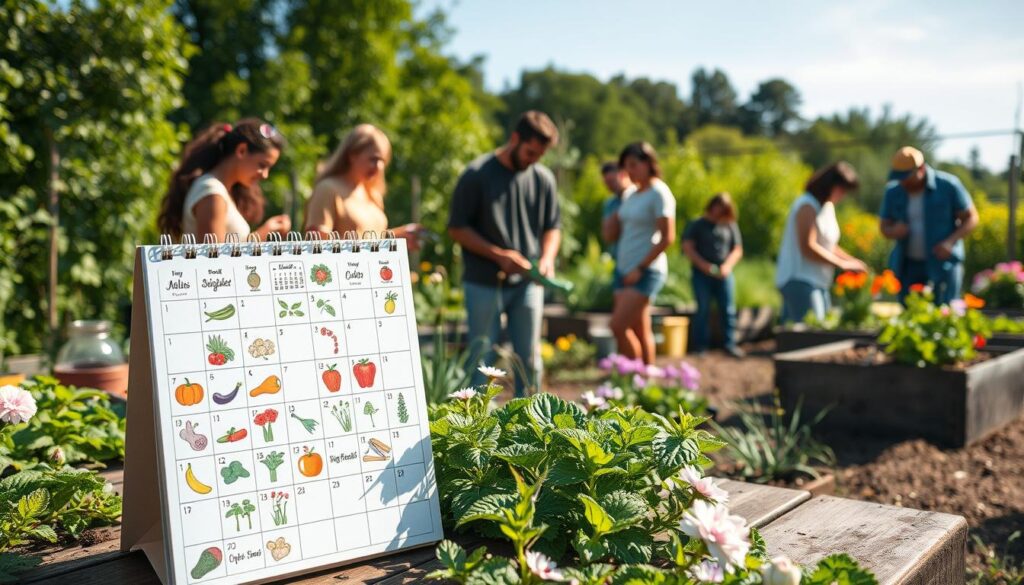
Seasonal planting guides account for regional variations – what works in Maine fails in Arizona. The calendar becomes the community’s shared rhythm. It blends moon phase traditions with soil temperature data.
Spring brings optimistic planting. Summer demands maintenance. Fall delivers abundant harvests. Each phase requires different tasks, from soil preparation to pest management.
The garden calendar is where ancient agricultural wisdom meets modern community coordination. It’s the difference between organized abundance and chaotic overgrowth.
Seasonal Food Drives
Most community efforts feel slow and complicated. But seasonal food drives are different. They’re like a punk rock concert in wellness gardening – fast, real, and works.
Studies show 35% of gardeners share their harvests often. This isn’t just being nice. It’s a secret food security network.
Food banks often lack fresh produce. But garden drives bring veggies from the soil to plates quickly. It’s a smart move.
Summer drives help during the “summer hunger gap” when school meals stop. Fall festivals become places to donate food, making food justice advocates happy.
This isn’t just giving. It’s building a community network through wellness gardening. It’s teaching people to grow their own food, with more tomatoes and less fishing.
Everyone benefits. Gardeners share their extra food. People get fresh produce. The community gets stronger against food security issues.
Your extra zucchini could be someone’s dinner tonight. That’s the power of wellness gardening.
Photo Journal Tips
Think of your garden photo journal as a visual diary of your healthy living journey. It’s not just about capturing perfect blooms. It’s about documenting the messy, beautiful process of growth. Your phone camera becomes a scientific instrument and artistic tool rolled into one.
Focus on the details that tell the real story. Capture the first true leaves emerging, the subtle color changes, the texture of soil after rain. These images document your garden’s progress better than any written record could. They become evidence of your commitment to healthy living practices.
Your photo journal serves multiple purposes. It’s a recruitment tool showing what’s possible. It’s an educational resource documenting pest patterns and plant recovery. It’s historical documentation of your community’s growth. Most importantly, it’s visual proof that you’re cultivating more than plants – you’re growing a healthier lifestyle.
The best part? Comparing your July tomato jungle to April’s bare soil provides that rare satisfaction of tangible accomplishment. In our digital world of endless scrolling, your garden photos represent something real. They capture the essence of healthy living – progress, patience, and the pure joy of watching something grow under your care.