Let’s be honest. A toddler using mashed potatoes as paint is very different from dealing with a teenager. The journey of growing up is full of big changes, not just small steps.
From the early days of sleepless nights to the complex talks of adolescence, each stage is unique. Trying to guide a child with a single method is like trying to hold water with your hands.
So, where do you find the right parenting help? The answer is not a generic search. It’s about finding a parent group that understands your current challenges.
Benefits of Parent Groups
Forget the old idea of support groups. Today’s parent groups are more like a team working together. They offer real help, not just a listening ear.
They turn vague parenting help into something you can use every day. It’s like having a team to solve problems together.
Let’s look at the real benefits. We’ll skip the feel-good stuff and focus on what really matters.
| Core Benefit | What It Actually Means | The Parent ROI |
|---|---|---|
| Validation & Empathy | When you hear others struggle with the same things, it’s a relief. It shows you’re not alone. | It makes you feel less isolated and more confident. |
| Knowledge & Education | Parent groups offer real advice from experts. You learn about sleep, social media, and more. | It helps you understand why things happen. You get the big picture. |
| Practical Advice & Tips | These groups share tips and tricks that really work. It’s like getting advice from a friend. | It saves you time, money, and stress. You learn from others’ experiences. |
| Emotional Support | These groups offer more than sympathy. They provide a safe space to share your feelings. | It helps you deal with stress and feel supported. |
| Building Connections | Parent groups help you meet people who understand you. You can share experiences and support each other. | It creates a strong support network. You’re not alone in parenting. |
Think of it as getting help with parenting. You don’t have to figure everything out on your own. You can use proven strategies for bedtime and homework.
This approach changes how you see parenting. It turns frustrating moments into learning opportunities. Suddenly, the eye-rolling is interesting, not annoying.
Parenting help becomes a proactive strategy. A strong parent support system helps you handle challenges with confidence. You’re not just surviving; you’re thriving.
Isolation is not the best way to parent. Working together is the key to success.
Types of Parenting Support Groups
Choosing a parenting support group is not just about finding any group. It’s about finding the right one for your specific needs. There are different groups for different challenges, each with its own culture and rules. Your choice shows what you need, not your parenting style.
Imagine trying to bring a spreadsheet to a poetry slam. The wrong parent group feels like that mismatch. Your main problem decides which group will really help you. Do you need to feel less alone, learn more, or tackle specific issues?
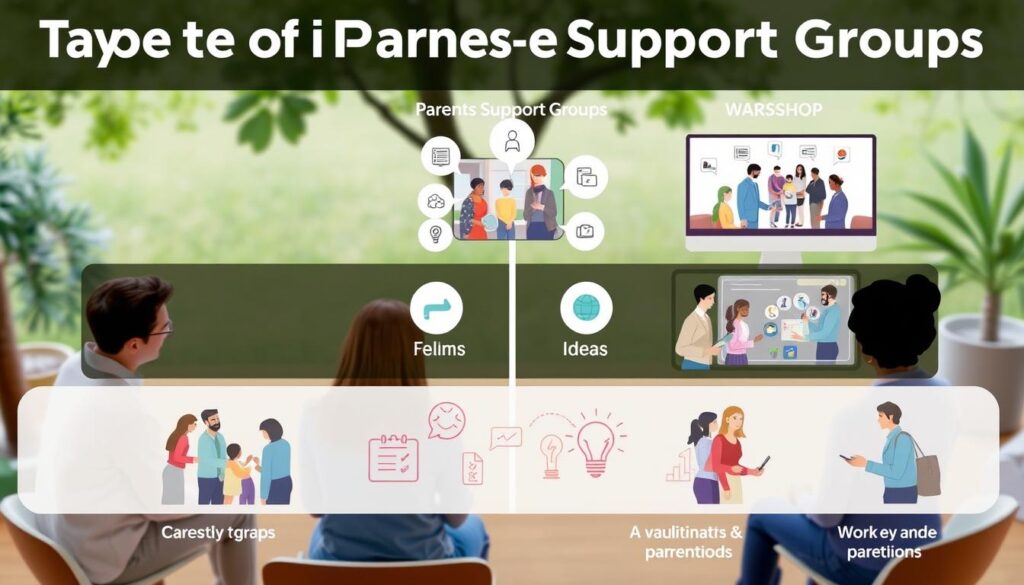
Online forums are like digital campfires, always available. They’re great for parents who need answers at 2 AM. You get advice from all over, but it’s not as warm as talking face-to-face.
Local meet-ups are the opposite, happening in real life. Here, you can talk about school issues and feel understood. The downside is the travel time, but you get real support.
Specialty groups are for specific needs, like neurodiverse kids or single parents. They offer deep, technical advice. It’s like having a team that really gets you.
| Group Type | Core Vibe | Best For Parents Who… | Key Limitation |
|---|---|---|---|
| Online Forums | Asynchronous, global, anonymous | Need instant answers at odd hours, value privacy, seek diverse perspectives | Lacks deep personal connection, can foster comparison |
| Local Meet-ups | Tangible, community-focused, regular | Crave in-person connection, want practical local resources (schools, sitters), build local networks | Geographically limited, requires scheduling commitment |
| Specialty Groups | Niche, expert-informed, deeply empathetic | Face specific challenges (special needs, single parenting, adoption), need targeted strategies, seek identity-affirming space | Smaller member pool, can sometimes feel insular |
The table shows different options. Your life and your child’s needs will guide you. New parents might choose online groups for their always-on nature. Parents of kids with special needs might find their community online.
It’s okay to have more than one group. You might join a local group for everyday issues, an online forum for medical advice, and a general community for venting. This approach is smart and flexible.
Your choice depends on what you need. Do you need more info, to feel less alone, or specialized advice? The right group will show itself. Just show up, whether online or in person.
How to Join or Start a Group
Getting into parent groups is like finding a secret club with baby monitors. It’s not just about coffee. It’s about finding people who understand your struggles and share your sleepless nights.
Start by looking online. Check out Facebook, Meetup, or Peanut. Also, local community centers and libraries often have notices about these groups. Your goal is to find groups that really speak to you.
Next, do some research. Think of it as a first date with a group. What’s their approach to parenting? Do they offer support or compare milestones?
Think about the practical stuff like a business:
- Location & Schedule: Is it far during nap time?
- Cost Structure: Is it free, by donation, or a subscription?
- Group Dynamics: Are they welcoming or cliquey?
- Child Inclusion: Is it stroller-friendly or for adults only?
If you can’t find the perfect parent group, start your own. It’s like starting a small business. You’re creating something new.
Be clear about your mission. What need are you filling? Are you helping single parents or families with special needs? Your “why” is key.
Find your team. Start with a few dedicated parents. Choose a platform: online for more people, or in-person for real connections.
Then, get down to business. Plan like a project manager. Ask the big questions:
| Planning Phase | Key Questions | Your Answers |
|---|---|---|
| Foundation | Goals? Target audience? | Be specific. “Parents of toddlers” is vague. “Working parents of 2-3 year olds in Brooklyn” has power. |
| Content & Delivery | Discussion topics? Facilitator? | Will you rotate leadership or have a guide? Structured themes or free-flow? |
| Operations | Registration? Marketing? | Simple Google Form? Word-of-mouth or local flyers? |
| Sustainability | Follow-up? Feedback? | How will you nurture connections between meetings? |
Marketing your parent group needs to be subtle. You’re inviting people to join a journey, not selling something. Post in online communities and share your vision.
The first meeting is important. Arrive early and have a plan, but leave room for real talks. You’re a host, moderator, and fellow traveler seeking parenting help.
Remember, every movement starts small. Your home or Zoom room could be a lifeline for others. The hard work now is building a community. Let’s get started.
Group Activities & Discussion Ideas
Think of a parenting support group as a place to plan and strategize, not just share feelings. It’s where you learn to improve your parenting skills. This is about making your parenting better, not just talking about it.
These activities are like a family resource that turns ideas into actions. It’s not just talking; it’s practicing and learning together. You’re testing new ways to handle parenting challenges.
Let’s focus on activities that help you build real skills. We want you to practice, not just talk about it.
- The Five Love Languages Workshop: This turns a popular idea into a real skill. You learn to understand and speak your child’s emotional language.
- Role-Playing Scenarios: Practice tough conversations like about curfew or screen time. It’s a safe way to test your arguments without any real consequences.
- Parent & Child Vision Boards: This is like planning a family project. It helps you align your goals and work together.
- Mindfulness Exercises for Parents: These help you pause before reacting. It’s about learning to stay calm in stressful moments.
- Crafting Activities (Together or Solo): Making things helps you build patience. It’s a practical way to learn this important skill.
These activities give you real parenting help for when challenges come. They help you take action, not just learn passively.
Now, let’s talk about discussion topics. A good agenda is timely and focused. We move from general problems to specific solutions. Good family discussions start with a clear plan.
Here are topics to help you plan, not just feel sorry:
- Child Development Milestones: Learn how to support your child’s growth. It’s about creating the right environment.
- Gentle Parenting in Practice: Learn how to set boundaries without causing a fight. It’s about finding a balance.
- Teaching Life Skills: Focus on skills like laundry and finance. It’s about raising competent kids.
- Discipline That Sticks: Explore consequences that teach, not just punish. It’s about learning from mistakes.
- Parental Burnout & Anger Management: Talk about staying energized and calm. You can’t lead when you’re angry or tired.
- The Screen Time Negotiation: Create a family media plan. It’s about setting rules together.
- Teen Communication Breakdowns: Learn to understand your teenager better. It’s about keeping communication open.
- Family Nutrition Without the Fight: Find ways to feed everyone without arguing. It’s about working together.
This approach turns your group into a valuable family resource. It’s where you try out ideas, test strategies, and leave with a plan. The goal is to give you parenting help that makes challenges feel manageable.
The magic happens when you do and talk together. Practice a nutrition talk or make a vision board about screen time. This turns abstract support into real skills.
Integrating Professional Advice
Imagine if your weekly vent session about toddler tantrums came with a live Q&A from a child development specialist. That’s the quantum leap we’re discussing here. It’s the moment your parent group evolves from a well-meaning coffee klatch into something far more potent.
Shared experience provides comfort, sure. But professional advice delivers clarity. It’s the difference between everyone in the book club guessing the symbolism and having the actual author explain it. Your group’s collective wisdom is valuable, but it’s anecdotal. Bringing in experts transforms that anecdote into strategy.
So, what does this look like in practice? It’s not about replacing peer support. It’s about augmenting it. Think of it as building a bridge between the trenches of daily parenting and the ivory towers of research.
Here are three powerful ways to weave professional guidance into your group’s fabric:
- Live Expert Q&As: Schedule virtual or in-person sessions with child psychologists, educational consultants, or family therapists. This turns abstract concepts into actionable answers for your specific struggles.
- Topic-Specific Workshops: Host a workshop led by a sleep coach, a nutritionist, or a financial planner specializing in college savings. This targeted learning addresses universal pain points with precision.
- Curated Resource Sessions: Have a facilitator, perhaps a parenting coach, guide a discussion on evidence-based frameworks. They can dissect popular parenting methods, separating science from trend.
This integration does something remarkable. It changes the group’s entire energy. Conversations shift from “This is what I did…” to “Here’s what the research suggests…” The emotional support remains, but now it’s backed by intellectual rigor. Your weekly meeting becomes a premier family resource, a place where empathy meets evidence.
The table below breaks down the transformation from a standard group to an expert-integrated one:
| Standard Parent Group | Expert-Integrated Parent Group | The Upgrade |
|---|---|---|
| Peer-to-peer anecdotal sharing | Evidence-based strategy discussions | Moves from sympathy to solutions |
| Informal advice on challenges | Structured Q&As with professionals | Replaces guesswork with guidance |
| General emotional support network | Targeted knowledge consortium | Evolves from a safe space to a smart space |
| Self-guided topic exploration | Curated learning from leading experts | Shifts from reactive to proactive support |
Ultimately, this isn’t about undermining the value of shared experience. It’s about fortifying it. When your parent group can connect you directly to a professional who wrote the book on behavioral challenges, you’re not just getting support. You’re getting an education. That’s how a simple support circle becomes the most dynamic family resource in your arsenal.
Balancing Support & Privacy
Joining a parent group is like sharing secrets with a bartender. You want help and advice but keep your family’s story private. This is the key challenge of parenting help: sharing versus keeping things to yourself.
How much do you share about your family? A parent group can feel like a confessional. But remember, it’s not a place for secrets to stay forever. It’s about knowing when to share.

A good group has rules for safe talks. This isn’t luck. It’s thanks to moderators who keep things in check. They’re like referees, making sure everyone is comfortable sharing.
So, what’s the right thing to say? Share the problems, like defiance or homework issues. But keep the deeper stuff, like family history, to yourself. It’s about building a team, not airing your laundry.
Being selective with what you share is powerful. It lets you get help without exposing your personal struggles. You get support without the risk of regret.
Setting boundaries is not about building walls. It’s about choosing what to let in. This way, you get the help you need from your parent group without any unwanted consequences.
Local & Digital Resources
Trying to navigate parenting without a good resource map is tough. It’s like trying to put together IKEA furniture without the instructions. We’re surrounded by advice from over 1,000 podcasts, articles, apps, books, and organizations every day. Your parent group should be your go-to for trusted advice, not just more noise.
We’re building a resource map that’s both digital and local. This helps parents connect and feel part of a community. Let’s start with the digital side.
The digital world has everything from helpful podcasts to detailed online guides. These guides cover topics like child development and mental health. Have you found an app for managing chores or a podcast that really gets it?
Your group’s job is to sort through all this information. It’s about finding the best platforms and tools. Some apps and websites are great for organizing events and managing communities. This is where your parent group shines.
Now, let’s look at local resources. Family resource centers and library programs are your local allies. Every community has its own hidden treasures. Which library has the best storytime for toddlers? Which community center offers yoga for parents and kids?
Local resources offer something digital ones can’t: real people and immediate help. A local family resource center knows your community’s specific needs. They can point you to affordable services and local support groups.
Here’s the analytical part. The best groups create a living database of resources. They organize them by need, age, and how to access them. Think of this simple framework:
- Digital First Aid: Apps for emergencies, crisis lines, and virtual help
- Knowledge Archives: Podcasts, articles, and book suggestions
- Local Anchors: Community centers, library programs, and school resources
- Specialist Networks: Therapists, tutors, and healthcare providers recommended by the group
This isn’t just about collecting links. It’s about curation with context. A resource is only valuable if it fits your specific situation. That podcast about teenage anxiety? Not useful for parents of toddlers. That amazing preschool coop? Not relevant for parents of middle-schoolers.
Your group becomes the filter that sorts the good from the bad. This turns overwhelming information into something useful. It makes your parent group a vital family resource. Members get more than support; they get a personalized guide for parenting.
The goal isn’t to know everything. It’s to know where to find what you need. A good introduction to parenting support systems covers both digital and local resources. The best groups excel in both areas. They become the go-to for connecting parents to what they need, when they need it.
So, does your group have its act together? Or are you stuck trying to figure things out on your own?
FAQ
Q: What are some effective parenting tips for raising a well-adjusted child?
A: Effective parenting tips include setting clear boundaries, practicing positive reinforcement, and fostering a supportive environment. These strategies help children develop self-esteem and emotional intelligence.
Q: How can I create a positive home environment for my child?
A: To create a positive home environment, maintain a clean and organized space, encourage open communication, and promote emotional well-being. This helps in building a strong foundation for your child’s development.
Q: What are some strategies for effective communication with my child?
A: Effective communication strategies include active listening, using non-verbal cues, and maintaining a calm demeanor. These help in building trust and understanding between you and your child.
Q: How can I encourage my child’s emotional intelligence?
A: You can encourage emotional intelligence by teaching empathy, recognizing and validating feelings, and modeling healthy emotional responses. This helps your child develop self-awareness and social skills.
Q: What are some ways to promote positive self-esteem in my child?
A: Ways to promote positive self-esteem include providing positive reinforcement, encouraging self-expression, and celebrating achievements. These help in building your child’s confidence and self-worth.
Q: How can I foster a supportive environment for my child?
A: You can foster a supportive environment by being present, showing physical affection, and creating a safe space for emotional expression. This helps in building a strong bond and promoting emotional well-being.
Q: What are some effective discipline strategies for raising a well-adjusted child?
A: Effective discipline strategies include setting clear boundaries, using positive reinforcement, and teaching consequences. These help in teaching responsibility and promoting positive behavior.
Q: How can I encourage my child’s cognitive development?
A: You can encourage cognitive development by providing opportunities for learning, engaging in activities that promote problem-solving, and fostering a love for reading. These help in developing critical thinking skills and a love for knowledge.
Q: What are some ways to promote physical and mental well-being in my child?
A: Ways to promote physical and mental well-being include encouraging regular exercise, promoting healthy eating habits, and teaching stress management techniques. These help in maintaining overall health and well-being.
Q: How can I create a positive home environment for my child?
A: To create a positive home environment, maintain a clean and organized space, encourage open communication, and promote emotional well-being. This helps in building a strong foundation for your child’s development.
Q: What are some strategies for effective communication with my child?
A: Effective communication strategies include active listening, using non-verbal cues, and maintaining a calm demeanor. These help in building trust and understanding between you and your child.
Q: How can I encourage my child’s emotional intelligence?
A: You can encourage emotional intelligence by teaching empathy, recognizing and validating feelings, and modeling healthy emotional responses. This helps your child develop self-awareness and social skills.
Q: What are some ways to promote positive self-esteem in my child?
A: Ways to promote positive self-esteem include providing positive reinforcement, encouraging self-expression, and celebrating achievements. These help in building your child’s confidence and self-worth.
Q: How can I foster a supportive environment for my child?
A: You can foster a supportive environment by being present, showing physical affection, and creating a safe space for emotional expression. This helps in building a strong bond and promoting emotional well-being.
Q: What are some effective discipline strategies for raising a well-adjusted child?
A: Effective discipline strategies include setting clear boundaries, using positive reinforcement, and teaching consequences. These help in teaching responsibility and promoting positive behavior.
Q: How can I encourage my child’s cognitive development?
A: You can encourage cognitive development by providing opportunities for learning, engaging in activities that promote problem-solving, and fostering a love for reading. These help in developing critical thinking skills and a love for knowledge.
Q: What are some ways to promote physical and mental well-being in my child?
A: Ways to promote physical and mental well-being include encouraging regular exercise, promoting healthy eating habits, and teaching stress management techniques. These help in maintaining overall health and well-being.
Ongoing Support
The true test of any support system isn’t the first meeting. It’s the tenth. Or the hundredth. Does your parent group stay when the crisis is over, like a tent in a storm? Or does it become a strong part of your family’s foundation?
Ongoing support is the quiet work in the background. It’s the text months later. It’s sharing an article when a new stage comes. This turns a helpful group into a lifelong learning community.
Groups like Parents Helping Parents build this strength with daily groups and weekly talks. They know that learning needs a network, not just a single talk.
Creating lasting connections means making rituals members value. It means changing leaders to keep things fresh. Your chosen group should grow with your family.
The parenting journey never ends. It just changes. Your support system should be ready for all of it.