Forget everything you’ve heard about kale smoothies and overpriced yoga mats. We’re talking about something far more substantial here.
These initiatives show us a simple truth: our health is tied to our communities. It’s part of our neighborhoods, schools, and local spots.
The Community Preventive Services Task Force has the proof: working together can reduce substance use among youth. This isn’t just theory – it’s real, evidence-based change.
SAMHSA calls it “community action,” which might sound boring at first. But it’s really about caring for our neighbors’ health. It’s like a neighborhood watch, but for helping people thrive.
These aren’t just nice ideas. They’re our best chance at building healthy communities. Experts call it creating the conditions for health – where people can grow and succeed together.
Why They Matter for Families
Let’s face it – keeping up with modern family health can feel like a choice between organic avocado toast and paying the mortgage. Community wellness programs help bridge this gap.
The CDC’s latest numbers paint a scary picture. Adults with disabilities face huge health disparities. They have 42% higher obesity rates, 28% more smoking, and alarming heart disease stats. These aren’t just numbers; they’re our family members.
Community wellness steps in as the hero we need. SAMHSA’s eight dimensions of wellness turn health into a team effort. We’re talking about:
- Social wellness that gets teens off their phones
- Financial health strategies that don’t cost a fortune
- Emotional support systems that beat endless Instagram scrolling
- Physical activities that won’t break the bank
These programs do more than fix problems; they build “health capital.” Think of it as investing in your family’s wellbeing. Every yoga class, every nutrition workshop, adds to your family’s strength.
The real magic is that community wellness makes preventive care a basic right. It’s the difference between treating illness and building health. It’s about creating vitality, not just reacting to crises.
For families dealing with high healthcare costs and wellness trends, these programs offer something special. They provide common sense solutions that don’t require a huge income. They’re like finding a working payphone in 2024 – surprisingly vital and desperately needed.
Types of Community Wellness Programs
Welcome to the buffet of better living. Here, you can find everything from fitness classes to prevention strategies. It’s like a choose-your-own-adventure book, but every path leads to better health and connections.
Group Fitness: The Modern Town Square
Remember town squares where communities gathered? Now, we gather to sweat together. Group fitness turns exercise into a social celebration.
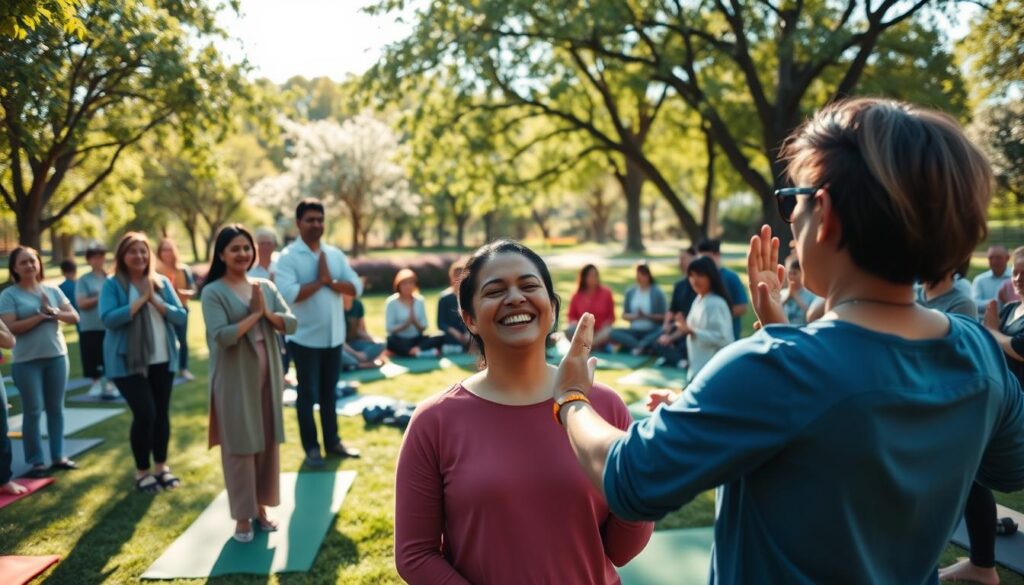
Yoga in the park becomes a chance to network. Zumba classes are intergenerational dance parties. These programs show that community health grows when people interact.
Nutrition Programs: Fighting Food Deserts
Nutrition initiatives fight the “food desert industrial complex.” They offer real education and access, not just pamphlets.
These programs teach skills like budget-friendly meal prep and reading labels. They make health advice real and actionable.
Support Groups: Building Social Capital
Sociologists call it “social capital.” Normal people call it “not feeling alone.” Support groups build this through shared experiences.
They help with parenting challenges or managing chronic illness. These groups show that community health includes emotional well-being.
Disease Prevention: Inclusive by Design
Disease prevention works when it includes everyone. We needed reminders that people with disabilities want to avoid diseases too.
The CDC’s disability inclusion recommendations address this gap. The Community Guide suggests adaptations for accessibility:
| Adaptation Type | Implementation | Impact |
|---|---|---|
| Communication Formats | Braille materials, sign language interpreters | Information accessibility |
| Staff Training | Disability awareness programs | Better participant support |
| Environmental Changes | Ramps, accessible equipment | Physical accessibility |
| Program Flexibility | Modified exercises, extended timelines | Inclusive participation |
California’s public health resources show these adaptations in action. Realizing your wellness program excluded 25% of the population is a wake-up call.
These program types show wellness is more than individual choices. It’s about creating environments where healthy choices are easy, social, and inclusive.
How to Find and Join Locally
Finding local wellness programs shouldn’t be hard. You’d think it would be easier than finding a new Marvel series on Disney+. But here we are.
Start with SAMHSA’s planning resources. They offer tools to find programs. It’s like having a wellness-focused GPS that works.
Then, check your local health department website. If it’s old, try calling. Sometimes, the best info is in the analog world.
The CDC supports 19 state-based disability and health programs. You shouldn’t miss out on wellness because of where you live. These programs often work with community wellness hubs that are central gathering points.
Look for programs that are inclusive. We’re talking about:
- Accessible formats that are easy to understand
- Trained staff who know their stuff
- Environments that are easy to get around
Pro tip: If the program only shows able-bodied people, ask about inclusion. Real wellness programs reflect the community – diverse, imperfect, and human.
Don’t overlook local libraries, community centers, and places of worship. Some of the best wellness initiatives are hidden, run by passionate volunteers.
Remember: The best wellness programs aren’t always the shiniest. Sometimes, they feel like coming home to a place you belong.
Registration & Accessibility
Ever tried to sign up for something that promised healthy living but found it too hard? That’s what happens with many wellness programs. They look good on paper but struggle with the sign-up process.
The CDC talks about making things accessible for everyone. They say to make websites easy to use with screen readers. This means big print and clear communication for all.
Being accessible means more than just wheelchair ramps. It’s about making sure everyone can read your forms. It’s about understanding service animals and having transportation for all.
Wellness programs that don’t welcome everyone are unhealthy. The National Institutes of Health has great guidelines that many ignore.
Today’s technology should make signing up easy for all. But many programs use PDFs that screen readers can’t read. They also expect everyone to have internet and know how to use it.
Real healthy living programs make accessibility a core part of what they do. They offer many ways to sign up and provide materials in different formats. They also train staff to meet everyone’s needs without making them feel like a burden.
The sign-up process shows what a program values. If it’s hard to sign up, the program might not be welcoming. It’s a test of whether they really care about inclusion.
When looking at a program, don’t just look at the marketing. Can your grandma use their website? Can someone with mobility issues join? Does their customer service get different needs? These questions show their true commitment to healthy living.
Accessibility is not just an extra feature. It’s the base of a strong community wellness program. The healthiest communities are those where everyone can join in.
Tips for Getting Family Involved
Getting your family to join in on community health initiatives is like playing chess against toddlers. You need clever strategies, endless patience, and knowing when to give up. It’s all about winning the game of family wellness.
Think of SAMHSA’s eight wellness dimensions as your guide. The key is to find activities that cover many areas at once. Emotional wellness through support groups, physical wellness through group fitness, and social wellness through community events. This way, everyone finds something they like, even that uncle who loves kale.
Change the way you talk about health from “mandatory” to “fun family time.” Nobody likes being forced to do something. But everyone is curious about new things like community gardens or walking clubs that end with coffee.
The best programs understand that families are different. Single parents balancing soccer and meditation, multigenerational families doing Zumba and yoga, and chosen families creating their own wellness traditions. Everyone has their own unique needs.
If a program doesn’t fit your family, it’s not your fault. It’s the program’s. True community health meets people where they are, both physically and emotionally.
Successful family engagement isn’t about being perfect. It’s about making small, consistent changes. Like going for bike rides on Saturday mornings instead of watching screens. Or cooking together with fresh ingredients from the market. These small actions can change your family’s health over time.
Resistance often comes from fear of failure. Your teenager might not want to try yoga because they’re worried about looking silly. Your partner might avoid nutrition workshops because they feel judged. The answer is to celebrate effort, not just success.
The best approach is to choose programs wisely and talk to your family about them. Offer choices instead of telling them what to do. Use “we” instead of “you” and always have a plan for when someone needs a break.
At its heart, family wellness through community programs is about sharing experiences that are good for you. It’s about making health feel like a part of life, not just something you have to do.
Measuring Progress & Success
Tracking wellness progress isn’t just about counting kale smoothies. The Community Preventive Services Task Force (CPSTF) brings science to the table. They show us that communities do better when people are healthier.
Their research shows that real success isn’t just about losing weight or running more. It’s about seeing fewer people start using harmful substances. The CPSTF says this is key to knowing if a program works.
But there’s more. Good wellness programs attract people from all walks of life. If your program only has yoga moms and CrossFit dads, it’s not doing its job. Success means everyone, from all ages and backgrounds, is involved.

The eight dimensions of wellness offer a full picture of health. It’s not just about being active. It’s about physical, emotional, social, and intellectual health too. This gives a clearer view of community wellbeing than any single number.
Here’s the truth: seeing people keep coming back is key. How long people stay in wellness programs tells us more than any survey. If people drop out fast, it means something’s not working.
| Measurement Approach | What It Tracks | Why It Matters | CPSTF Evidence |
|---|---|---|---|
| Participation Diversity | Demographic representation across programs | Ensures equitable access and relevance | Strong correlation with community health outcomes |
| Substance Use Metrics | Initiation rates and reduction patterns | Indicates preventive effectiveness | Systematic review shows significant impact |
| Retention Rates | Program attendance over time | Measures ongoing engagement and value | Secondary indicator of program success |
| Wellness Dimension Progress | Improvements across 8 health areas | Provides holistic success picture | Framework supported by preventive research |
If your wellness program is as consistent as cable news, it might need a change. The data is clear, but we need to understand it right.
Measuring success in wellness programs is about numbers and people’s stories. The numbers tell part of the story, but how people keep coming back tells the real story of impact.
Getting Involved as a Volunteer
Ever notice how we’re all health consumers until we decide to become health producers? Volunteering for community wellness programs changes you from a spectator to a player in the game of healthy living. It’s like switching from binge-watching Netflix to making documentaries – you start shaping the story.
According to SAMHSA’s community action guide, the most valuable volunteers bring diverse expertise. Having lived through health challenges often beats book knowledge. Skills in organizing are more important than medical degrees. Sometimes, just showing up consistently is the key.
Look for programs that offer real training, not just videos. They should have ongoing support systems. This prevents volunteer burnout, which can harm community wellness. The best opportunities help both the volunteers and the community.
The radical truth is, your most valuable contribution might not be your time, but your perspective. You know what community health needs are because you live them every day. You’ve seen the gaps in services, the transportation barriers, and the cultural misunderstandings that professionals often miss.
Quality volunteer programs understand this. They create roles that value:
- Lived experience as legitimate expertise
- Consistency over credentials
- Community insight over institutional knowledge
- Sustainable engagement over martyrdom
Volunteering shouldn’t feel like unpaid labor. It should feel like community ownership. When you find the right fit, you’re not just filling a slot – you’re helping redesign the entire system from the inside. Now that’s what I call actual healthy living.
Calendar of Ongoing Events
Most wellness calendars look like they were made by someone who doesn’t exercise much. They focus on big events like galas and 5Ks that you need to take time off for.
But the real magic happens in the everyday, not just the big events. Good calendars help build habits through regular, easy-to-get-to events. These are the kinds of events that people with jobs, kids, and limited travel options can attend.
When checking out any community health calendar, ask these important questions:
- Are events scheduled when public transportation actually runs?
- Do venues have ramps, wide doorways, and accessible restrooms?
- Is childcare provided or affordable nearby?
- Can someone working 9-5 actually make it there?
The CDC’s disability inclusion guidelines are not just suggestions. They are the minimum for real community health inclusion. Events that are only open to those without mobility issues, childcare needs, or jobs are not inclusive.
Look for programs that know health is a daily thing, not just a quarterly event. Weekly farmers’ markets, evening meditation sessions, and Saturday family yoga classes are great examples. These are the foundations of true community health.
The best calendars focus on consistency, not just big events. They understand that showing up regularly is more important than just attending big gatherings. Your health doesn’t take breaks, and neither should your community’s support system.
Community Resources
So, you’ve looked into local wellness programs and seen how community health matters. Now, let’s talk about the support systems behind these efforts. Remember, personal drive only goes so far before you need real systems.
The Substance Abuse and Mental Health Services Administration provides useful guides for starting healthy living programs. The CDC’s Disability and Health program also funds 19 state-based initiatives. Your tax money is helping create accessible health resources.
But, the best community resources aren’t just in government reports. They’re in the connections made in local wellness programs. They’re in the knowledge shared over community gardens. They’re in the collective effort to improve our approach to health.
The real truth about community health? The most valuable resource isn’t government funding or fancy brochures. It’s the people who show up, demand better, and build what’s needed. Your involvement in wellness programs benefits you and strengthens the whole community.
So, save those SAMHSA resources and support state initiatives. But remember, the most powerful asset is the one you help create through active participation. The infrastructure is there – it’s up to you to be part of it.