Let’s skip the vague platitudes. Psychologist Dr. Shauna Shapiro offers a clear definition: “Mindfulness helps us see clearly so we can make wise choices and respond to life effectively.”
Clarity. Choice. Effective response. It sounds like the ultimate personal upgrade.
But here’s the modern irony. The quest for this profound inner peace can feel profoundly isolating. Sitting alone with an app, chasing a moment of Zen, can start to feel as fulfilling as a Zoom happy hour. We’re social creatures wired for connection.
This is the central paradox. True awareness might not be found in perfect solitude. What if the most powerful practice happens in the shared, slightly awkward silence of others?
This isn’t a new-age concept. At its core, mindfulness is an innate human capacity. It’s our ability to be present. But like any capacity, from playing the piano to running a marathon, it’s often strengthened in community.
Benefits of Mindfulness and Meditation
Mindfulness and meditation are powerful tools for improving mental health and overall well-being. By incorporating these practices into your daily routine, you can experience a range of benefits that can positively impact your life.
Reducing Stress and Anxiety
Mindfulness and meditation have been shown to be effective in reducing stress and anxiety levels. By focusing on the present moment and letting go of worries about the past or future, you can find a sense of calm and tranquility. Regular mindfulness and meditation practices can help you develop a greater sense of emotional resilience and better manage stress.
Improving Sleep Quality
One of the benefits of mindfulness and meditation is improved sleep quality. By practicing mindfulness and meditation before bed, you can calm your mind and body, leading to a more restful and rejuvenating sleep. This can help you feel more refreshed and energized in the morning, improving your overall well-being.
Enhancing Focus and Concentration
Mindfulness and meditation can also improve focus and concentration. By training your mind to stay present and focused, you can enhance your ability to stay engaged and productive. This can be beneficial in both personal and professional settings, helping you achieve your goals and stay on track.
Boosting Mood and Emotional Well-being
Regular mindfulness and meditation practices can have a positive impact on your mood and emotional well-being. By cultivating a sense of gratitude, self-compassion, and acceptance, you can develop a more positive outlook on life. This can help you navigate challenging situations with greater ease and resilience.
Supporting Physical Health
Mindfulness and meditation can also have physical health benefits. Studies have shown that regular mindfulness and meditation practices can lower blood pressure, reduce chronic pain, and improve immune function. By incorporating mindfulness and meditation into your daily routine, you can support your overall physical health and well-being.
By embracing mindfulness and meditation, you can experience a range of benefits that can enhance your mental health, improve your mood, and support your overall well-being. Whether you practice mindfulness and meditation individually or as part of a wellness group, these practices can be a valuable addition to your self-care routine.
| Benefits of Mindfulness and Meditation |
|---|
| Reducing stress and anxiety |
| Improving sleep quality |
| Enhancing focus and concentration |
| Boosting mood and emotional well-being |
| Supporting physical health |
Family & Group Practices
Forget the silent retreat; the real frontier of mindfulness is the family dinner table. It’s about finding common ground, not silence. Think of your home as a place to learn together.
You need to understand each family member’s unique needs. A one-size-fits-all approach won’t work. Each age group needs a different way to find calm.
For young kids, games like Belly Breathing work well. They lie down with a stuffed animal on their stomachs. The goal is to make the toy move up and down with each breath.
Kids aged 7-12 love to explore. The Body Scan or Five Senses Game turns them into detectives. They learn to focus on their senses.
Teenagers need something that feels like their own. Mindful Journaling or a solo Mindful Walk is perfect. It helps them deal with their world in a private way.
Adults face pressure to stay calm. Yoga or Guided Meditation can help. But sometimes, you just need to get through the next hour. Mindfulness games are great for that.
“Sleeping Tigers” is a fun game. See who can stay completely quiet the longest. It turns the room into a place of calm.
“Trace Your Breath” is another great game. You trace your breath with your finger. It’s easy and doesn’t need explanation. These games make mindfulness fun for everyone.
Success comes from making mindfulness a family secret. It’s about sharing moments of calm. Your home becomes a wellness group in its own way.
For more ideas, check out group mindfulness activities. They can help you create a routine that works for your family. The goal is to make mindfulness a natural part of your life.
Starting a Mindfulness Group
Leading a group of adults in quiet reflection is like a social engineering challenge. Your first goal isn’t to find enlightenment. It’s to create a safe space.
This space has two key elements: the physical area and the group’s agreement. Choose a cozy spot, like a living room corner, over a cold conference room. Dim the lights to set the right mood.
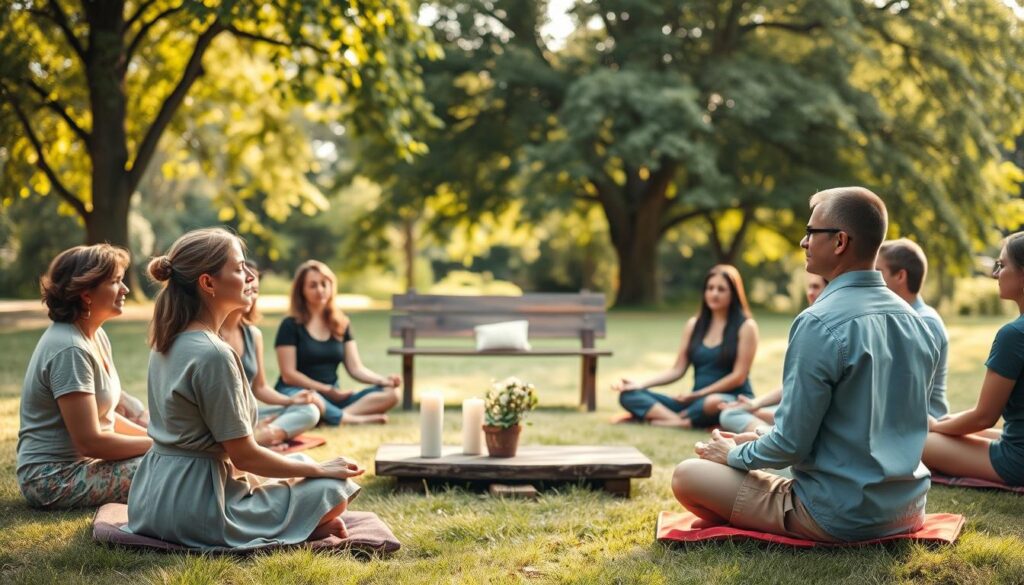
The group’s agreement is like a constitution. Share it clearly at the start. Banish the “shoulds.” It’s not about who’s quietest. It’s about exploring presence together.
What if someone talks too much? Gently steer them back. “Thank you, let’s focus on our breath now.” For skeptics, ask them to observe their doubts. Let the group teach itself.
Managing a mindfulness group is like leading a project. You need a clear plan, a schedule, and everyone’s buy-in. What do people really want? Stress relief? Connection? A break from screens? Align these goals under the simple idea of showing up.
Use fun, easy activities to anchor the group. Start with a three-minute listening meditation. Try a walking meditation if sitting is hard. It’s not about strict rules; it’s about finding what works for this group.
Success means the group feels like a safe haven. When people arrive early to sit together, you’ve succeeded. You’ve created a mindfulness sanctuary, a place of peace in chaos.
Integrating Mindful Living at Home
Your home is more than just a place to store things. It’s where you practice being aware. It’s like a secret training ground against living on autopilot. You don’t need to turn your home into a temple. Just start small.
Think about your morning coffee ritual. It can be a form of meditation. Instead of rushing, enjoy the warmth of your mug. Take in the smell and taste each sip slowly. This turns drinking coffee into a mindful experience.
After work, we often scroll through our phones without thinking. Use this as a chance to do a quick micro-meditation. First, check your posture. Then, notice your breath. Lastly, feel your body on the chair. You’ve just meditated.
Grounding techniques help fight the feeling of being lost in digital space. If you’re feeling anxious, try standing with your feet flat on the floor. Imagine roots growing from your feet. It’s simple yet effective.
Not everyone likes quiet time. Your wellness group should fit your personality.
- For the extrovert: Try a “mindful walk” with a friend. Share sensory details without judgment. It’s a way to stay present together.
- For the introvert: “Mindful destruction” might be your thing. Tear out magazine pages slowly, noticing the sounds and textures. It’s a calming activity.
Games like “What’s the Best Smell?” can train your senses. Walk through your home and rank different smells. It’s a fun way to improve your sense of smell.
Another idea is to pet your animal with full attention. Notice the texture of their fur and their breathing. If you don’t have a pet, use a blanket instead. It’s a great way to ground yourself.
Eating mindfully turns dinner into a sensory experience. Eat one meal a week in silence. Notice the colors, textures, and flavors. Chew slowly to enjoy every bite.
The goal is to make mindfulness a part of your daily life. Start with small moments, like enjoying your coffee or petting your dog. These moments add up and make a big difference.
Your home becomes a wellness group for you and your family. These small practices can change how you feel and experience life.
Benefits of Mindfulness and Meditation
Mindfulness and meditation are powerful tools for improving mental health and overall well-being. By incorporating these practices into your daily routine, you can experience a range of benefits that can positively impact your life.
Reducing Stress and Anxiety
Mindfulness and meditation have been shown to be effective in reducing stress and anxiety levels. By focusing on the present moment and letting go of worries about the past or future, you can find a sense of calm and tranquility. Regular mindfulness and meditation practices can help you develop a greater sense of emotional resilience and better manage stress.
Improving Sleep Quality
One of the benefits of mindfulness and meditation is improved sleep quality. By practicing mindfulness and meditation before bed, you can calm your mind and body, leading to a more restful and rejuvenating sleep. This can help you feel more refreshed and energized in the morning, improving your overall well-being.
Enhancing Focus and Concentration
Mindfulness and meditation can also improve focus and concentration. By training your mind to stay present and focused, you can enhance your ability to stay engaged and productive. This can be beneficial in both personal and professional settings, helping you achieve your goals and stay on track.
Boosting Mood and Emotional Well-being
Regular mindfulness and meditation practices can have a positive impact on your mood and emotional well-being. By cultivating a sense of gratitude, self-compassion, and acceptance, you can develop a more positive outlook on life. This can help you navigate challenging situations with greater resilience and find joy in everyday moments.
By incorporating mindfulness and meditation into your daily routine, you can experience these benefits and more. Whether you choose to practice mindfulness through meditation, yoga, or other activities, the key is to find what works best for you and make it a consistent part of your self-care routine.
Remember, mindfulness and meditation are not one-size-fits-all practices. It’s important to find a method that resonates with you and suits your lifestyle. Experiment with different techniques, find a quiet space that feels comfortable, and be patient with yourself as you develop your mindfulness practice.
Training Volunteer Leaders
A volunteer mindfulness facilitator’s main tool isn’t a gong or chant. It’s something much more subtle: psychological safety. Think of it as the social equivalent of a non-slip yoga mat. Your job is to create a space where the group’s wisdom can emerge.
This role requires a unique skill set. You must guide without directing. Hold space without owning it. The real power lies in supporting autonomy. A therapeutic environment is one you create with people, where they feel safe to explore.
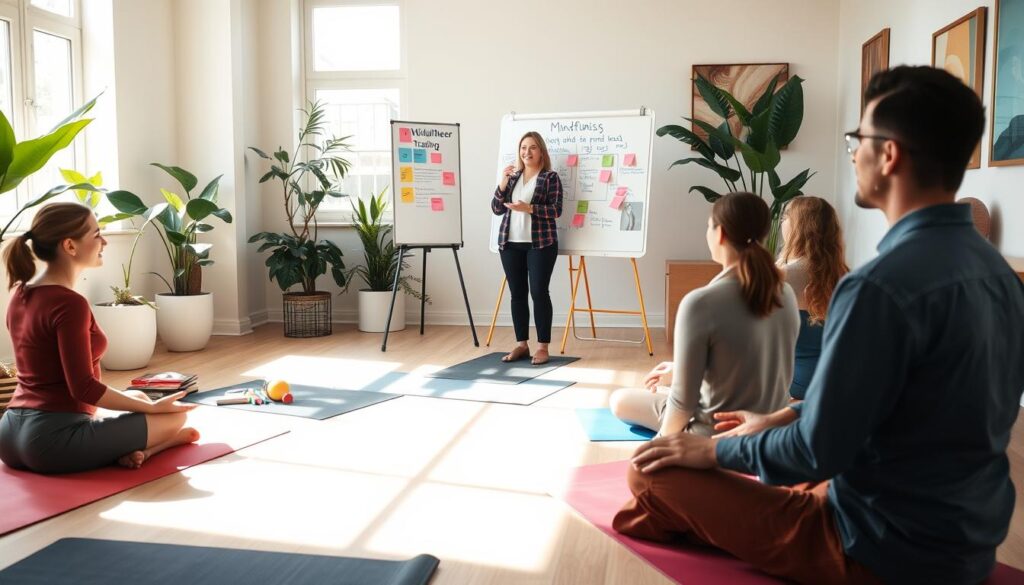
To build this invisible architecture, start by checking your ego at the door. Your role is to be a curious, calm center. When someone shares something vulnerable, listen with holy curiosity. This builds more trust than any quote.
The practical toolkit for this work is surprisingly mundane, yet critical. Let’s break it down:
- Time Management as a Ritual: Starting and ending on time is key. It signals respect and predictability. The opening bell and closing breath are the bookends of your shared experience.
- Navigating Emotional Weather: Groups have climates. Your job is to notice and name emotional shifts. “I’m noticing some heaviness in the room. Would anyone like to name what they’re feeling?” This simple act is powerful.
- The Art of the Pause: After asking a question, let silence sit for a beat longer than feels comfortable. This space is where real reflection happens. Most leaders rush to fill it; don’t.
To do this work sustainably, you must practice what you facilitate. Your own mindfulness practice isn’t a luxury; it’s your oxygen mask. Burnout in volunteer leaders doesn’t come from the hours; it comes from emotional osmosis. Schedule your personal meditation before the group meets. It’s like prepping the chef before serving the meal.
You’re not responsible for anyone’s transformation. That’s a relief, isn’t it? You’re responsible for showing up prepared, present, and open. You provide the compass, not the destination. The group’s journey is their own. This is leadership as a humble service, a practice in letting go of outcomes while fiercely protecting the process.
In the end, a successful wellness group leader measures their impact not by the profundity of their insights, but by the depth of the silence they can comfortably hold. You become a mirror, reflecting back the group’s capacity for connection. And sometimes, that’s the most profound meditation of all.
Resources for Beginners
The world of ‘mindfulness resources’ can feel overwhelming. It’s like searching through a digital mess. You need something that stands out.
Think of this as your guide. I’ve sorted the key tools into three easy groups. You’ll find apps for tech lovers, books for those who prefer paper, and simple exercises for quick starts.
The best tool isn’t always the most popular. It’s the one you’ll use every day. Looking for the perfect practice can add to your stress, not reduce it.
| Tool Type | Best For | Top Recommendations | Key Advantage |
|---|---|---|---|
| Apps & Digital Courses | The scheduler, the tech-comfortable, the guided voice lover. | Apps like Headspace or Calm; the structured “Mindfulness X” course. | Builds a daily habit with reminders and progressive lessons. |
| Books & Guides | The deep diver, the self-paced learner, the highlight-and-note-taker. | “Wherever You Go, There You Are” by Jon Kabat-Zinn; “The Miracle of Mindfulness” by Thich Nhat Hanh. | Provides foundational theory and context for your practice. |
| Immediate Exercises | The skeptic, the time-poor, the “just show me how” crowd. | Anchor Breathing (5-count inhale, hold, 5-count exhale); the “Trace Your Breath” game (visually follow your breath’s path in your mind). | Zero prep, zero cost. Demonstrates the core of mindfulness instantly. |
Start with “Anchor Breathing”. It’s easy. If you can count to five, you’re good to go. The “Trace Your Breath” game is also great for beginners. It makes focusing fun.
Community is also key. A good wellness group can really help. But how do you find a good one? Look for groups that are welcoming and don’t judge.
Ask questions. Is the leader trained? Does the group focus on practice or theory? Is it a safe place? Many find that being part of a group boosts their commitment.
Online groups should be the same. Look for places that are supportive and not just places where people try to outdo each other.
Exploring mindfulness should be fun, not stressful. Pick one tool from the table and try it for a week. That’s how you make it manageable.
Measuring Progress
Measuring mindfulness progress is like trying to quantify the color of a sunset—possible, but missing the point entirely. We’re conditioned to track everything: steps, calories, productivity hours. But your inner landscape defies such crude metrics.
So how do you measure the immeasurable? You don’t. You observe the qualitative audit of your consciousness. Progress isn’t logged in minutes of silent meditation, but in the subtle, seismic shifts in your daily life.
Look for evidence in the spaces you didn’t have before. That moment you receive a provoking email and, instead of firing back, you take a breath. The newfound gap between stimulus and your response widens just enough to let choice in. This is the real data point.
In a wellness group context, progress manifests differently. It’s in the deepening trust during shared discussions. It’s when someone vulnerably shares a struggle, and the room holds that space without rushing to fix it. The metric here is authenticity, not attendance.
I call the opposite of progress “mental spin”—that frantic, hamster-wheel thinking that solves nothing. A key indicator of advancing mindfulness is a noticeable decrease in this spin. Your inner dialogue shifts from critic to compassionate observer.
For those who absolutely need something resembling a scorecard, formal mindfulness questionnaires and scales exist. They can provide a snapshot. But they capture the shadow, not the substance.
The most telling measures are relational. Are your conversations less reactive? Do you listen more than you wait to speak? Does frustration melt into curiosity faster? These are your true north indicators.
In your meditation practice or wellness group, abandon the corporate mindset. There’s no promotion, no bonus, no “employee of the month” in your inner world. The reward is the growing ease of being with what is—the ultimate, unquantifiable ROI.
Event Calendar & Follow-Up
Think of your calendar as the blueprint of your commitments. A weekly mindfulness session or a monthly walk with your wellness group creates a rhythm. This rhythm is what your nervous system craves.
The real magic happens in the follow-up. Sharing a cup of tea after a session or sending a simple “how was your practice?” text can make a big difference. These small connections turn a series of meetings into a vibrant community. Apps like Headspace and Insight Timer build digital communities around this idea.
Your local meditation center or yoga studio probably has a calendar. Mark it and show up. Awareness is often a journey shared with others. Find your tribe, commit to the schedule, and watch your meditation habit grow.
The call to action is simple. Don’t just read about mindfulness. Find a community and join their events. The shared goal of a group makes the path clearer and helps you stick to your practice. Your calendar is waiting for you.