Let’s be honest – when was the last time your household’s wellness routine involved more than debating which streaming service to marathon?
Wellness initiatives aren’t just corporate HR buzzwords. Data from the 2022 St. Mary’s Partnership shows these programs actually create measurable health improvements.
Think of it as gamifying your well-being. Nothing motivates like friendly competition and proving your step count superiority.
The 2025 emphasis on holistic health continues this momentum. Structured activities transform vague intentions into concrete results.
We’ll examine why these frameworks work well for household dynamics. The psychological hooks make them surprisingly effective.
Planning Your Month
Setting up a family wellness challenge is like solving a Rubik’s Cube. It’s all about planning smartly without feeling like you’re in boot camp.
St. Mary’s 12-month plan is a great starting point. We’re making it a 30-day challenge. It includes everything from walking steps to drinking water. But getting teens to drink water can be tough.
The 2025 system is great for organizing wellness. It covers six areas:
- Physical (step challenges, hydration tracking)
- Mental (mindful eating – call it “food adventures”)
- Social (device-free dinners)
- Productivity (family goal setting)
- Creativity (cooking challenges)
- Environmental (reduction initiatives)
Choosing the right time for challenges is key. Trying to cut sugar in October? That’s like trying to stay sober at a wine festival. January is good for new beginnings, and summer is perfect for outdoor fun.
How you label things matters a lot. “Mindful eating” might scare kids off, but “food tasting Olympics” makes them excited. The right words can make challenges fun.
Mixing categories can make challenges more interesting. Dance-off Fridays mix creativity and physical activity. Creating the best recycling system combines environmental and productivity goals. This keeps everyone engaged in your wellness challenge.
The main goal is to make plans that work. Start small, celebrate your successes, and avoid big holidays for diet challenges.
Daily & Weekly Goals
Let’s make a plan to turn “we should do better” into real actions. Corporate wellness goals look great on slides but fail in real life. Things like forgotten permission slips and last-minute school projects get in the way.
The SMART framework (Specific, Measurable, Attainable, Realistic, Trackable) is key. But we’re making it work for family challenge life, not just office dreams.
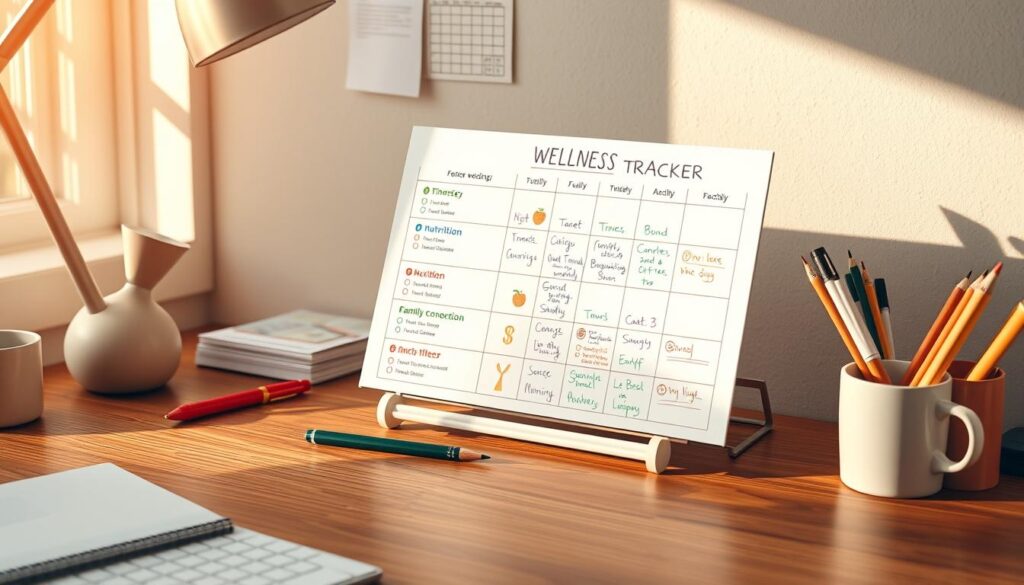
The 10,000 steps goal seems easy until you chase toddlers. It’s like extreme sports. Making corporate goals fit family life is the trick.
Here’s what really works for wellness challenge success:
- Specific: “8 glasses of water daily” becomes “Everyone finishes their water bottle before dinner”
- Measurable: Track consistency, not perfection – 5/7 days hitting targets is a win
- Attainable: Begin with 15-minute walks before marathon training
- Realistic: Remember soccer practice, homework, and that kitchen stain
- Trackable: Use simple habit trackers that kids can follow
Weekly goals are better than daily perfection. Aim for 150 minutes of activity. This includes playground trips and dance parties. And yes, chasing toddlers counts.
Sleep and hydration are more important than steps for brain function. Hydration affects mood more than we think.
The secret? Make your family challenge feel like a game, not a chore. When your 8-year-old reminds you about water, you’ve won.
The goal isn’t to follow corporate wellness rules. It’s to build habits that last through life’s chaos.
Printable Trackers
In today’s world, paper trackers are a refreshing change. They’re like vinyl records for habits, providing a tactile experience. They offer a break from the digital overload.
I’ve tried many templates, from screen time logs to water trackers. Some become art, while others are used regularly. The best ones help you stay on track.
Why do paper trackers work better than apps? It’s because they tap into our love for the old ways. The act of writing down progress releases dopamine. It’s not just tracking; it’s creating a keepsake of your family challenge journey.
To make tracking a family affair, follow these tips:
- Put trackers in places where they’re seen often, like the kitchen fridge.
- Use colorful stickers for kids instead of checkmarks.
- Enjoy favorite snacks during weekly reviews.
- Let kids decorate their trackers.
For younger kids, make tracking fun. Use simple templates and turn water tracking into coloring. Make eating veggies a fun sticker chart. The healthy habits tracker pack has great ideas for kids.
The best Family Challenge Plans know the tracker is just a tool. It shows your family’s effort and commitment. It’s proof of your dedication to something important.
Social Motivation
Let’s be honest – most family wellness challenges fail because we treat them like mandatory fun. Remember that awkward team-building exercise your company forced on you? That’s exactly how your family feels about forced bonding.
The secret lies in understanding why digital connections often feel more natural than real ones. We’ve become experts at curating our online selves while forgetting how to be present in our own living rooms.

Here’s the uncomfortable truth: no-phone meals work better as 30-day challenges than as daily nagging. The time-bound nature creates anticipation instead of resentment. Game nights become stealth screen-time reducers when framed as weekly tournaments instead of lectures about device usage.
Effective Family Challenge Plans leverage our competitive nature for social good. Try these proven social components:
- Compliment campaigns where each family member must give genuine praise daily
- Weekly “connection coffee” with someone outside your immediate circle
- Support local businesses together instead of defaulting to Amazon
- Volunteer as a team – nothing bonds like helping others
The magic happens when challenges create organic connection instead of forced interaction. Your family wellness challenge should feel like discovering old friends, not attending a mandatory meeting.
Adapting Challenges
When your 9-year-old thinks veggies are tracking devices, it’s time to rethink wellness challenges. These programs need a family-friendly makeover.
Adapting challenges isn’t about being perfect. It’s about finding what works, even if ketchup is seen as a veggie. The key is in the tweaks.
Scaling challenges for all ages means understanding different goals. Your teenager might aim for abs, while your preschooler wants to jump without crying.
Every family has a rebel who sees wellness challenges as propaganda. The trick is to let them lead the fun. They’ll turn resistance into creativity.
Adapting for special needs is essential. Gluten-free, dairy-free, or mobility-limited? Turn these into opportunities for fun. Wheelchair basketball could be the week’s highlight.
When challenges meet eye-rolling and tantrums, remember: it’s about progress, not perfection. Even a 5-year-old’s pea art counts as mindful eating.
| Corporate Challenge Element | Family Adaptation | Success Tip |
|---|---|---|
| Step Count Competitions | Family Dance-Offs | Let kids choose the music |
| Salad Bar Lunches | Build-Your-Own Taco Night | Include even “weird” ingredients |
| Meeting Room Yoga | Living Room Animal Poses | Who can hold frog position longest? |
| Water Consumption Tracking | Funny Glass Markings | Hydration monsters need feeding! |
| Weekly Progress Reports | Refrigerator Art Charts | Sparkly stickers beat spreadsheets |
The best wellness challenge meets your family where they are. Adaptation turns corporate ideas into family traditions that last.
Success Stories
Forget the wellness industry’s perfect images. Real success in Family Challenge Plans is more like a toddler eating veggies. It’s about small wins, not perfect bodies.
Some families do great with these plans. Others fail, but beautifully. The key is looking beyond just numbers.
Success isn’t about being perfect. It’s about making it through the month without anyone leaving. It’s about small, real moments, like dad putting his phone away at dinner.
These aren’t big change stories. They’re about small, lasting changes. The fact that the program is continuing shows it works. And that’s what truly matters.